Binuclear Acetoniminato Derivatives of Iron and Chromium Carbonyls: A Theoretical Study
Haoyu Chen, Jinfeng Luo, Yongtao Liu, Huidong Li, Qunchao Fan, Zhixiang Fan, R. Bruce King, Henry F. Schaefer III

TL;DR
This study uses theoretical methods to explore the structures and stability of iron and chromium compounds with acetoniminato ligands.
Contribution
The paper identifies energetically preferred structures for binuclear iron and chromium carbonyl derivatives with acetoniminato ligands.
Findings
The (Me2C=N)2Fe2(CO)6 structure is energetically preferred for iron systems with bridging ligands.
Chromium systems prefer a structure with a 2,3-diazabutadiene ligand bonded to chromium moieties.
Tetracarbonyl iron systems favor a structure where one ligand bonds via its C=N double bond.
Abstract
The structures and energetics of binuclear acetoniminato metal carbonyl derivatives of the types (Me2CN)2Fe2(CO) n and (Me2CN)2Cr2(CO) n have been investigated by density functional theory. The (Me2CN)2Fe2(CO)6 structure, with bridging Me2CN ligands using only their nitrogen atoms to bridge an FeFe bond related to experimentally known species, as well as a related (Me2CN)2Cr2(CO)8 structure, appear to be energetically preferred. Among carbonyl-richer systems, the iron system energetically prefers a {Me2CNC(O)}2Fe2(CO)6 structure with bridging Me2CNC(O) ligands, whereas the chromium system energetically prefers a structure with a 2,3-diazabutadiene ligand having each nitrogen atom bonded to a Cr(CO)5 moiety. Preferred structures for systems with fewer CO groups include the tetracarbonyl (Me2CN)2Fe2(CO)4 in which one of the bridging Me2CN uses its CN double bond to bond to…
Genes, proteins, chemicals, diseases, species, mutations and cell lines named across the full text — each resolved to its canonical identifier and authoritative record.
Click any figure to enlarge with its caption.
 1
1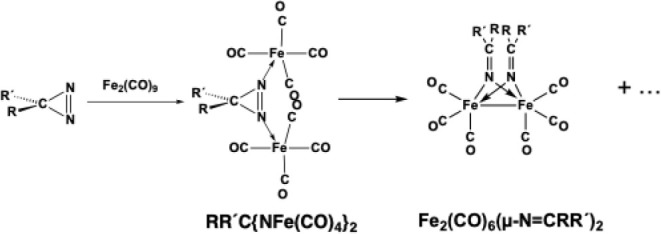 2
2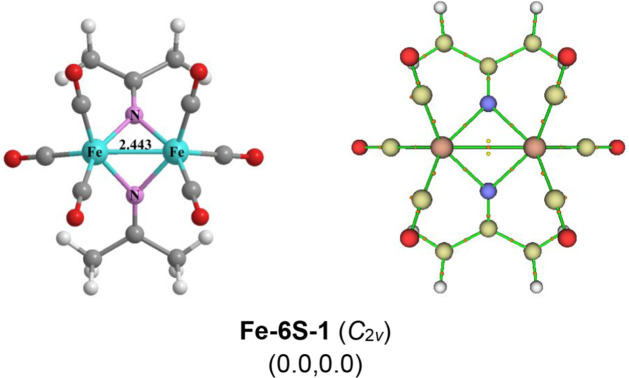 3
3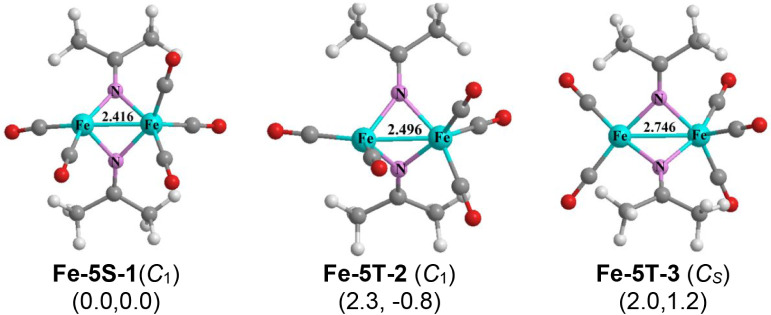 4
4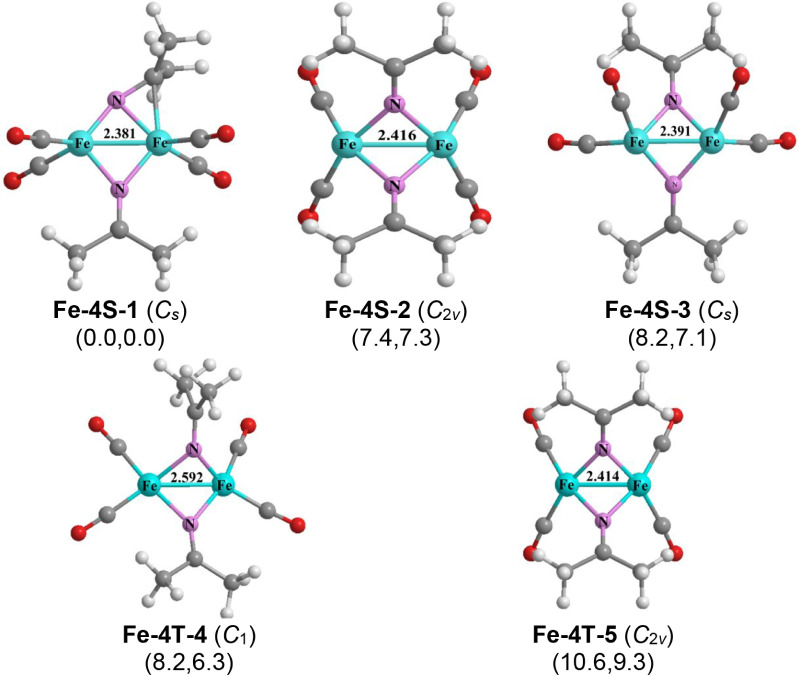 5
5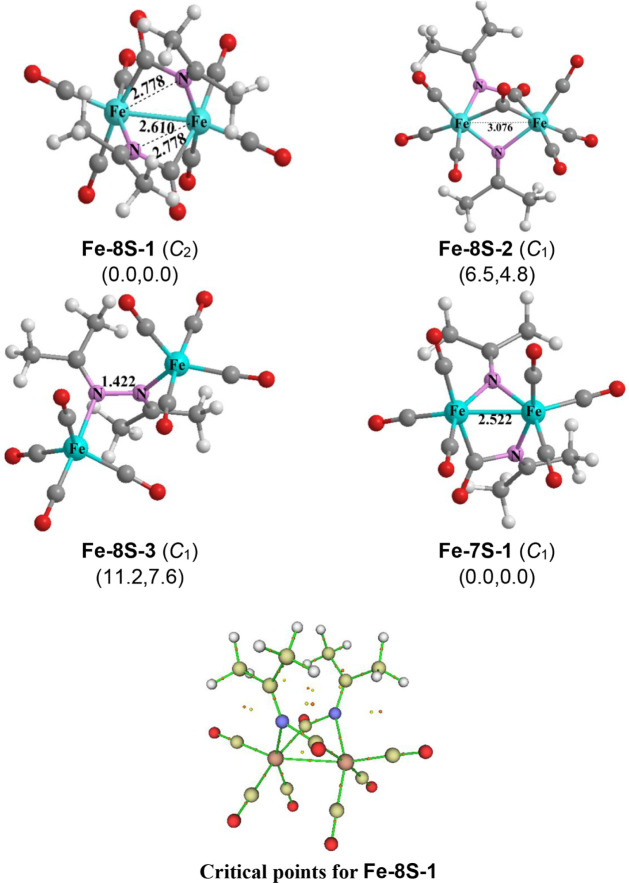 6
6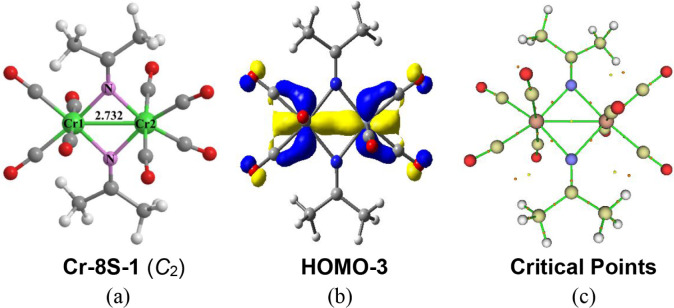 7
7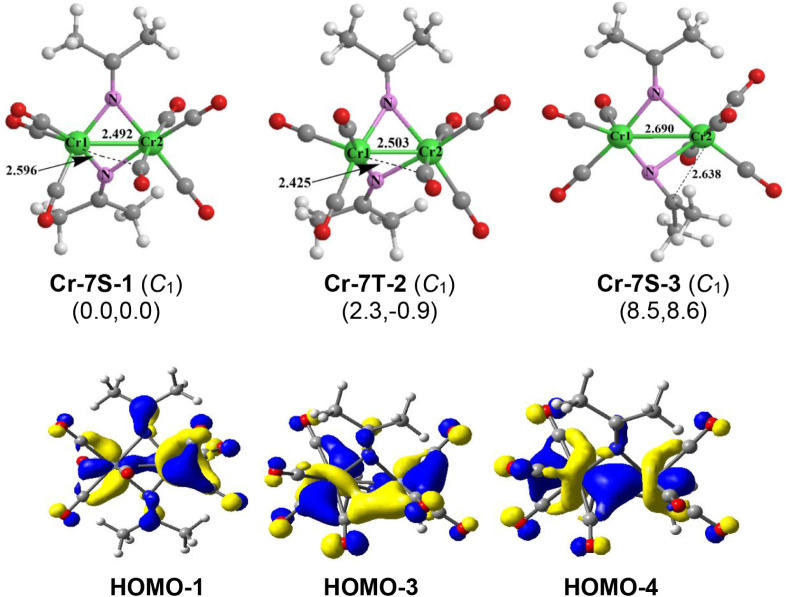 8
8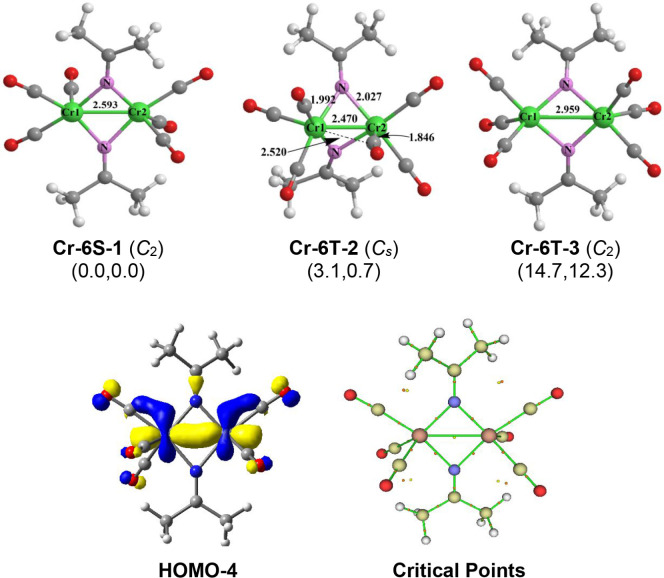 9
9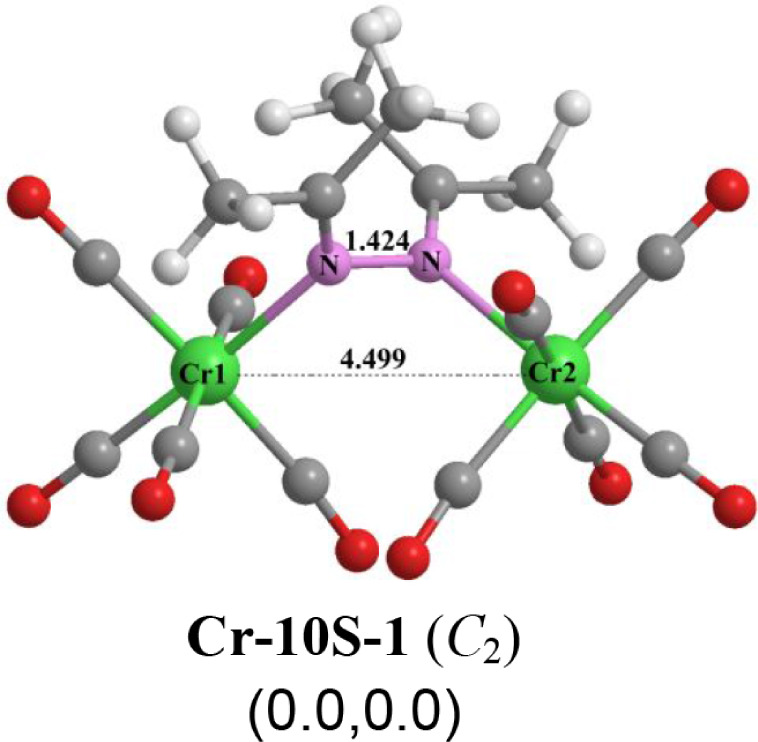 10
10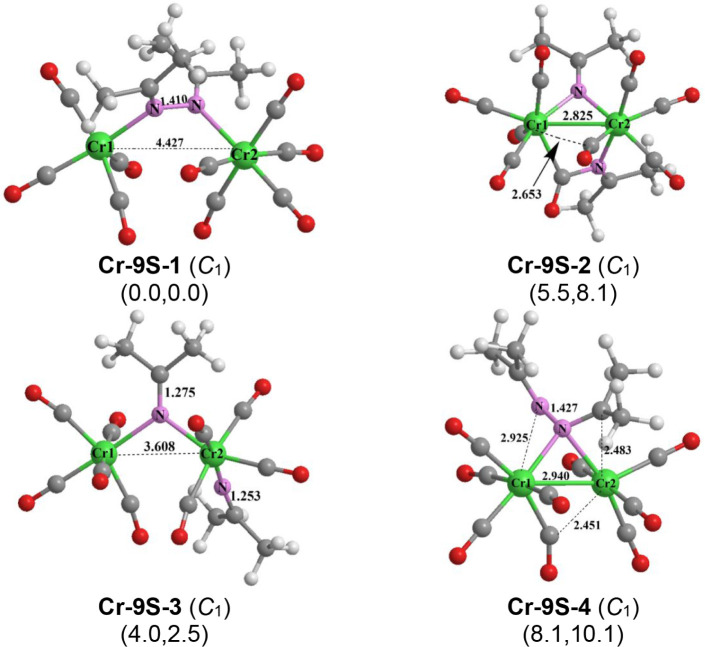 11
11| Δ | Δ | |
|---|---|---|
| (Me2CN)2Fe2(CO)8 ( | 2.0 | –12.8 |
| (Me2CN)2Fe2(CO)7 ( | –0.2 | –13.9 |
| (Me2CN)2Fe2(CO)6
| 43.3 | 29.9 |
| (Me2CN)2Fe2(CO)5 ( | 36.1 | 24.1 |
| 2(Me2CN)2Fe2(CO)7
| –2.2 | –1.0 |
| 2(Me2CN)2Fe2(CO)6 ( | 43.4 | 43.8 |
| 2(Me2CN)2Fe2(CO)5 ( | –7.2 | –5.8 |
| Δ | Δ | |
|---|---|---|
| (Me2CN)2Cr2(CO)10 ( | 33.0 | 18.7 |
| (Me2CN)2Cr2(CO)9 ( | 2.8 | –9.5 |
| (Me2CN)2Cr2(CO)8
| 15.9 | 2.9 |
| (Me2CN)2Cr2(CO)7
| 33.3 | 20.3 |
| 2(Me2CN)2Cr2(CO)9 ( | –30.2 | –28.2 |
| 2(Me2CN)2Cr2(CO)8 ( | 13.1 | 12.4 |
| 2(Me2CN)2Cr2(CO)7 ( | 17.4 | 17.4 |
- —Basic Energy Sciences10.13039/100006151
- —Science and Technology Department of Sichuan Province10.13039/501100004829
Peer Reviews
No public reviews on file for this paper yet. If you reviewed it on a platform where reviews are public (OpenReview, ICLR, NeurIPS, ICML), you can paste yours below so the community can read it here.
Videos
No videos yet. Explain this paper in a talk, walkthrough, or lecture? Add one.
Taxonomy
TopicsChromium effects and bioremediation · Metal-Catalyzed Oxygenation Mechanisms · Organometallic Complex Synthesis and Catalysis
Introduction
1
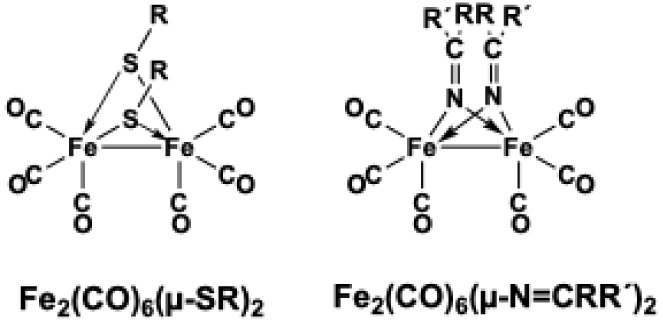
A key development in the early history of the reaction chemistry of iron carbonyls was the discovery by Reihlen, Hieber and Spacu ?,? of the reactions between Fe_3_(CO)12 and various disulfides, mercaptans, and sulfides to give essentially air-stable products of stoichiometry RSFe(CO)3, subsequently shown by molecular weight determinations to be the dimers (RS)2_Fe_2(CO)6 ? At the time of their original discovery direct bonds between transition metals had not been recognized so that the nature of these products remained obscure. Eventually, however, the presence of a direct iron–iron bond was recognized and confirmed by X-ray crystallography on the ethylthio derivative? (C_2_H_5_S)2_Fe_2(CO)6. The X-ray structure determination also showed that the alkylthio groups were bridging rather than terminal groups. The resulting structures can be regarded as butterfly structures where the iron–iron bond is the “body” of the butterfly and the organosulfur groups are the “wingtips” (Figure). The iron atoms in these butterfly structures have the favored 18-electron configuration by receiving six electrons from the three carbonyl groups, one electron from a two-center two-electron bond from one sulfur atom, two electrons from a dative S→Fe bond from the other sulfur atom, and one electron through the iron–iron bond. Stereoisomers of the (μRS)2_Fe_2(CO)6 structures are possible depending on the relative orientation of the alkyl group and the nonbonding lone pair on each sulfur atom. Such stereoisomers have been separated by column chromatography for the methylthio derivative (μCH_3_S)2_Fe_2(CO)6. ?,? Related butterfly species are known in which the sulfur atoms are connected by a direct bond such as (μ-S)2_Fe_2(CO)6 or by a carbon chain such as (μC_2_H_4_S_2_)Fe_2_(CO)6.
Butterfly structures of (μ-RS)2Fe2(CO)6 and (μ-ŔCN)2Fe2(CO)6.
The butterfly structure originally found in (μ-RS)2_Fe_2(CO)6 derivatives is not limited to bridging organosulfur groups. The (μ-R_2_CN)2_Fe_2(R_2_CN)4 butterfly structure containing the ketamide ligands has attracted significant attention in recent years.? Related butterfly (μ-X)2_Fe_2(CO)6 structures are also found where the bridging X groups have other donor atoms such as nitrogen or phosphorus. The electron counting in such (μ-R_2_E)2_Fe_2(CO)6 (E = N, P) structures is analogous to that given above for the (μ-RS)2_Fe_2(CO)6 derivatives likewise giving the iron atoms the favored 18-electron configuration. Furthermore, unsaturation can be added to the bridging group providing additional possibilities for electron donation from the bridging group to the iron carbonyl system. Thus, bridging ketiminato groups in structures of the type (μR_2_CN)2_Fe_2(CO)6 provide carbon–nitrogen double bonds as a potential source of electrons for donation to the iron atoms in addition to those provided by the nitrogen lone pairs. In order to explore this possibility, we have used density functional theory to investigate the geometries and energetics of the structures of the type (Me_2_CN)2_Fe_2(CO)_ n _ (n = 8, 7, 6, 5, 4) and (Me_2_CN)2_Cr_2(CO)_ n _ (n = 10, 9, 8, 7, 6).
A number of compounds of the type (μ-RR′CN)2_Fe_2(CO)6 are known experimentally with the most efficient syntheses involving cleavage of the N–N bond in the 2,3-diazabutadiene derivatives RR′N–NCRR′ with iron carbonyls. ?−? ? The required 2,3-diazabutadiene derivatives, also known as ketone azines, can readily be obtained from the corresponding ketones and hydrazine. The acetoniminato derivative (Me_2_CN)2_Fe_2(CO)6 has also been isolated in minor quantities (3% yield) from the reaction of Na_2_Fe(CO)4 with 2-bromo-2-nitrosopropane.? In addition, (RRCN)2_Fe_2(CO)6 derivatives have been isolated by the reactions of diazirines R′C(N_2_) with Fe_2_(CO)9. A rather unstable intermediate of the type RR′C{NFe(CO)4}2 can be isolated from this reaction (Figure).?
Formation of (μ-RR′CN)2Fe2(CO)6 derivatives from diazirines and Fe2(CO)9.
Chromium carbonyl derivatives of the type (μ-RR′CN)2_Cr_2(CO)8 having structures analogous to the (μ-RR′CN)2_Fe_2(CO)6 derivatives but with one more terminal carbonyl group bonded to each metal atom also have the favored metal 18-electron configuration. Such species do not appear to have been reported. However, they are potentially accessible by reactions of the 2,3-diazabutadienes R′CNNCRR with a suitably chosen chromium carbonyl derivative.
Theoretical Methods
2
The meta-GGA DFT method M06-L ?,? as implemented in the Gaussian16 program? was used for the computations. This method has been reported to give better overall performance for organometallic compounds than the first-generation functionals.? The def2-TZVP basis sets ?,? were used for all the atoms. All geometries of the reported structures were fully optimized by using the M06-L/def2-TZVP method with the (120, 974) integration grid.
Wiberg Bond Indices (WBIs) for the metal–metal interactions in the (Me_2_CN)2_M_2(CO)_ n _ (M = Fe or Cr) compounds were determined using the MultiWFN software (Table S3 and S4). ?,? For these systems, the WBIs were found to range from 0.11 to 0.44 for M–M single bonds, and from 0.46 to 0.82 for MM double bonds
The optimized structures in this paper are designated as ** M-nY-Z ** where ** M ** indicates the name of the transition metal atom, ** n ** indicates the number of CO groups, ** Y ** indicates the spin state as singlet (S) or triplet (T), and ** Z ** indicates the ranking of the structure on the relative energy.
Results and Discussion
3
Iron Carbonyl Derivatives
3.1
(Me2CN)2Fe2(CO)6 Structures
3.1.1
Only one low-energy structure Fe-6S-1 is found for (Me_2_CN)2_Fe_2(CO)6 (Figure). Structure Fe-6S-1, with C 2v symmetry and singlet spin state, lies at least ∼18 kcal/mol in energy below other predicted isomers. In Fe-6S-1, each iron atom bears three terminal carbonyl groups. An Fe–Fe bond of length 2.443 Å with a Wiberg Bond Index (WBI) of 0.44 is bridged by two equivalent Me_2_CN groups through their nitrogen atoms. The critical point analysis suggests there is a direct bond between the two iron atoms. Two ring critical points were found nearby the bond critical points, indicating 3c-2e bonds within the two Fe–N–Fe rings. Interpreting this Fe–Fe bond as a single bond gives each iron atom in Fe-6S-1 the favored 18-electron configuration. Although (Me_2_CN)2_Fe_2(CO)6 has been obtained experimentally by several methods, ?,? its structure has not been determined by X-ray crystallography. However, the structure of the related p-tolyl derivative {(p-MeC_6_H_4_)2_CN}2_Fe_2(CO)6 was found by X-ray crystallography to have an Fe–Fe distance of 2.403 Å similar to the calculated Fe–Fe distance for Fe-6S-1. The predicted ν(CO) frequencies of 2120, 2078, 2061, 2039, and 2029 cm^–1^ when scaled by a factor? of 0.97 give 2056, 2016, 1999, 1978, and 1968 cm^–1^ which are comparable with the experimental observed values of 2077, 2029, 1982, and 1970 cm^–1^ in CH_2_Cl_2 solution.?
Optimized (Me2CN)2Fe2(CO)6 structure and the critical point analysis by the AIM method within the MultiWFN software. In Figures –, the numbers in parentheses are the relative energies (in kcal/mol) ΔE and relative Gibbs’ free energy ΔG at room temperature. Only the ΔE is reported in the text.
(Me2CN)2Fe2(CO)5 Structures
3.1.2
Three structures, namely the singlet Fe-5S-1 and the triplets Fe-5T-2 and Fe-5T-3, were found for (Me_2_CN)2_Fe_2(CO)5 lying within ∼3 kcal/mol in energy (Figure). The singlet structure Fe-5S-1 can be obtained by removing one carbonyl group from the hexacarbonyl Fe-6S-1. However, the Fe–Fe distance of 2.416 Å (M06-L) with a WBI of 0.46 is almost identical to that in the hexacarbonyl Fe-6S-1, suggesting that the Fe–Fe single bond is retained in Fe-5S-1. Thus, the iron atom in Fe-5S-1 bearing two terminal CO groups has only a 16-electron configuration. The triplet structure Fe-5T-2 having an Fe–Fe distance of 2.496 Å with a WBI of 0.38 appears to be a high-spin version of Fe-5S-1. The triplet structure Fe-5T-3 has a similar coordination environment of each iron atom but with a longer Fe–Fe bond of 2.746 Å with a lower WBI of 0.15. In Fe-5T-2 the FeC_2_N_2_ coordination environment of the iron atom bearing two CO groups is distorted tetrahedral whereas in Fe-5T-3 the coordination environment of that iron atom is nearly tetragonal planar.
Optimized (Me2CN)2Fe2(CO)5 structures.
(Me2CN)2Fe2(CO)4 Structures
3.1.3
Five low-energy structures were found for (Me_2_CN)2_Fe_2(CO)4 (Figure). The lowest energy structure is the C _ s _ singlet structure Fe-4S-1 having an FeFe distance of 2.381 Å with a WBI of 0.51, only 0.03 Å shorter than that in the (Me_2_CN)2_Fe_2(CO)_ n _ (n = 6, 5) structures discussed above (Figures and ?), and thus can be also interpreted as a formal single bond. In Fe-4S-1 each iron atom bears two CO groups and the Fe–Fe bond is bridged by two nonequivalent Me_2_CN units. One of these Me_2_CN groups bridges the Fe–Fe bond only through its nitrogen atom similar to the bridging Me_2_CN units in all of the low-energy (Me_2_CN)2_Fe_2(CO)_ n _ (n = 6, 5) structures in Figures and ?. However, the other bridging Me_2_CN group is bent so that its carbon atom is brought close enough to one of its iron atoms for an Fe–C bond of length 2.116 Å. This provides two extra electrons for this iron atom from the π component of the CN double bond. The combination of two electrons from coordination of the CN double bond from one of the Me_2_CN groups and the single Fe–Fe bond in Fe-4S-1 gives the iron atom connecting to the carbon atom of one of the two CN double bonds the favored 18-electron configuration, but the other iron atom acquires only a 16-electron configuration.
Optimized (Me2CN)2Fe2(CO)4 structures.
The other four low-energy (Me_2_CN)2_Fe_2(CO)4 structures, namely the singlets Fe-4S-2 and Fe-4S-3 as well as the triplets Fe-4T-4 and Fe-4T-5, have similar coordination environments for the CO groups and the Me_2_CN groups with energies within 10 kcal/mol of that of Fe-4S-1 (Figure). Thus, in all four structures, each iron atom bears two terminal CO groups and the Me_2_CN groups bridge the iron–iron bonds only through their nitrogen atoms similar to the low-energy the (Me_2_CN)2_Fe_2(CO)_ n _ (n = 6, 5) structures (Figures and ?). The Fe–Fe bonds predicted for Fe-4S-2, Fe-4S-3 and Fe-4T-5 of lengths around ∼2.4 Å comparable to that in the singlet structure Fe-4S-1, correspond to formal single bonds. The longer iron–iron distance predicted for the triplet structure Fe-4T-4 of 2.592 Å also corresponds to a single bond.
Carbonyl-Rich (Me2CN)2Fe2(CO)
n (N = 8, 7) Structures
3.1.4
Three low energy structures were predicted for (Me_2_CN)2_Fe_2(CO)8 (Figure). The lowest energy structure is Fe-8S-1 with C 2 symmetry. This structure is related to the lowest energy and experimentally known (Me_2_CN)2_Fe_2(CO)6 structure Fe-6S-1 (Figure) by insertion of a CO group into one of the Fe–N bonds of each bridging Me_2_CN ligand to form a bridging Me_2_CN(CO) ligand. The predicted ν(CO) frequencies for the Me_2_CN(CO) ligands of 1741 cm^–1^ and 1744 cm^–1^ are significantly lower than those of terminal CO groups bonded to metal atoms. Such CO insertions do not affect the electron bookkeeping since a formally neutral bridging Me_2_CNC(O) ligand like the bridging Me_2_CN ligands in Fe-6S-1 formally donates three electrons to each iron atoms. Thus, each iron atom in Fe-8S-1 like those in Fe-6S-1 has the favored 18-electron configuration. The CO insertion into the Fe–N bonds in Fe-6S-1 to give Fe-8S-1 lengthens the single Fe–Fe bond indicated by the bond critical point to 2.610 Å with a WBI of 0.39. Each iron atom in Fe-8S-1 acquires the favored 18-electron configuration.
Optimized carbonyl-rich (Me2CN)2Fe2(CO) n (n = 8, 7) structures and critical points analysis for structure Fe-8S-1.
The next highest energy structure for (Me_2_CN)2_Fe_2(CO)8 is the singlet Fe-8S-2, lying 6.5 kcal/mol (M06-L) above Fe-8S-1 (Figure). The iron atoms in Fe-8S-2 are bridged by a CO group and a Me_2_CN group, as well as a bridging Me_2_CNC(O) group with ν(CO) frequencies of 1763 cm^–1^ similar to the bridging Me_2_CNC(O) groups in Fe-8S-1. The long iron–iron distance in Fe-8S-2 of 3.076 Å corresponding to a low WBI of 0.11 suggests the absence of a formal iron–iron bond. However, since the bridging Me_2_CN and Me_2_CNC(O) groups can each donate three electrons to the two iron atoms, then each iron atom obtains the favored 18-electron configuration without requiring any iron–iron bond.
The third (Me_2_CN)2_Fe_2(CO)8 structure Fe-8S-3, lying 11.2 kcal/mol above Fe-8S-1, has four terminal CO groups bonded to each iron atom (Figure). In Fe-8S-3 the two Me_2_CN units are coupled to form a 2,3-diazabutadiene ligand that donates two electrons to each Fe(CO)4 moiety to give each iron atom the favored 18-electron configuration. Structure Fe-8S-3 represents an obvious intermediate in the synthesis of (Me_2_CN)2_Fe_2(CO)6 (Fe-6S-1) from the 2,3-diazabutadiene Me_2_CN–NCMe_2_ and iron carbonyls (see Figure). ?−? ?
Only one low energy structure, namely the singlet Fe-7S-1, was found for the heptacarbonyl (Me_2_CN)2_Fe_2(CO)7 (Figure). Structure Fe-7S-1 lies at least 24 kcal/mol below other predicted structures and thus appears to be highly favored. In Fe-7S-1 the iron atoms are bridged by one Me_2_CN group and one Me_2_CN(CO) group with a predicted ν(CO) frequency of 1746 cm^–1^ for the latter. Each of these bridging groups, considered formally as neutral ligands, donates three electrons to the Fe_2_ unit. The predicted Fe–Fe distance of 2.522 Å in Fe-7S-1 with a WBI of 0.41 corresponds to the formal single bond required to give each iron atom the favored 18-electron configuration.
Chromium Carbonyl Derivatives
3.2
(Me2CN)2Cr2(CO)8 Structures
3.2.1
Only one low-energy (Me_2_CN)2_Cr_2(CO)8 structure was found, namely the singlet Cr-8S-1 with C 2 symmetry (Figure). The predicted Cr–Cr distance of 2.732 Å in Cr-8S-1 with a WBI of 0.35 can be interpreted as a formal single bond, which is suggested by the HOMO–3 orbital. This Cr–Cr bond is bridged by two Me_2_CN groups, forming the multicenter bond indicated by the ring critical point (Figurec), to give each chromium atom the favored 18-electron configuration. Structure Cr-8S-1 is closely related to that of the iron complex (Me_2_CN)2_Fe_2(CO)6 (Fe-6S-1) but with an additional CO group on each metal atom to compensate for the two fewer valence electrons of chromium relative to iron.
(a) The optimized (Me2CN)2Cr2(CO)8 structure; (b) the selected bonding orbital and (c) critical point analysis.
(Me2CN)2Cr2(CO)7 Structures
3.2.2
Three low-energy structures were predicted for the heptacarbonyl (Me_2_CN)2_Cr_2(CO)7 (Figure). The lowest energy structure Cr-7S-1 could be obtained by removing one terminal CO group from one chromium atom in Cr-8S-1 thereby shortening the CrCr distance by ∼0.2 Å to 2.492 Å and increasing the WBI from 0.35 to 0.5. This CrCr double bond can also be indicated by the frontier molecular orbitals. Thus, HOMO–4 and HOMO–3 correspond to the σ and π components, respectively, of the CrCr double bond. The bridging Me_2_CN groups in Cr-8S-1 are not affected significantly by the loss of the CO group to give Cr-7S-1. Interpreting the CrCr bond as a formal double bond in Cr-7S-1 compensates for the loss of a CO group from Cr-8S-1 so that each chromium atom retains the favored 18-electron configuration in Cr-7S-1. The triplet (Me_2_CN)2_Cr_2(CO)7 structure Cr-7T-2, lying only 2.3 kcal/mol in energy above Cr-7S-1 is very similar to Cr-7S-1 except for the spin state. The predicted CrCr distance of 2.503 Å with a WBI of 0.57 is similar to that of the singlet structure Cr-7S-1 and thus can also correspond to a formal double bond. However, in order to account for the triplet spin state, the CrCr double bond in Cr-7T-2 must be of the σ + ^2^/2_π type similar to the OO bond in normal triplet dioxygen or the FeFe bond in the organometallics (η^5^-R_5_C_5)2_Fe_2(μ-CO)3 (R = H, Me) ?,?,? with an unpaired electron in each of the orthogonal π orbitals.
Optimized (Me2CN)2Cr2(CO)7 structures and the selected frontier molecular orbitals for structure Cr-7S-1.
The third (Me_2_CN)2_Cr_2(CO)7 structure Cr-7S-3 is a singlet structure lying 8.5 kcal/mol in energy above Cr-7S-1 (Figure). One of the bridging Me_2_CN groups in Cr-7S-3 is bent toward the Cr(CO)4 chromium atom with a Cr–C distance of 2.638 Å implying coordination of the CN double bond to that chromium atom. The Cr–Cr distance of 2.690 Å with a WBI of 0.32 in Cr-7S-3 corresponds to a formal single bond. Placing a formal positive charge on the Cr(CO)4 chromium atom and a balancing formal negative charge on the Cr(CO)3 chromium atom gives each chromium atom in Cr-7S-3 the favored 18-electron configuration.
(Me2CN)2Cr2(CO)6 Structures
3.2.3
Three low-energy structures were found for (Me_2_CN)2_Cr_2(CO)6 (Figure). The lowest energy structure Cr-6S-1 is a singlet with C 2 symmetry with three terminal CO groups on each chromium atom and the two chromium atoms bridged by two Me_2_CN ligands. The Cr–Cr distance of 2.593 Å with a WBI of 0.50 suggests a single bond formed by the d orbitals of the two chromium atoms, also the 3c-2e bonds were formed by the two Cr–N–Cr rings as indicted by the ring critical point, then each chromium obtains the 16-electron configuration (Figure).
Optimized (Me2CN)2Cr2(CO)6 structures, the selected molecular orbital, and the critical point analysis for structure Cr-6S-1.
The other two low-energy (Me_2_CN)2_Cr_2(CO)6 structures are triplet spin state structures (Figure). Structure Cr-6T-2, lying 3.1 kcal/mol above Cr-6S-1, has a CrCr distance of 2.470 Å with a WBI of 0.63 suggesting a CrCr double bond. This CrCr double bond bridged by the usual bridging Me_2_CN group gives each chromium atom a 17-electron configuration consistent with a binuclear triplet. One of the CO groups in Cr-6T-2 is a weakly semibridging CO group with a short Cr–C distance of 1.846 Å and a long Cr–C distance of 2.520 Å. This semibridging CO group has the effect of bending one of the Me_2_CN bridges to make it unsymmetrical with a short Cr–N distance of 1.992 Å and a long Cr–N distance of 2.027 Å. The other (Me_2_CN)2_Cr_2(CO)6 structure Cr-6T-3, lying 14.7 kcal/mol (M06-L) above Cr-6S-1, has a long Cr···Cr distance of 2.959 Å with a low WBI of 0.14 suggesting the lack of a formal chromium–chromium bond. The chromium–chromium distance is thus determined by the two bridging Me_2_CN groups which are of the usual type. With this bonding interpretation, each chromium atom in Cr-6T-3 has a 15-electron configuration consistent with a binuclear triplet.
Carbonyl-Rich (Me2CN)2Cr2(CO)
n (N = 10, 9) Structures
3.2.4
Only one low-energy (Me_2_CN)2_Cr_2(CO)10 structure was found, namely the singlet Cr-10S-1, which was found to lie at least 17 kcal/mol below any of its isomers (Figure). In Cr-10S-1 the two Me_2_CN units couple to form a 2,3-diazabutadiene (acetone azine) Me_2_CNNCMe_2_ which then uses the lone pair on each of the two nitrogen atoms to coordinate to a Cr(CO)5 moiety. The very long Cr···Cr distance of 4.499 Å with a near-zero WBI of 0.01 in Cr-10S-1 clearly indicates the absence of any chromium–chromium bonding. Structure Cr-10S-1 represents a likely intermediate in a synthesis of (Me_2_CN)2_Cr_2(CO)8 (Cr-8S-1) from Me_2_CNNCMe_2_ and a suitably chosen chromium carbonyl derivative.
Optimized (Me2CN)2Cr2(CO)10 structure.
The lowest energy (Me_2_CN)2_Cr_2(CO)9 structure Cr-9S-1 (Figure) can be obtained by removing one terminal carbonyl group from Cr-10S-1 (Figure). In Cr-9S-1, the distance between the two chromium atoms at 4.427 Å (M06-L) is maintained upon loss of the CO group from Cr-10S-1 suggesting absence of a direct metal–metal bond. Thus, the chromium atom losing the CO group in going from Cr-10S-1 to Cr-9S-1 goes from the favored 18-electron configuration to a 16-electron configuration.
Optimized (Me2CN)2Cr2(CO)9 structures.
The next (Me_2_CN)2_Cr_2(CO)9 structure in terms of energy is the singlet Cr-9S-2, lying 5.5 kcal/mol above Cr-9S-1. Structure Cr-9S-2 has a Cr–Cr distance of 2.825 Å with a WBI of 0.28 suggesting a formal single bond (Figure). Eight of the CO groups in Cr-9S-2 are terminal CO groups whereas the ninth CO group inserts into a Cr–N bond to form a bridging Me_2_CNC(O) ligand with a relatively low ν(CO) frequency of 1766 cm^–1^ similar to that found in the carbonyl-rich iron structures Fe-8S-1, Fe-8S-2, and Fe-7S-1. The combination of four terminal CO groups on each chromium atom, bridging Me_2_CN and Me_2_CNC(O) groups, and a Cr–Cr single bond gives each chromium atom in Cr-9S-2 the favored 18-electron configuration.
The singlet (Me_2_CN)2_Cr_2(CO)9 structure Cr-9S-3, lying 4.0 kcal/mol above Cr-9S-1, has one chromium atom bonded to five terminal CO groups, and the other chromium atom bonded to four terminal CO groups and a terminal Me_2_CN group (Figure). The pair of chromium atoms in Cr-9S-3 is bridged by the other Me_2_CN group. The long Cr···Cr distance of 3.608 Å with a low WBI of 0.06 indicates the lack of a chromium–chromium bond. The combination of bridging and terminal Me_2_CN groups, each as three-electron donors, and the nine terminal CO groups gives each chromium atom in Cr-9S-3 the favored 18-electron configuration, even in the absence of a chromium–chromium bond.
The fourth (Me_2_CN)2_Cr_2(CO)9 structure Cr-9S-4, lying 8.1 kcal/mol in energy above Cr-9S-1, has the two Me_2_CN units coupled to form a 2,3-diazabutadiene ligand similar to Cr-9S-1 (Figure). However, one of the nitrogen atoms in the 2,3-diazabutadiene ligand in Cr-9S-4 is not involved in the bonding to the chromium atoms. The Cr–Cr distance in Cr-9S-4 of 2.940 Å with a WBI of 0.21 can be interpreted as a formal single bond. One chromium atom in Cr-9S-4 bears five terminal CO groups whereas the other chromium atom bears only four terminal CO groups. The bridging 2,3-diazabutadiene ligand is bonded to the Cr(CO)5 moiety only through one of its nitrogen atoms and to the Cr(CO)4 moiety through its CN double bond with a Cr–C distance of 2.483 Å. The 2,3-diazabutadiene ligand in Cr-9S-4 is thus a four-electron donor, which, when combined with the nine terminal CO groups and the Cr–Cr single bond, gives each chromium atom the favored 18-electron configuration.
Thermochemistry
3.3
Tables and ? report the predicted energies for processes of the following two types considering the lowest energy singlet structures of the (Me_2_CN)2_M_2(CO)_ n _ (M = Fe or Cr) compounds:
1: CO Dissociation Energies and Disproportionation Energies (in kcal/mol) for the (Me2CN)2Fe2(CO) n (N = 8, 7, 6, 5, 4) Derivatives
2: CO Dissociation Energies and Disproportionation Energies (in kcal/mol) for the (Me2CN)2Cr2(CO) n (N = 10, 9, 8, 7, 6) Derivatives
CO dissociation:
Disproportionation:
For the (Me_2_CN)2_Fe_2(CO)_ n _ (n = 6, 5) structures, the CO dissociation processes are seen to be endothermic by substantial amounts indicated by their positive ΔG values (Table). However, the CO dissociation processes for (Me_2_CN)2_Fe_2(CO)_ n _ (n = 8, 7) structures are exothermic. For the (Me_2_CN)2_Fe_2(CO)_ n _ structures, the CO dissociation energies and disproportionation energies for the experimentally known? (Me_2_CN)2_Fe_2(CO)6 structure Fe-6S-1 were much more endothermic than those for the other (Me_2_CN)2_Fe_2(CO)_ n _ structures consistent with the stability of the hexacarbonyl and its experimental synthesis. Disproportionation of the carbonyl-rich (Me_2_CN)2_Fe_2(CO)7 structure Fe-7S-1 and the unsaturated (Me_2_CN)2_Fe_2(CO)5 structure Fe-5S-1 are clearly exothermic suggesting that these structures are not viable, also reflecting the stability of the known hexacarbonyl Fe-6S-1 as an energy sink.
The CO dissociation processes for the (Me_2_CN)2_Cr_2(CO)_ n _ (n = 10, 8, 7) structures were predicted to be endothermic indicated by their positive ΔG values (Table). For (Me_2_CN)2_Cr_2(CO)9 and (Me_2_CN)2_Fe_2(CO)8, the CO dissociation processes were predicted to be exothermic by their negative ΔG values. Disproportionation of the (Me_2_CN)2_Cr_2(CO)9 structure Cr-9S-1 is the only such process among the chromium systems that is found to be exothermic and it is rather strongly exothermic at ΔG = −28.2 kcal/mol. However, the heptacarbonyl structure Cr-7S-1 appears to be viable unlike the corresponding situation in the iron system.
Conclusion
4
This theoretical study reveals significant differences between the preferred structures for analogous (Me_2_CN)2_Fe_2(CO)_ n _ and (Me_2_CN)2_Cr_2(CO)_ n+2_ systems even though the extra carbonyl group for each chromium atom should compensate for the two fewer valence electrons of chromium relative to iron.
Analysis of the thermochemical data suggests that for the iron (Me_2_CN)2_Fe_2(CO)_ n _ systems the only viable structure is likely to be the hexacarbonyl. The preferred structure Fe-6S-1 for the hexacarbonyl is of the type (Me_2_CN)2_Fe_2(CO)6 in which an Fe–Fe single bond is bridged by two Me_2_CN groups through only their nitrogen atoms. The preferred structure Fe-4S-1 for the tetracarbonyl (Me_2_CN)2_Fe_2(CO)4 has a formal FeFe double bond bridged by two nonequivalent Me_2_CN groups. One of these Me_2_CN bridges bonds to the iron atoms solely through its nitrogen atoms whereas the other Me_2_CN bridge uses its CN double bond as well as its nitrogen atom to bridge the FeFe bond. In all of these three preferred (Me_2_CN)2_Fe_2(CO)_ n _ structures the coordination number of each iron atom does not exceed six.
For the chromium systems (Me_2_CN)2_Cr_2(CO)_ n _ the decacarbonyl, octacarbonyl, heptacarbonyl, and hexacarbonyl all appear to be viable structures. The preferred structure Cr-10S-1 for the carbonyl-rich decacarbonyl has an intact 2,3-diazabutadiene (acetone azine) Me_2_CN–NCMe_2_ ligand in which each nitrogen atom is coordinated to a Cr(CO)5 moiety leading to an octahedral LCr(CO)5 local environment. The preferred structure Cr-8S-1 for the octacarbonyl (Me_2_CN)2_Cr_2(CO)8 has a Cr–Cr bond bridged by two Me_2_CN groups similar to the preferred structure Fe-6S-1 for the iron derivative but with one more CO group per metal atom leading to heptacoordinate chromium counting the Cr–Cr bond. For the chromium systems the heptacarbonyl Cr-7S-1 and hexacarbonyl Cr-6S-1 both appear to be viable. These two structures retain the bridging Me_2_CN groups of Cr-8S-1 but have shorter chromium–chromium distances to compensate for carbonyl loss.
Supplementary Material
The reference list from the paper itself. Each links out to its DOI / PubMed record.
- 1Hieber W.Spacu P.The effect of organic sulfur bonds on iron and cobalt carbonyls Z. Anorg. Allgem. Chem.193723335336410.1002/zaac.19372330402 · doi ↗
- 2Reihlen H.von Friedolsheim A.Oswald W.Über Stickoxyd- und Kohlenoxydverbindungen des scheinbar einwertigen Eisens und Nickels Liebigs Ann. Chem.19284657296
- 3Hieber W.Beck W.Über Tricarbonyleisenverbindungen des Typs [Fe(CO)3X]2 (X = S, Se, SC 2H 5, Se C 2H 5, SC 6H 5)Z. Anorg. Allgem. Chem.196030526527310.1002/zaac.19603050504 · doi ↗
- 4Dahl L. F.Wei C. H.Structure and nature of bonding of [C 2H 5S Fe(CO)3]2 Inorg. Chem.1963232833310.1021/ic 50006 a 022 · doi ↗
- 5King R. B.The isolation of two isomeric products in the reaction of triiron dodecacarbonyl with dimethyl disulfide J. Am. Chem. Soc.1962842460246010.1021/ja 00871 a 045 · doi ↗
- 6King R. B.Bisnette M. B.New aspects of the chemistry of methylthio derivatives of iron carbonyl Inorg. Chem.196541663166510.1021/ic 50033 a 031 · doi ↗
- 7Hertler P. R.Lewis R. A.Wu G.Hayton T. W.Measuring metal–metal communication in a series of ketimide-bridged [Fe 2]6+ complexes Inorg. Chem.202362118291183610.1021/acs.inorgchem.3c 0110937462407 · doi ↗ · pubmed ↗
- 8Bright D.Mills O.The structure of di-p-(4,4́-dimethylbenzophenoniminato)bis(tricarbonyliron)Chem. Commun.196724524610.1039/C 19670000245 · doi ↗