Correction: Confining Li+ Solvation in Core–Shell Metal–Organic Frameworks for Stable Lithium Metal Batteries at 100 °C
Minh Hai Nguyen, Jeongmin Shin, Mee-Ree Kim, Quan Van Nguyen, JinHyeok Cha, Sangbaek Park

Abstract
Genes, proteins, chemicals, diseases, species, mutations and cell lines named across the full text — each resolved to its canonical identifier and authoritative record.
Click any figure to enlarge with its caption.
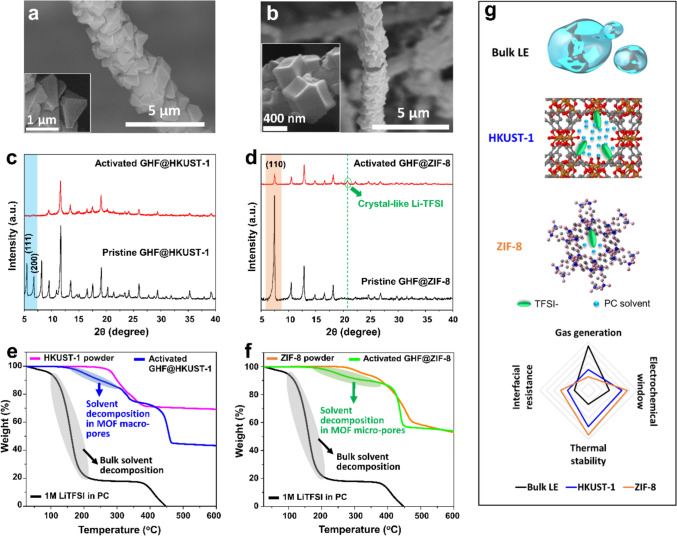 Figure 2
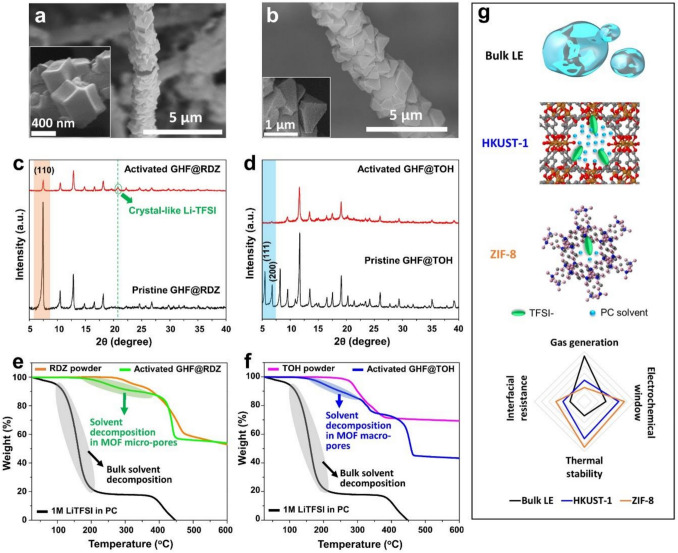 Figure 2
Peer Reviews
No public reviews on file for this paper yet. If you reviewed it on a platform where reviews are public (OpenReview, ICLR, NeurIPS, ICML), you can paste yours below so the community can read it here.
Videos
No videos yet. Explain this paper in a talk, walkthrough, or lecture? Add one.
Taxonomy
TopicsAdvanced Battery Materials and Technologies · Advancements in Battery Materials · Extraction and Separation Processes
Correction to: Nano-Micro Lett. (2026) 18:135 10.1007/s40820-025-01988-7
Following publication of the original article [1], the authors noticed that Fig. 2 was published with an incorrect panel order, which does not reflect the final intended version approved during the proof stage. As a result, the panel sequence in Fig. 2 is inconsistent with the figure caption and manuscript text. This issue is limited strictly to the order and labeling of the figure panels. The experimental data, scientific interpretation, results, and conclusions of the paper remain completely unchanged.
The correct Fig. 2 has been provided in this Correction.
The incorrect Fig. 2 is:
The correct Fig. 2 is:
Fig. 2. Morphologies of single MOFs grown on GHF and liquid electrolyte infiltration. SEM images of as-synthesized a truncated octahedral HKUST-1 and b rhombic dodecahedral ZIF-8 particles grown on GHF. XRD patterns of pristine and activated c GHF@HKUST-1 and d GHF@ ZIF-8. Thermogravimetric analysis (TGA) curves of activated e GHF@HKUST-1 and f GHF@ZIF-8 separators in comparison with the typical liquid electrolyte and corresponding MOF powders. While the conventional LE (1 M LiTFSI in PC) showed poor thermal stability (highlighted in gray), the activated MOF-based QSSEs exhibited significantly enhanced thermal stability. The activated GHF@ZIF-8 revealed a slower decomposition rate over a broader temperature range (marked in green) compared to activated GHF@HKUST-1 (marked in blue). g Schematic depiction of the limitations of conventional liquid electrolytes and the features of MOF-based semi-solid electrolytes with varying pore sizes
The original article [1] has been corrected.