Surgical management of petrous apex lesions: a descriptive analysis of outcomes by anatomical location for the Kawase, retrosigmoid, and pterional approaches
Tianyang Wu, Hao Lang, Meiqi Wu, Xialin Zheng, Shan Xie, Longjie Cai, Dongqi Shao, Yu Li, Zhiquan Jiang

TL;DR
This study analyzes surgical outcomes for petrous apex lesions based on anatomical location and approach, showing that specific approaches yield predictable results and risks.
Contribution
The study introduces a framework for surgical decision-making based on lesion anatomical location and approach-specific outcomes.
Findings
The Kawase approach achieved 100% gross total resection for anteromedial lesions but had longer operative time and higher infection risk.
The endoscope-assisted retrosigmoid approach provided good exposure with minimal trauma for posterior lesions.
The pterional approach for superoanterior lesions was linked to higher cranial nerve dysfunction and speech impairment rates.
Abstract
This study is a descriptive analysis that systematically delineates the perioperative outcome profiles of Kawase, endoscope-assisted retrosigmoid, and pterional approaches for resecting petrous apex lesions within the clinical decision-making framework of “anatomical location first.” A retrospective series of 27 patients was included. Based on the core anatomical location of the lesion, surgery was performed via the Kawase approach (anteromedial region, n = 14), the endoscope-assisted retrosigmoid approach (posterior region, n = 7), or the pterional approach (superoanterior region, n = 6). The results demonstrate that surgical approaches corresponding to different anatomical subregions exhibited characteristic outcome profiles. For anteromedial petrous apex lesions, the Kawase approach achieved a high gross total resection rate (100%), but was associated with longer operative time and a…
Genes, proteins, chemicals, diseases, species, mutations and cell lines named across the full text — each resolved to its canonical identifier and authoritative record.
Click any figure to enlarge with its caption.
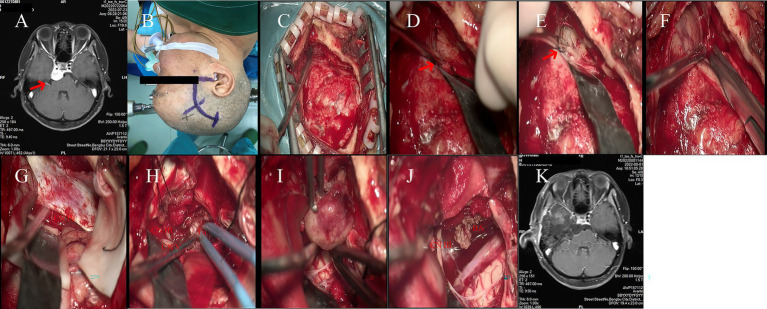 Figure 1
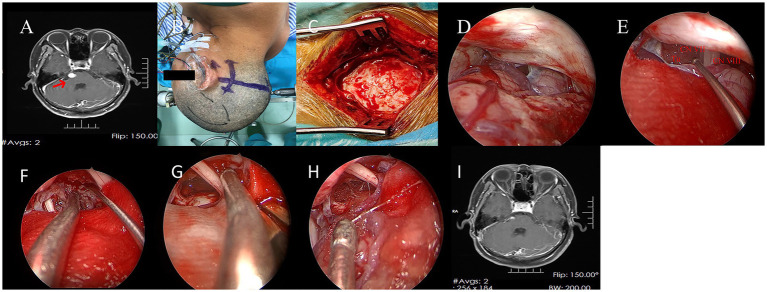 Figure 2
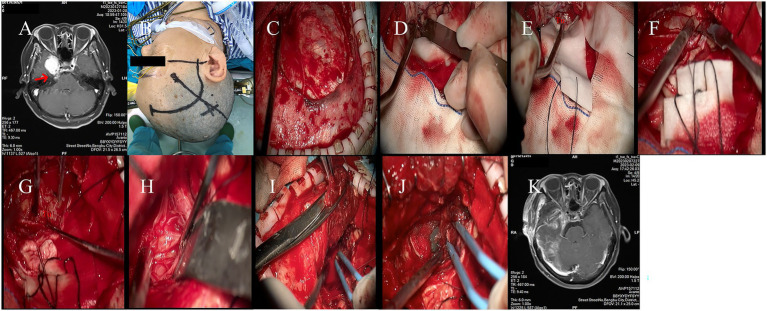 Figure 3
Peer Reviews
No public reviews on file for this paper yet. If you reviewed it on a platform where reviews are public (OpenReview, ICLR, NeurIPS, ICML), you can paste yours below so the community can read it here.
Videos
No videos yet. Explain this paper in a talk, walkthrough, or lecture? Add one.
Taxonomy
TopicsMeningioma and schwannoma management · Head and Neck Surgical Oncology · Ear Surgery and Otitis Media