The length of negative proximal resection margin does not significantly influence on the prognosis of Siewert type II adenocarcinoma of esophagogastric junction with or without neoadjuvant chemotherapy
Zhendan Yao, Maoxing Liu, Fei Tan, Ming Cui, Jiadi Xing, Chenghai Zhang, Hong Yang, Lei Chen, Kai Xu, Xiangqian Su

TL;DR
This study finds that the length of the proximal resection margin does not affect survival in Siewert type II esophagogastric junction cancer patients, regardless of chemotherapy use.
Contribution
The study is the first to show that PRM length does not impact prognosis in Siewert type II adenocarcinoma patients with or without chemotherapy.
Findings
Positive PRM status is linked to worse recurrence-free survival.
PRM length does not affect survival outcomes in patients with negative PRM.
No significant survival differences were found based on PRM length in either chemotherapy or surgery-only groups.
Abstract
Optimal length of proximal resection margin (PRM) for locally advanced Siewert type II adenocarcinoma of esophagogastric junction (AEG) remained undetermined. Especially, the relationship between PRM length after neoadjuvant chemotherapy (NAC) and survival were seldom reported. A total of 108 consecutive locally advanced Siewert type II AEG patients were enrolled. The clinicopathological characteristics, PRM length and survival outcomes were collected. Cox proportional hazard model was used to compare the hazard rates of survival and recurrence between patients with length above and below the cut-off value. Univariable and multivariable analyses were performed to analysis association between PRM length and prognosis. The mean PRM length was 13mm (range: 1–45 mm). PRM status was independent factor for recurrence-free survival (RFS) (HR 3.177, 95%CI 1.098-9.193, p = 0.033). 4 patients…
Genes, proteins, chemicals, diseases, species, mutations and cell lines named across the full text — each resolved to its canonical identifier and authoritative record.
Click any figure to enlarge with its caption.
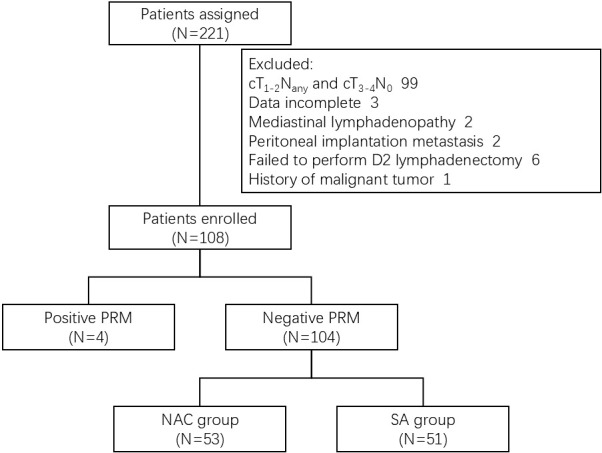 Figure 1
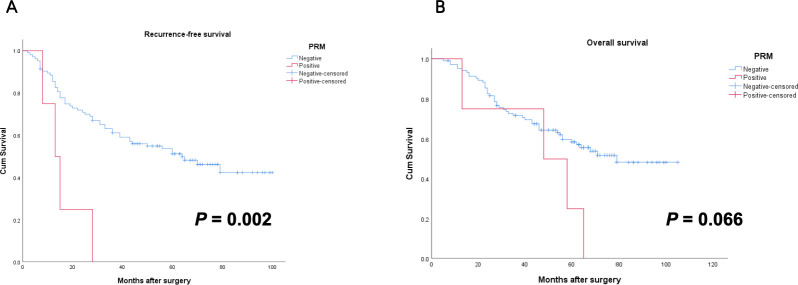 Figure 2
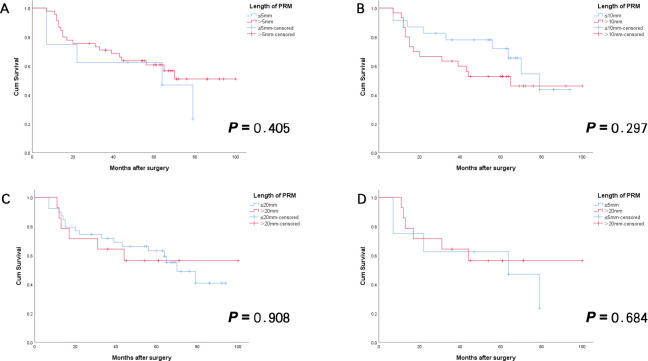 Figure 3
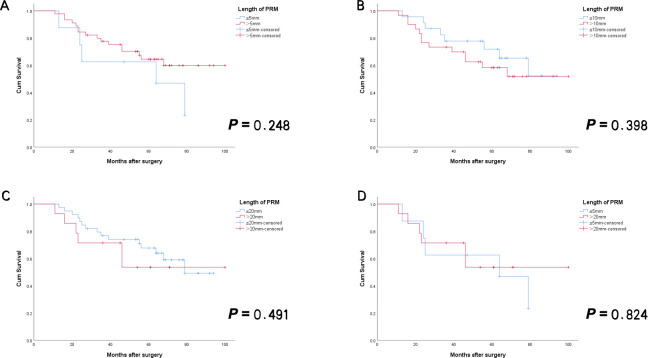 Figure 4
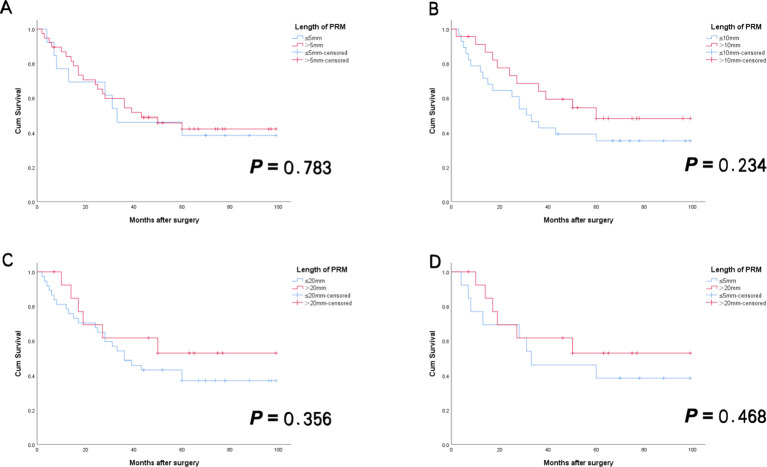 Figure 5
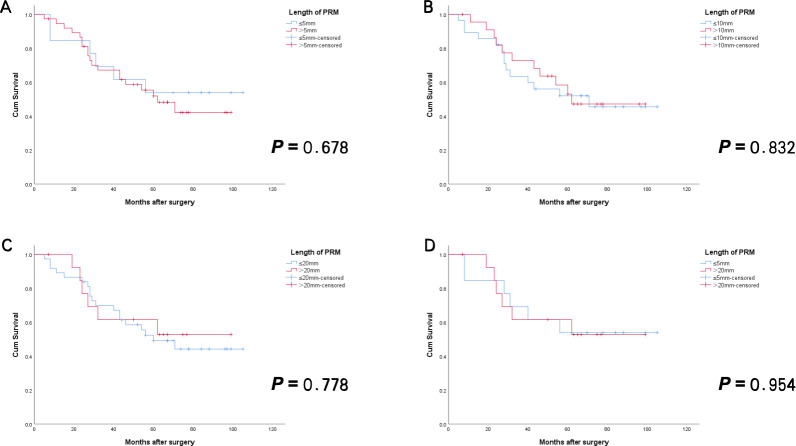 Figure 6
Peer Reviews
No public reviews on file for this paper yet. If you reviewed it on a platform where reviews are public (OpenReview, ICLR, NeurIPS, ICML), you can paste yours below so the community can read it here.
Videos
No videos yet. Explain this paper in a talk, walkthrough, or lecture? Add one.
Taxonomy
TopicsEsophageal Cancer Research and Treatment · Gastric Cancer Management and Outcomes · Gastrointestinal Tumor Research and Treatment