Sodium-glucose Co-transporter 2 (SGLT2) inhibitor dapagliflozin acutely activates cardiomyocyte HIF-1α signaling via succinate, a signaling metabolite
Tatsuyuki Sato, Takayuki Isagawa, Yuki Sugiura, Daigo Sawaki, Yu Nakagama, Takahiro Kuchimaru, Shun Minatsuki, Shigeru Sato, Kazutoshi Ono, Ariunbold Chuluun-Erdene, Hiroaki Semba, Masamichi Ito, Toshinaru Kawakami, Ryohei Tanaka, Masaya Sakamoto, Masataka Asagiri

TL;DR
This study shows that the SGLT2 inhibitor dapagliflozin activates HIF-1α signaling in heart cells through a metabolite called succinate, which may explain its benefits in heart failure.
Contribution
The study identifies a novel mechanism by which SGLT2 inhibitors may exert their effects via succinate-mediated HIF-1α activation in cardiomyocytes.
Findings
Short-term dapagliflozin treatment activates HIF-1α signaling in cardiomyocytes.
Ketone body-derived succinate accumulates in the heart and may stabilize HIF-1α.
Blocking ketone body metabolism with pimozide prevents dapagliflozin's activation of HIF-1α signaling.
Abstract
SGLT2 inhibitors are widely used to treat patients with chronic heart failure, and several studies have shown that the efficacy of SGLT2 inhibitors also extends to acute heart failure. However, the mechanisms remain unknown. Here, using knockout mice and pharmacological approaches, we show that short-term SGLT2 inhibitor treatment activates hypoxia-inducible factor-1α (HIF-1α) signaling in cardiomyocytes, and further pharmacological studies raised the possibility that this effect is mediated by ketone body-derived succinate. One week of Dapagliflozin administration upregulated the expression of HIF-1α target genes, and the effect was abolished in cardiomyocyte-specific HIF-1α knockout mice. Metabolome analysis and enzyme-based assays revealed that, following one week of short-term Dapagliflozin treatment, ketone body levels in the heart increased, leading to an accumulation of…
Genes, proteins, chemicals, diseases, species, mutations and cell lines named across the full text — each resolved to its canonical identifier and authoritative record.
Click any figure to enlarge with its caption.
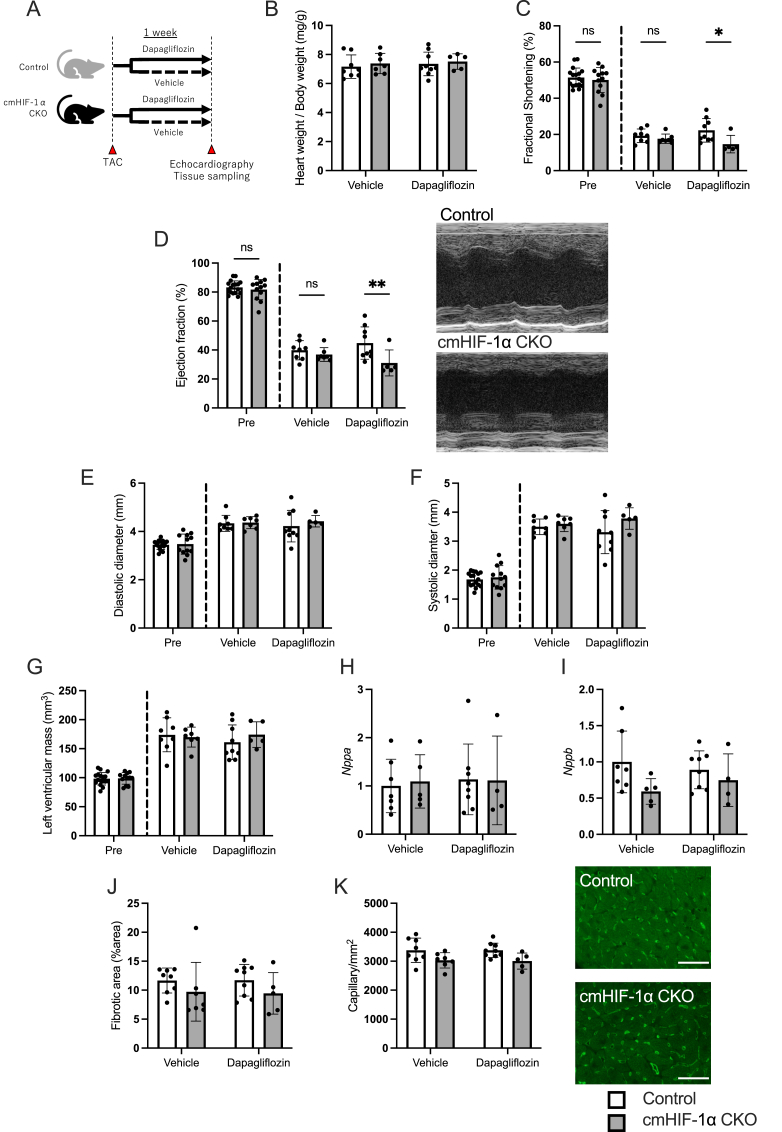 Figure 1
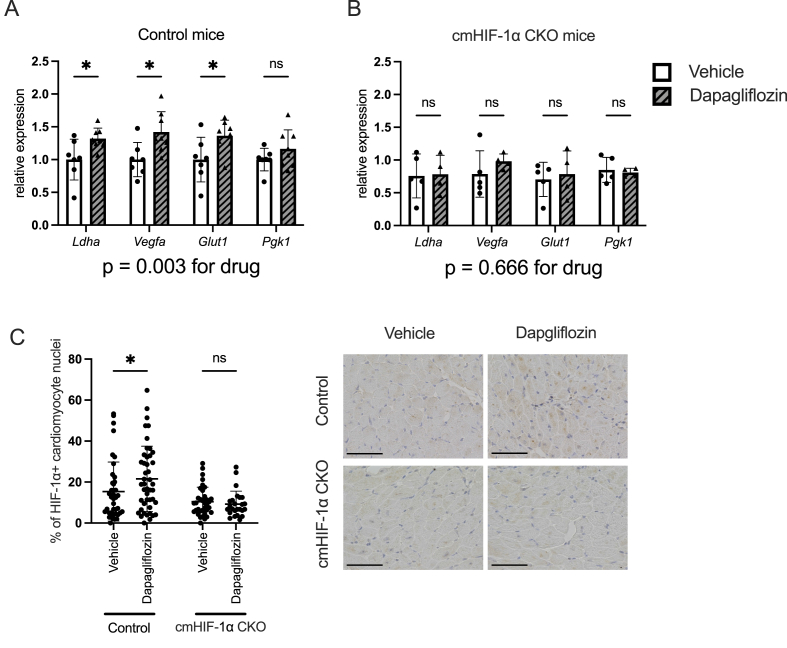 Figure 2
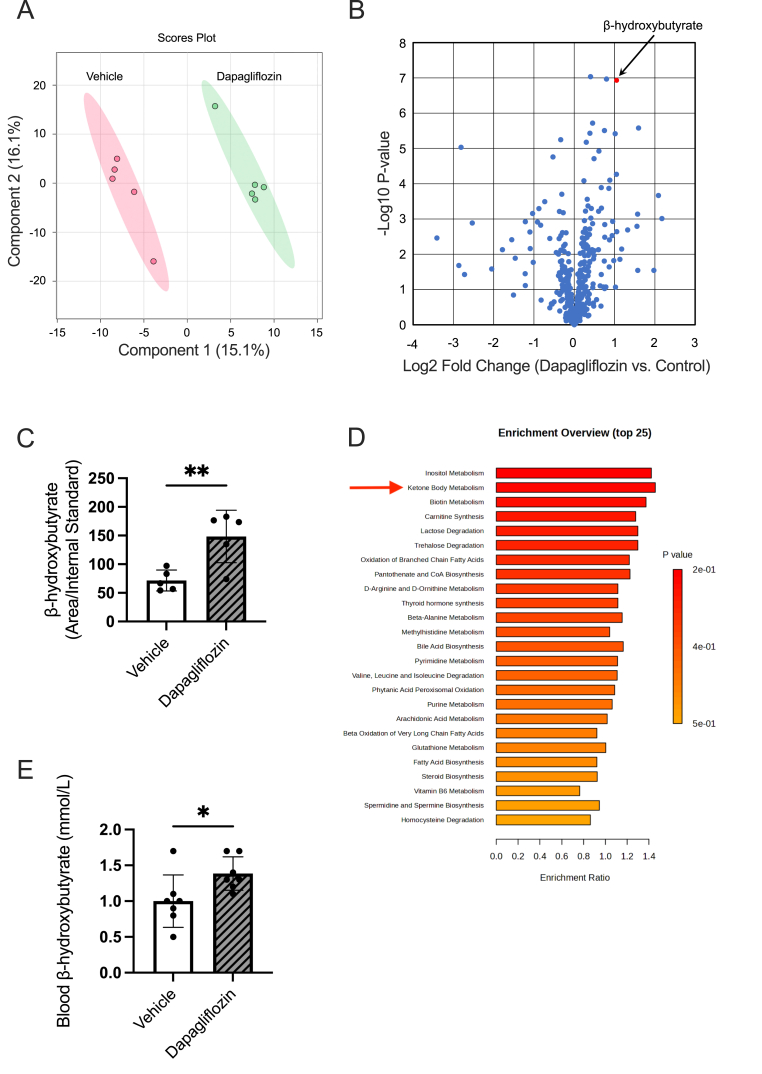 Figure 3
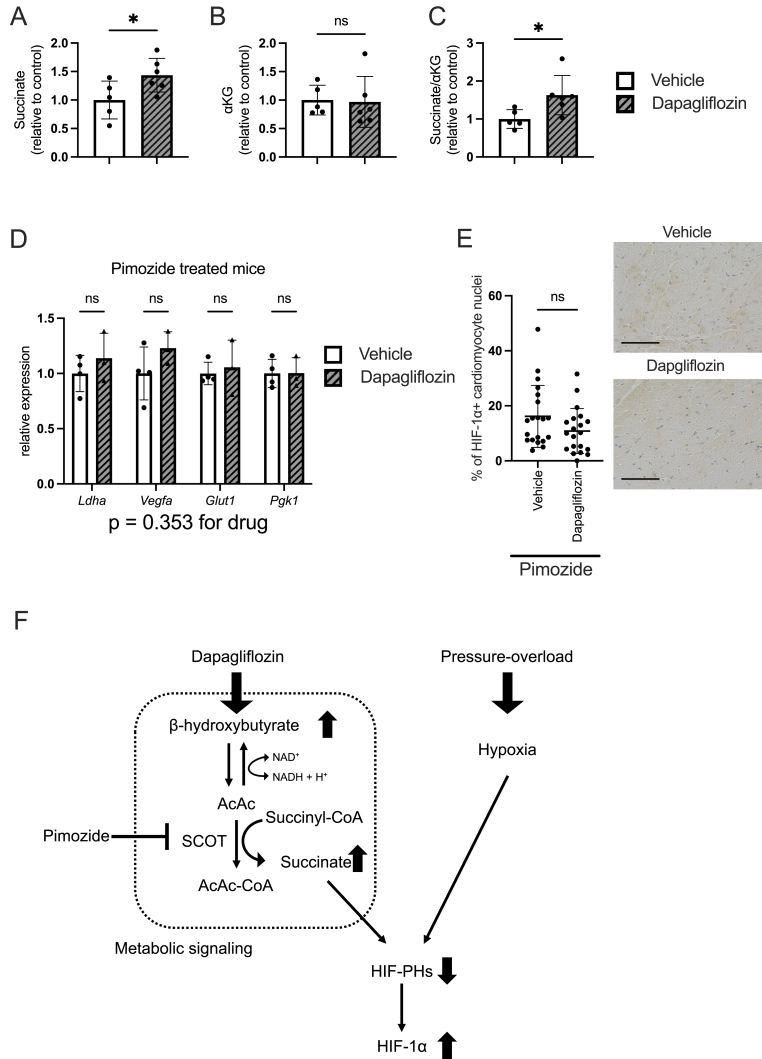 Figure 4
Peer Reviews
No public reviews on file for this paper yet. If you reviewed it on a platform where reviews are public (OpenReview, ICLR, NeurIPS, ICML), you can paste yours below so the community can read it here.
Videos
No videos yet. Explain this paper in a talk, walkthrough, or lecture? Add one.
Taxonomy
TopicsDiabetes Treatment and Management · Metabolism, Diabetes, and Cancer · Cancer, Hypoxia, and Metabolism