Differences in cognitive performance and neuroanatomy according to Alzheimer's disease pathophysiology
Isadora Cristina Ribeiro, Brenda Costa Gonçalves, Ítalo Karmann Aventurato, Marjorie Cristina Rocha da Silva, Liara Rizzi, Ana Luiza Gonçalves Rochetti, Gustavo Bruniera Peres Fernandes, Fernando Cendes, Marcio Luiz Figueredo Balthazar

TL;DR
This study explores how cognitive performance and brain structure differ among older adults with different Alzheimer's disease pathophysiology classifications.
Contribution
The study identifies cognitive differences between AT(N) classification groups and links memory to cortical thickness in the AD continuum group.
Findings
The suspected non-AD pathophysiology group performed worse in attention/executive function than the AD continuum and normal biomarkers groups.
Memory was associated with left fusiform gyrus thickness in the AD continuum group.
Cortical thickness did not differ significantly among the AT(N) classification groups.
Abstract
The diagnosis of predementia stages indicates an increased risk of progression to dementia. The Amyloid, Tau, and Neurodegeneration AT(N) classification considers measurements of altered proteins and the presence of neurodegeneration to classify the risk groups regarding the pathophysiology of Alzheimer's disease (AD). The cognitive and anatomical characteristics of the patients in the predementia stage according to the AT(N) classification are not fully understood. To investigate whether there are differences in the clinical and anatomical profiles among older adults in the predementia stage according to the ATN classification, and to investigate the associations involving cognition and cortical thickness and subcortical volume in the AT(N) groups. In total, 72 older adults with subjective cognitive decline and mild cognitive impairment were allocated to groups according to the AT(N)…
Genes, proteins, chemicals, diseases, species, mutations and cell lines named across the full text — each resolved to its canonical identifier and authoritative record.
Click any figure to enlarge with its caption.
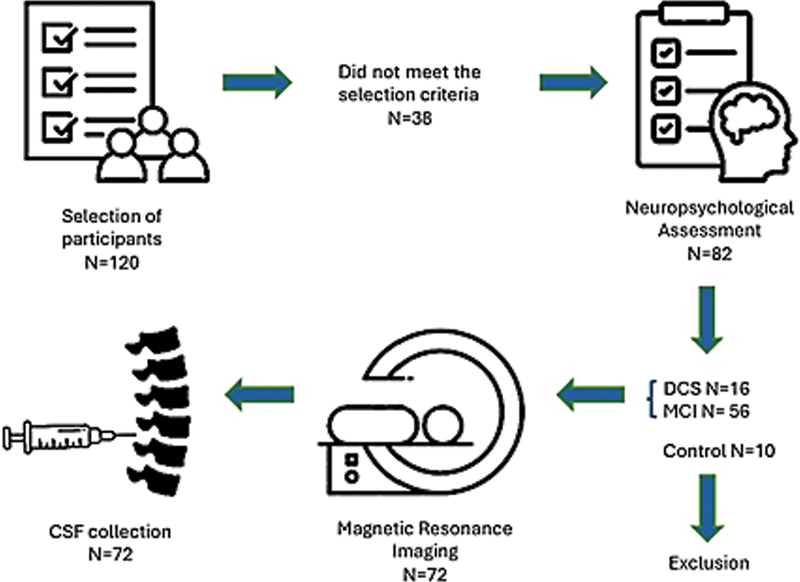 Figure 1
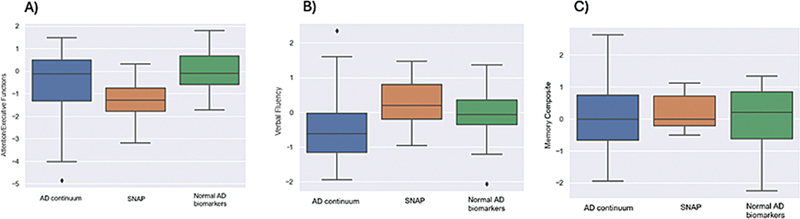 Figure 2
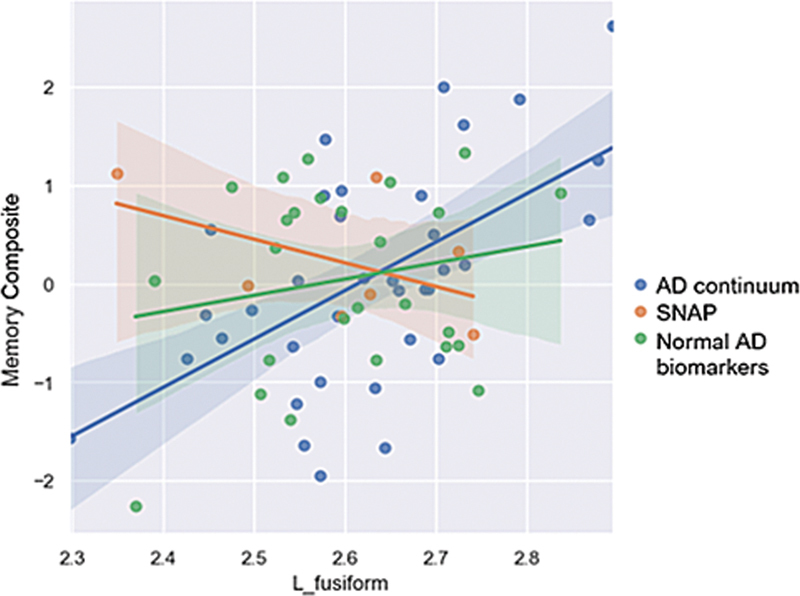 Figure 3
Peer Reviews
No public reviews on file for this paper yet. If you reviewed it on a platform where reviews are public (OpenReview, ICLR, NeurIPS, ICML), you can paste yours below so the community can read it here.
Videos
No videos yet. Explain this paper in a talk, walkthrough, or lecture? Add one.
Taxonomy
TopicsDementia and Cognitive Impairment Research · Alzheimer's disease research and treatments · Functional Brain Connectivity Studies