Audience-Specific Health Communication: Mixed Methods Evaluation of the Maria Ciência AI-Assisted Knowledge Translation Tool
Mariana Araújo-Pereira, Klauss Villalva-Serra Jr, Gustavo Pires-Ramos, Beatriz Sousa-Peres, Joanã Nascimento Conceição-Oliveira, Sarah Dourado Maiche, Rebeca Rebouças da Cunha Silva, Bruno de Bezerril Andrade

TL;DR
Maria Ciência is an AI tool that helps translate scientific research into accessible content for different audiences, improving health communication and reducing misinformation.
Contribution
Maria Ciência is a novel AI tool designed for science communication, using prompt engineering and inclusive language guidelines to produce audience-specific content.
Findings
Maria Ciência's outputs received high scores in clarity, language suitability, content quality, and level of detail.
Materials for children and the general public achieved the highest ratings across all criteria.
Maria Ciência's outputs were more accessible than human-written texts while maintaining high legibility.
Abstract
Scientific misinformation remains a major barrier to effective health communication. Bridging the gap between academic research and public understanding requires tools that simplify scientific language and adapt content to diverse audiences. This study presents Maria Ciência (LPCT-IGM), a specialized GPT-based assistant for science communication. The tool supports researchers in translating peer-reviewed scientific findings through simple prompts into accessible, ethically appropriate materials tailored for children, the general public, health professionals, and policymakers. The tool was configured using prompt engineering techniques and guided by curated reference materials on inclusive and nonstigmatizing scientific language. Materials derived from 47 public health papers resulted in 188 outputs, which were assessed by 121 evaluators using 4 criteria: clarity, level of detail,…
Genes, proteins, chemicals, diseases, species, mutations and cell lines named across the full text — each resolved to its canonical identifier and authoritative record.
Click any figure to enlarge with its caption.
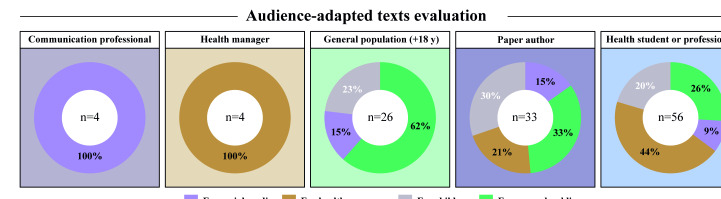 Figure 1
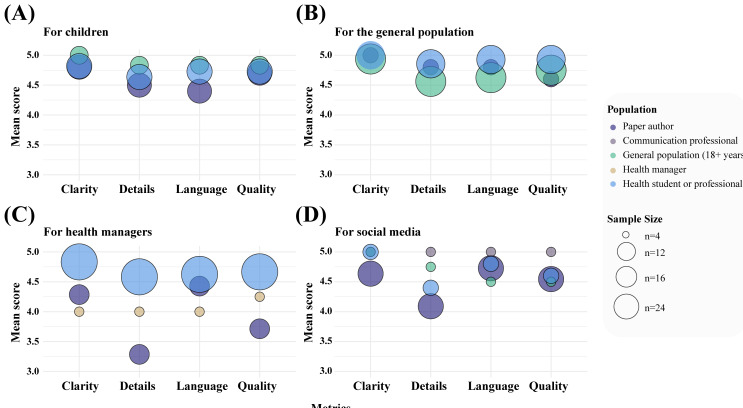 Figure 2
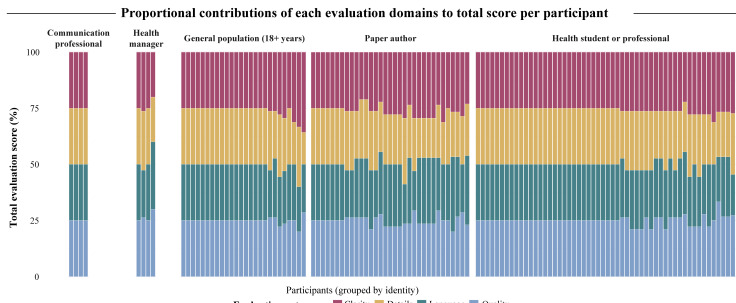 Figure 3
Peer Reviews
No public reviews on file for this paper yet. If you reviewed it on a platform where reviews are public (OpenReview, ICLR, NeurIPS, ICML), you can paste yours below so the community can read it here.
Videos
No videos yet. Explain this paper in a talk, walkthrough, or lecture? Add one.
Taxonomy
TopicsArtificial Intelligence in Healthcare and Education · Media and Communication Studies · COVID-19 diagnosis using AI