An AI-Driven Virtual Patient Platform (CBT Trainer) for Training Cognitive Behavioral Therapy Practitioners Against Competencies: Mixed Methods Pilot Study
Tianyu Terry Zhang, Rob Saunders, Stephen Pilling, Ciarán O'Driscoll

TL;DR
A new AI-based virtual patient platform called CBT Trainer was tested as a tool to train cognitive behavioral therapy practitioners, showing promise in improving skills through real-time feedback and accessible practice.
Contribution
The CBT Trainer is the first virtual patient platform to provide real-time feedback aligned with established CBT competence frameworks.
Findings
Participants engaged with the platform for an average of 95 minutes and rated platform usability as excellent (mean SUS score of 82.20).
Self-reported improvements were highest in assessment skills (96.7%) and information gathering (66.7%).
Qualitative feedback highlighted strengths in competency-aligned feedback and a psychologically safe practice space.
Abstract
Cognitive behavioral therapy (CBT) training faces significant challenges, including supervised practice with diverse cases, inconsistent feedback, resource-intensive supervision, and difficulties standardizing competence assessment. This study evaluated the acceptability and feasibility of CBT Trainer (TTZ), the first virtual patient platform to provide real-time feedback aligned with established competence frameworks. The mobile app trains psychological practitioners using standardized artificial intelligence patient interactions and the evaluation of therapist responses against competence frameworks to enable structured skill development in a controlled, repeatable environment that complements traditional training methods. This mixed methods pilot study used a 2-stage approach. Stage 1 involved usability testing with 4 participants. Stage 2 included 59 participants from…
Genes, proteins, chemicals, diseases, species, mutations and cell lines named across the full text — each resolved to its canonical identifier and authoritative record.
Click any figure to enlarge with its caption.
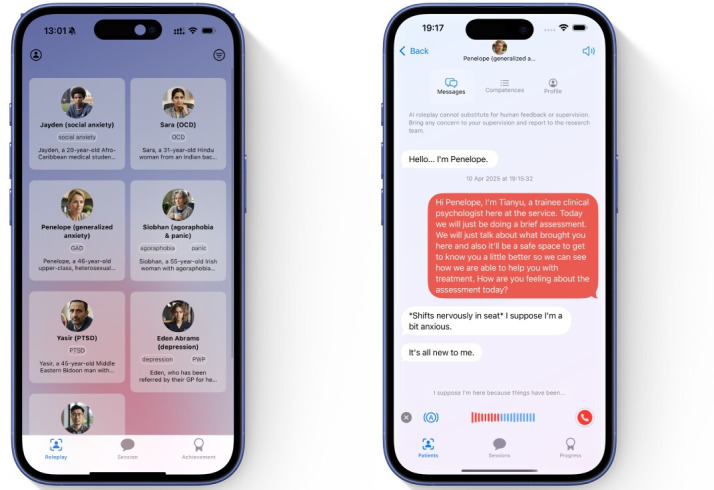 Figure 1
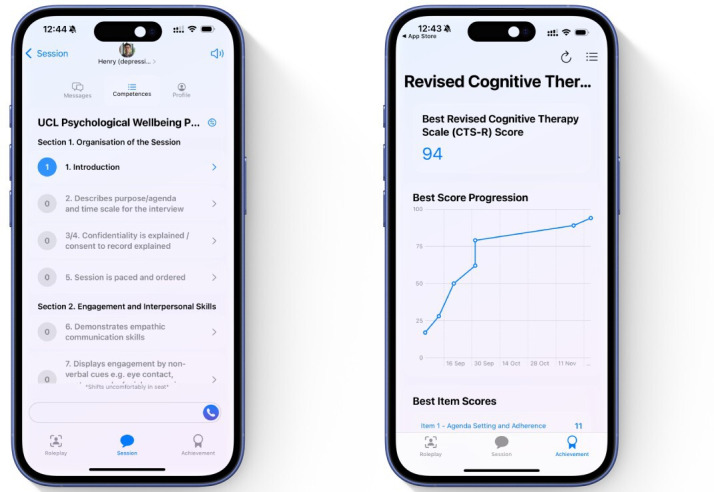 Figure 2
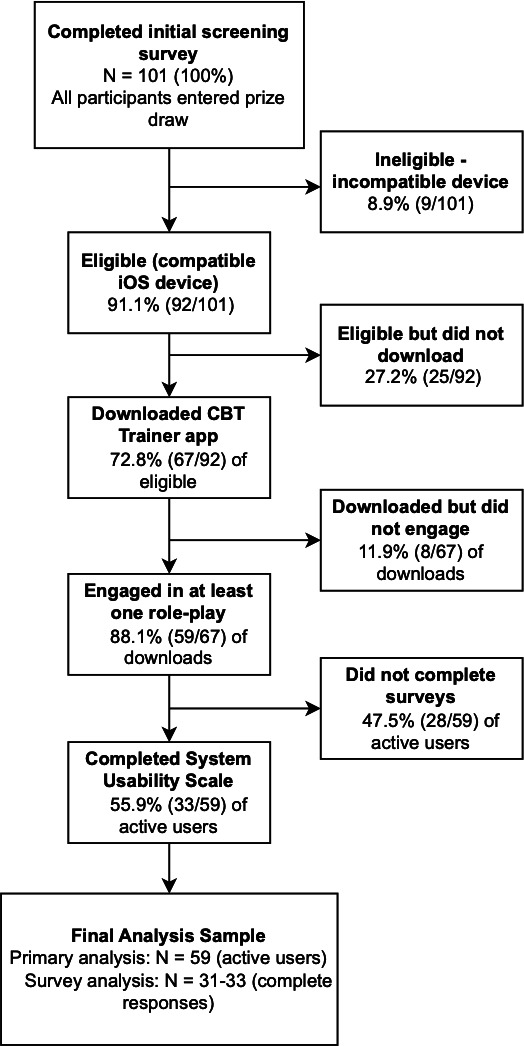 Figure 3
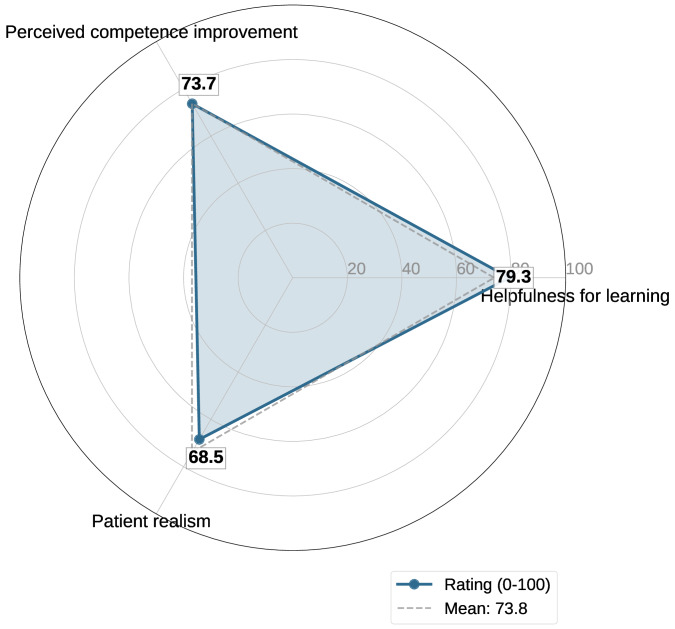 Figure 4
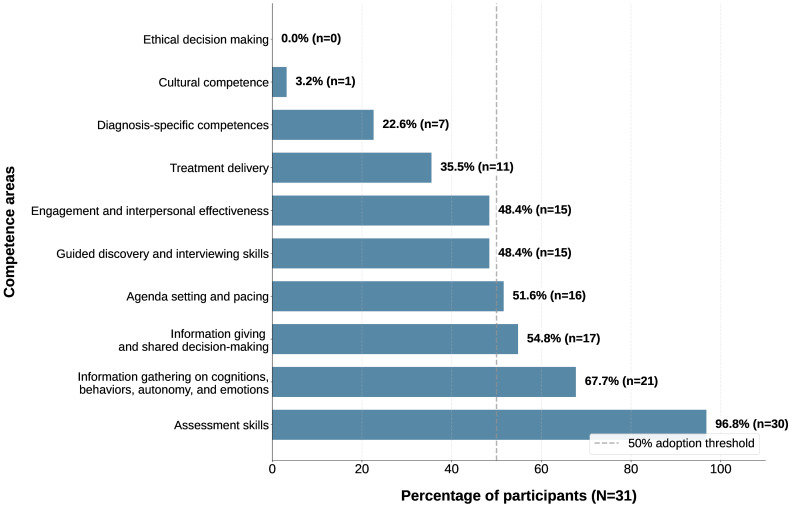 Figure 5
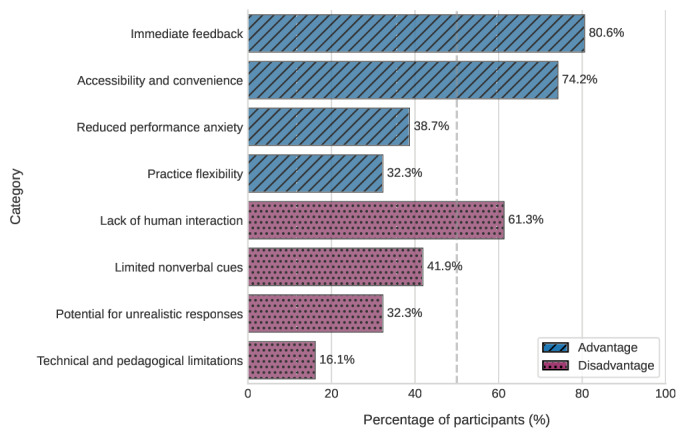 Figure 6
Peer Reviews
No public reviews on file for this paper yet. If you reviewed it on a platform where reviews are public (OpenReview, ICLR, NeurIPS, ICML), you can paste yours below so the community can read it here.
Videos
No videos yet. Explain this paper in a talk, walkthrough, or lecture? Add one.
Taxonomy
TopicsArtificial Intelligence in Healthcare and Education · Digital Mental Health Interventions · AI in Service Interactions