Design and Performance of an Email-Based Patient Recruitment Campaign in Primary Care Research: Formative Secondary Analysis
Vanessa T Vaillancourt, Marie-Dominique Poirier, Amélie Fournier, Sabrina T Wong, Marie-Eve Poitras

TL;DR
This study analyzed an email campaign to recruit primary care patients for research, finding it to be a feasible and low-burden method with useful insights for improving digital recruitment strategies.
Contribution
The study provides empirical evidence on the design and performance of email-based recruitment in primary care research.
Findings
Email-based recruitment achieved a 96.6% delivery rate and a 9.7% conversion rate for survey participation.
Reminder emails significantly increased participation, with 66.7% of participants joining after reminders.
Most emails were opened on computers, and engagement was highest for the survey link compared to supplementary content.
Abstract
Recruiting patients in primary care research remains challenging due to clinical workload, staffing constraints, and the need to limit disruption to routine care. Traditional recruitment methods often place a substantial burden on clinics, prompting research teams to adopt low-burden and scalable approaches such as email-based recruitment. Despite its growing use, limited empirical evidence describes how email recruitment campaigns are designed and how they perform when targeting primary care patients in real-world settings. This study aims to descriptively examine engagement metrics from an email recruitment campaign targeting primary care patients. We conducted a formative, descriptive secondary analysis of engagement metrics generated during a large-scale email recruitment campaign conducted as part of the Quebec component of the Patient-Reported Indicator Survey-Organisation for…
Genes, proteins, chemicals, diseases, species, mutations and cell lines named across the full text — each resolved to its canonical identifier and authoritative record.
Click any figure to enlarge with its caption.
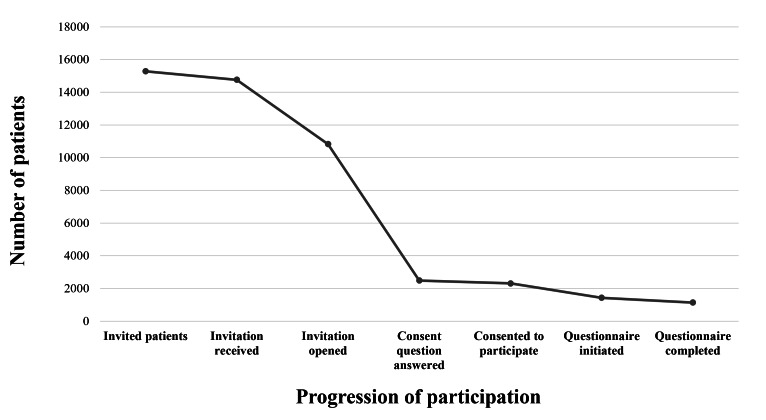 Figure 1
Peer Reviews
No public reviews on file for this paper yet. If you reviewed it on a platform where reviews are public (OpenReview, ICLR, NeurIPS, ICML), you can paste yours below so the community can read it here.
Videos
No videos yet. Explain this paper in a talk, walkthrough, or lecture? Add one.
Taxonomy
TopicsHealth Literacy and Information Accessibility · Mobile Health and mHealth Applications · Social Media in Health Education