Enhancing Detection of Message Intents in a Mobile Health Smoking-Cessation Intervention Using Large Language Model Fine-Tuning, Data Downsampling, and Error Correction: Algorithm Development and Validation
Shagoto Rahman, Cornelia (Connie) Pechmann, Ian G Harris

TL;DR
This paper develops an AI chatbot for smoking cessation by improving intent detection using large language models, data balancing, and error correction.
Contribution
A novel AI method combining fine-tuning, downsampling, and error correction to enhance intent detection in mobile health interventions.
Findings
Fine-tuning improved F1-scores from 0.38 to 0.80 on a downsampled dataset.
Downsampling and error correction together achieved 0.86 unweighted F1-score.
Automated downsampling alone may be sufficient for performance improvement.
Abstract
Although smoking-cessation aids such as support groups and nicotine replacement therapy (NRT) can help people quit, quit rates remain low. Mobile health interventions can boost accessibility and engagement, especially with NRT, but require ongoing effort to deliver timely responses. Accurate intent detection is crucial for identifying user needs and delivering timely, appropriate chatbot responses. Recent large language model advancements in natural language processing and artificial intelligence (AI) have shown promise. However, these systems often struggle with many intent categories, complex language, and imbalanced data, reducing recognition accuracy. The main goal of this study was to develop an AI tool, a large language model that could accurately detect people’s message intents, despite dataset imbalances and complexities. In our application, the messages came from a…
Genes, proteins, chemicals, diseases, species, mutations and cell lines named across the full text — each resolved to its canonical identifier and authoritative record.
Click any figure to enlarge with its caption.
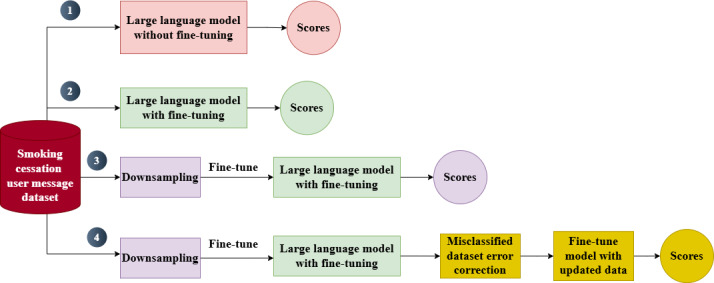 Figure 1
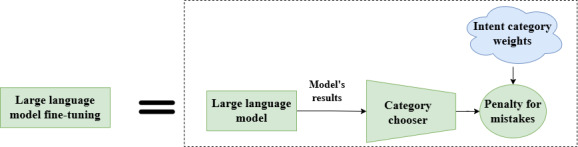 Figure 2
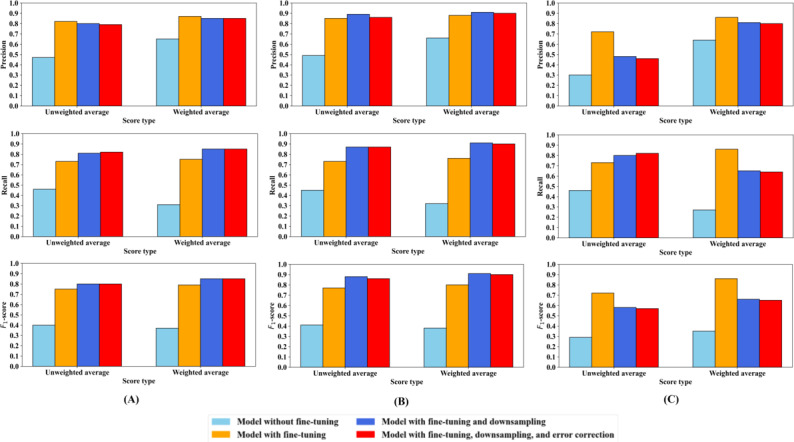 Figure 3
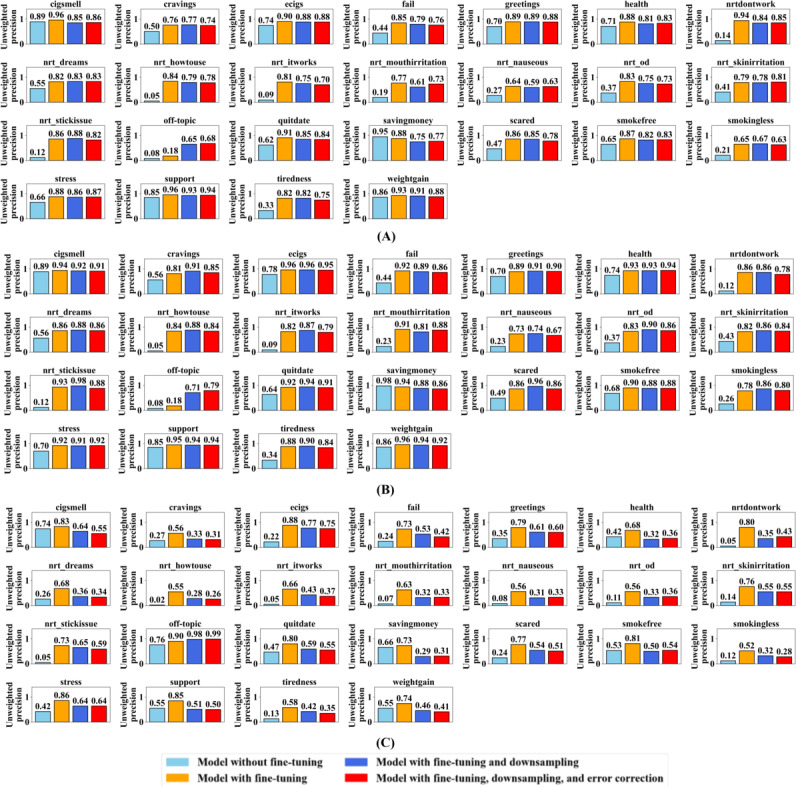 Figure 4
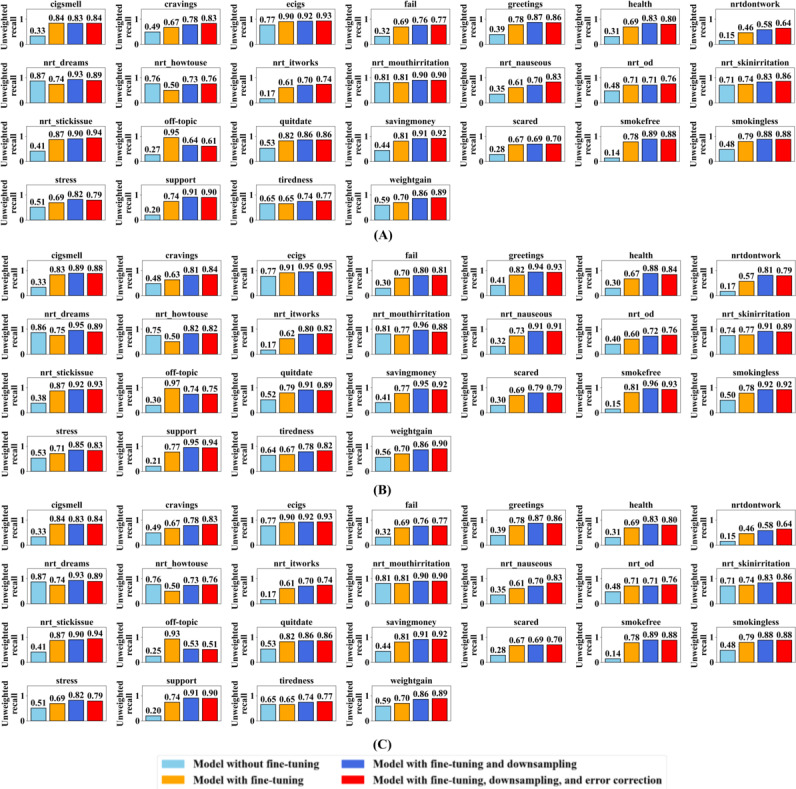 Figure 5
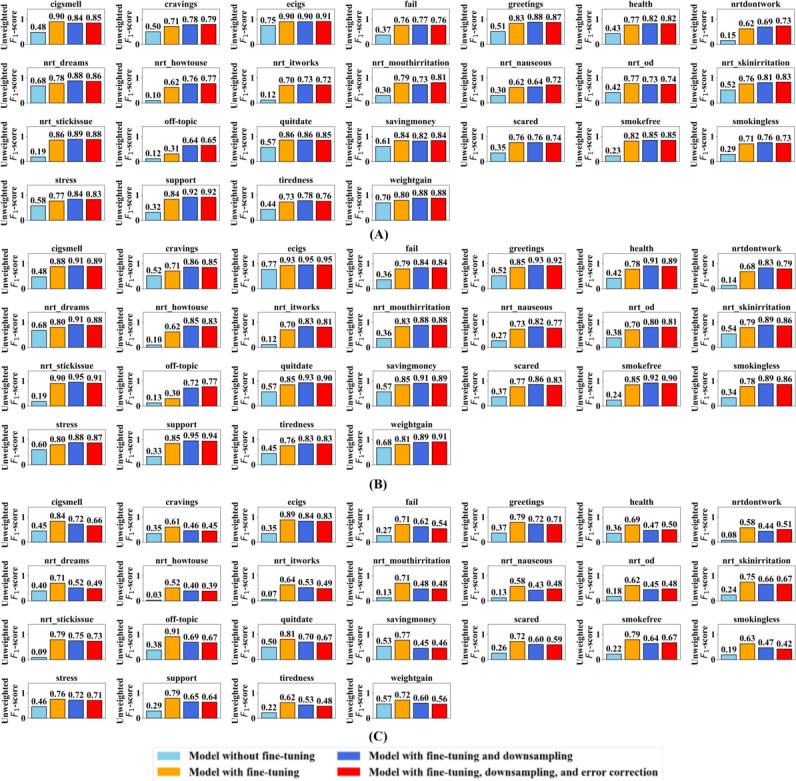 Figure 6
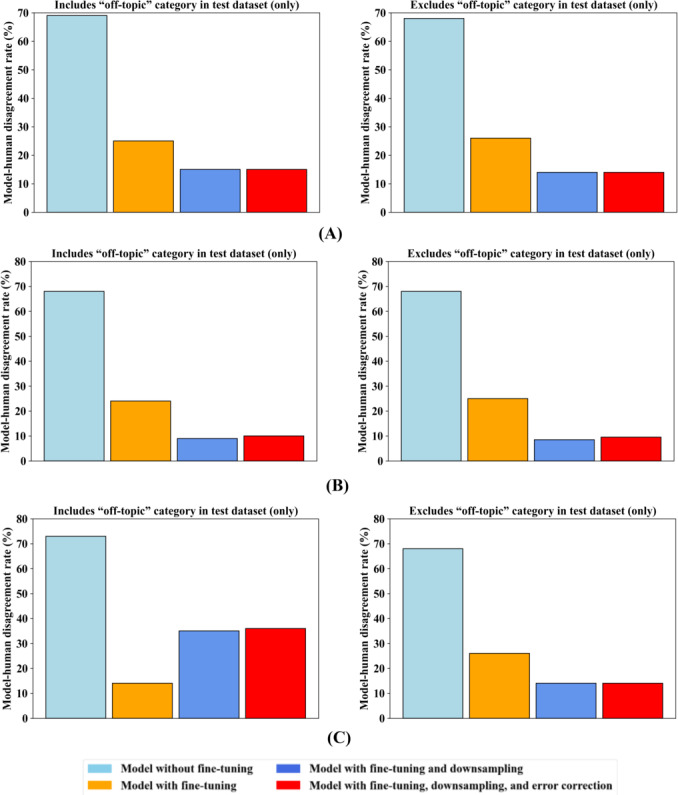 Figure 7
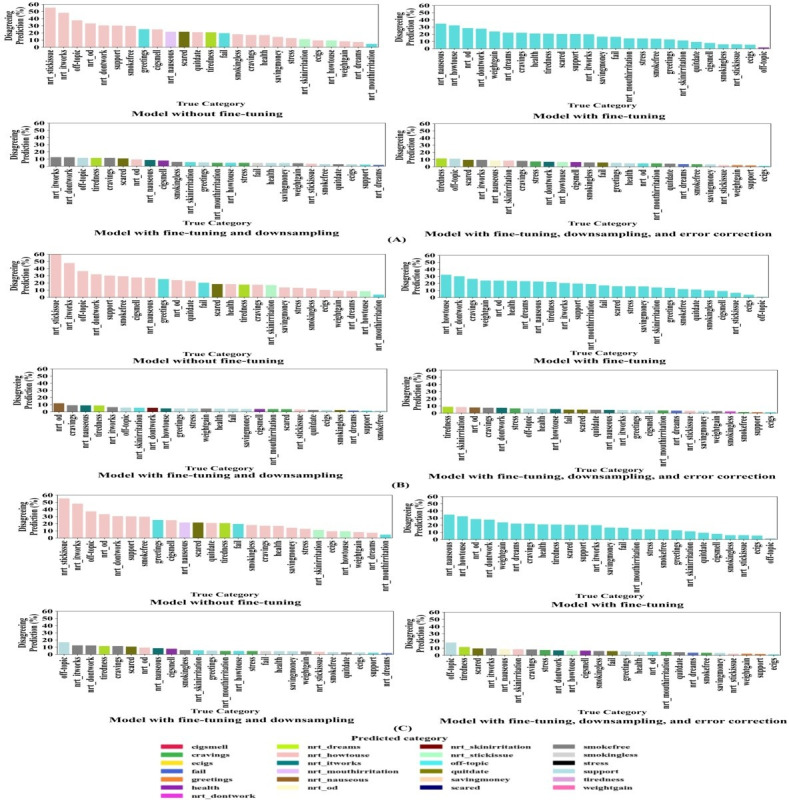 Figure 8
Peer Reviews
No public reviews on file for this paper yet. If you reviewed it on a platform where reviews are public (OpenReview, ICLR, NeurIPS, ICML), you can paste yours below so the community can read it here.
Videos
No videos yet. Explain this paper in a talk, walkthrough, or lecture? Add one.
Taxonomy
TopicsDigital Mental Health Interventions · Mental Health via Writing · Mobile Health and mHealth Applications