Developing and Validating a Machine Learning Algorithm to Predict the Risk of Incident Opioid Use Disorder Among OneFlorida+ Patients: Prognostic Modeling Study
Jabed Al Faysal, Weihsuan Lo-Ciganic, Walid F Gellad, Yonghui Wu, Christopher A Harle, Khoa Nguyen, James L Huang, Gerald Cochran, Debbie L Wilson, Stephanie AS Staras, Siegfried OF Schmidt, Eric I Rosenberg, Danielle Nelson, Shunhua Yan, Gary M Reisfield, William M Greene

TL;DR
This study developed a machine learning model using electronic health records to predict the risk of opioid use disorder in patients starting opioid therapy, which could help in early prevention efforts.
Contribution
The novel contribution is the development and validation of a high-performing machine learning model for predicting opioid use disorder risk using EHR data.
Findings
The GBM model achieved a C-statistic of 0.879 in predicting 3-month incident Opioid Use Disorder risk.
The top decile of patients predicted by the model captured ~68% of those who developed OUD.
The model demonstrated acceptable fairness across race, age, and sex with a low false negative rate.
Abstract
Opioid use disorder (OUD) remains a critical public health crisis in the United States. Despite widespread policy and clinical interventions, early identification of individuals at risk for developing OUD remains challenging due to limitations in traditional screening approaches and a lack of individualized risk stratification methods. Machine learning (ML) methods offer an opportunity to develop timely, high-performing, and explainable predictive models that can enhance OUD prevention strategies in clinical settings. This study aims to develop and validate an ML model using electronic health record (EHR) data to predict the 3-month risk of incident OUD among adults initiating opioid therapy and to stratify patients into clinically actionable risk groups. This prognostic modeling study used 2017‐2022 OneFlorida+ EHR data to develop and validate ML algorithms predicting 3-month…
Genes, proteins, chemicals, diseases, species, mutations and cell lines named across the full text — each resolved to its canonical identifier and authoritative record.
Click any figure to enlarge with its caption.
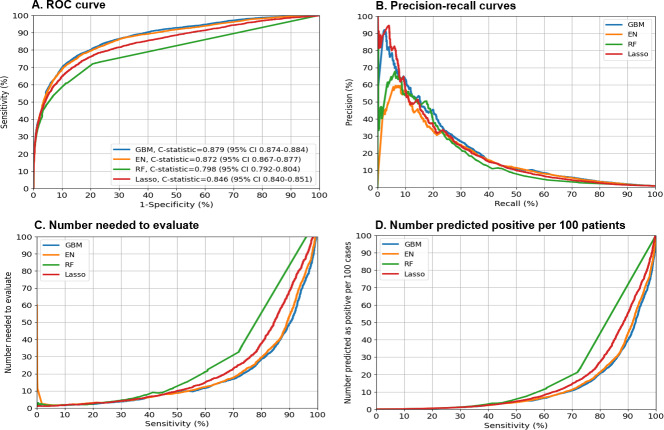 Figure 1
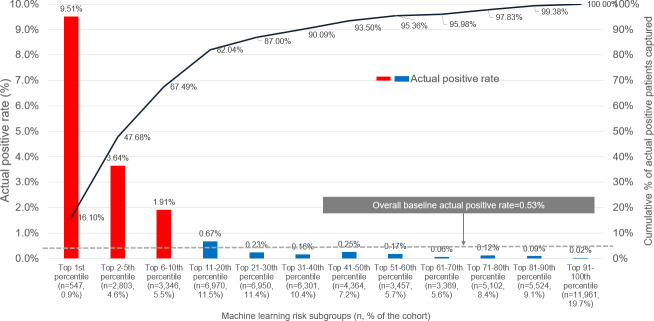 Figure 2
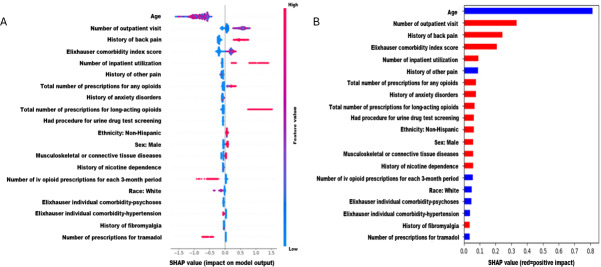 Figure 3
Peer Reviews
No public reviews on file for this paper yet. If you reviewed it on a platform where reviews are public (OpenReview, ICLR, NeurIPS, ICML), you can paste yours below so the community can read it here.
Videos
No videos yet. Explain this paper in a talk, walkthrough, or lecture? Add one.
Taxonomy
TopicsOpioid Use Disorder Treatment · Pain Management and Opioid Use · Substance Abuse Treatment and Outcomes