Multiscale Threats Shape the Occurrence Dynamics of a Threatened Aquatic Salamander and Reveal a Possible Extinction Debt
Eric W. Teitsworth, Jeffrey G. Hall, Jennifer M. Archambault, W. Jeffrey Humphries, Krishna Pacifici

TL;DR
This study examines how habitat quality, land use, and drought affect the threatened Neuse River Waterdog, revealing potential extinction risks in urban areas.
Contribution
The study introduces a novel application of dynamic occupancy models to assess extinction debt in a threatened aquatic salamander.
Findings
Habitat quality and developed land cover significantly influence the Neuse River Waterdog's occurrence dynamics.
Urban subpopulations show higher turnover and lower equilibrium occupancy, indicating an extinction debt.
Drought events may accelerate extinction risks in vulnerable subpopulations.
Abstract
Freshwater ecosystems are impacted by anthropogenic stressors, resulting in roughly one‐third of freshwater fauna being threatened with extinction. The Neuse River Waterdog ( Necturus lewisi ) is a large aquatic salamander endemic to the Neuse and Tar‐Pamlico River basins of eastern North Carolina, USA, and it was listed as threatened under the federal Endangered Species Act in 2021. Habitat degradation has been identified as the dominant threat driving N. lewisi occurrence, and its effect may be delayed. The USFWS Draft Recovery Plan classified investigation into the species' occurrence dynamics (colonization/extinction) as a high priority action. We hypothesized that extinction probabilities would decrease in high quality local instream habitats, increase with high proportions of disturbed land cover in the contributing watershed, and increase in years with intense droughts. We…
Genes, proteins, chemicals, diseases, species, mutations and cell lines named across the full text — each resolved to its canonical identifier and authoritative record.
Click any figure to enlarge with its caption.
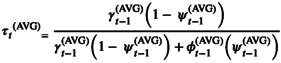 Figure 1
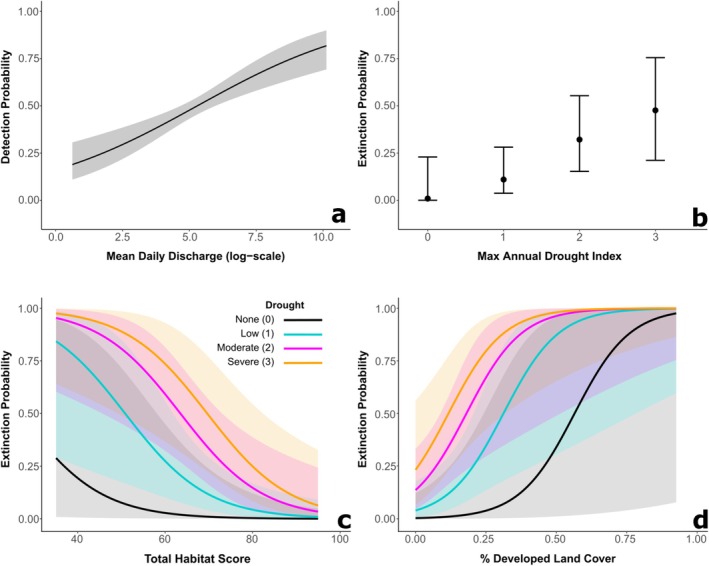 Figure 2
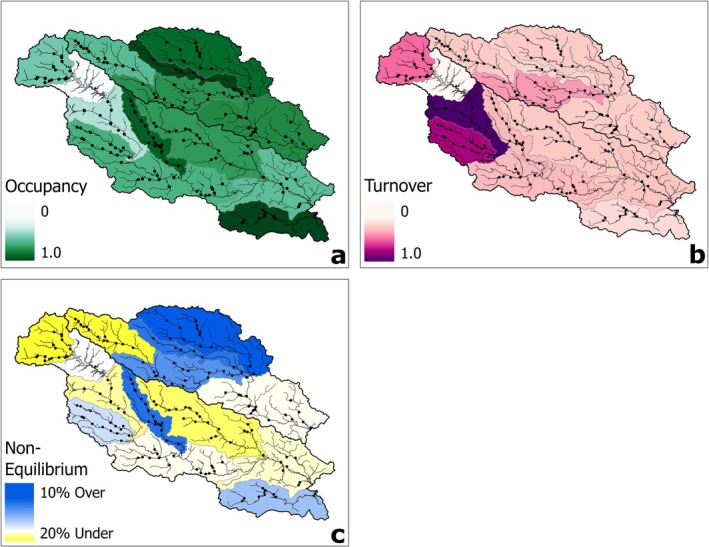 Figure 3
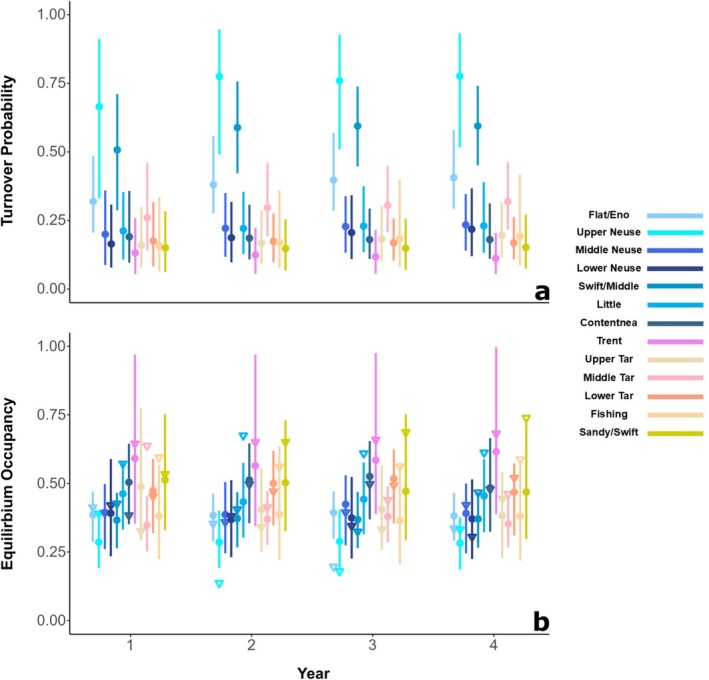 Figure 4
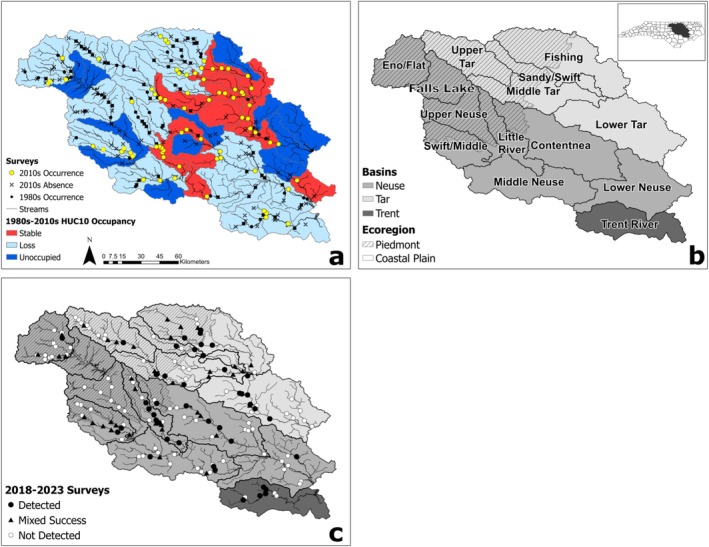 Figure 5
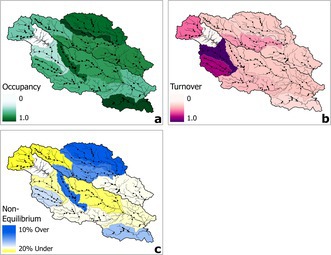 Figure 6
Peer Reviews
No public reviews on file for this paper yet. If you reviewed it on a platform where reviews are public (OpenReview, ICLR, NeurIPS, ICML), you can paste yours below so the community can read it here.
Videos
No videos yet. Explain this paper in a talk, walkthrough, or lecture? Add one.
Taxonomy
TopicsAmphibian and Reptile Biology · Freshwater macroinvertebrate diversity and ecology · Environmental DNA in Biodiversity Studies