Accuracy of site versus core laboratory interpretations of right heart catheterization hemodynamics
Omar Cantu-Martinez, Marat Fudim, David F. Kong, Ryan J. Tedford, Philip G. Jones, Andrew J. Sauer, Timothy J. Fendler, John A. Spertus

TL;DR
This study compares how accurately different sites and a central lab interpret heart catheterization measurements for heart failure and lung pressure.
Contribution
The study evaluates concordance and variability in RHC hemodynamic interpretations between sites and a core laboratory.
Findings
Site and core laboratory interpretations of RHC hemodynamics showed variability.
Concordance between site and core laboratory interpretations was evaluated for heart failure and pulmonary hypertension management.
Abstract
An accurate interpretation of hemodynamics measured by right heart catheterization (RHC) is crucial for guiding the management of heart failure and pulmonary hypertension. We evaluated the concordance and variability between site-reported and core laboratory-adjudicated interpretations of invasive hemodynamic measurements.
Genes, proteins, chemicals, diseases, species, mutations and cell lines named across the full text — each resolved to its canonical identifier and authoritative record.
Click any figure to enlarge with its caption.
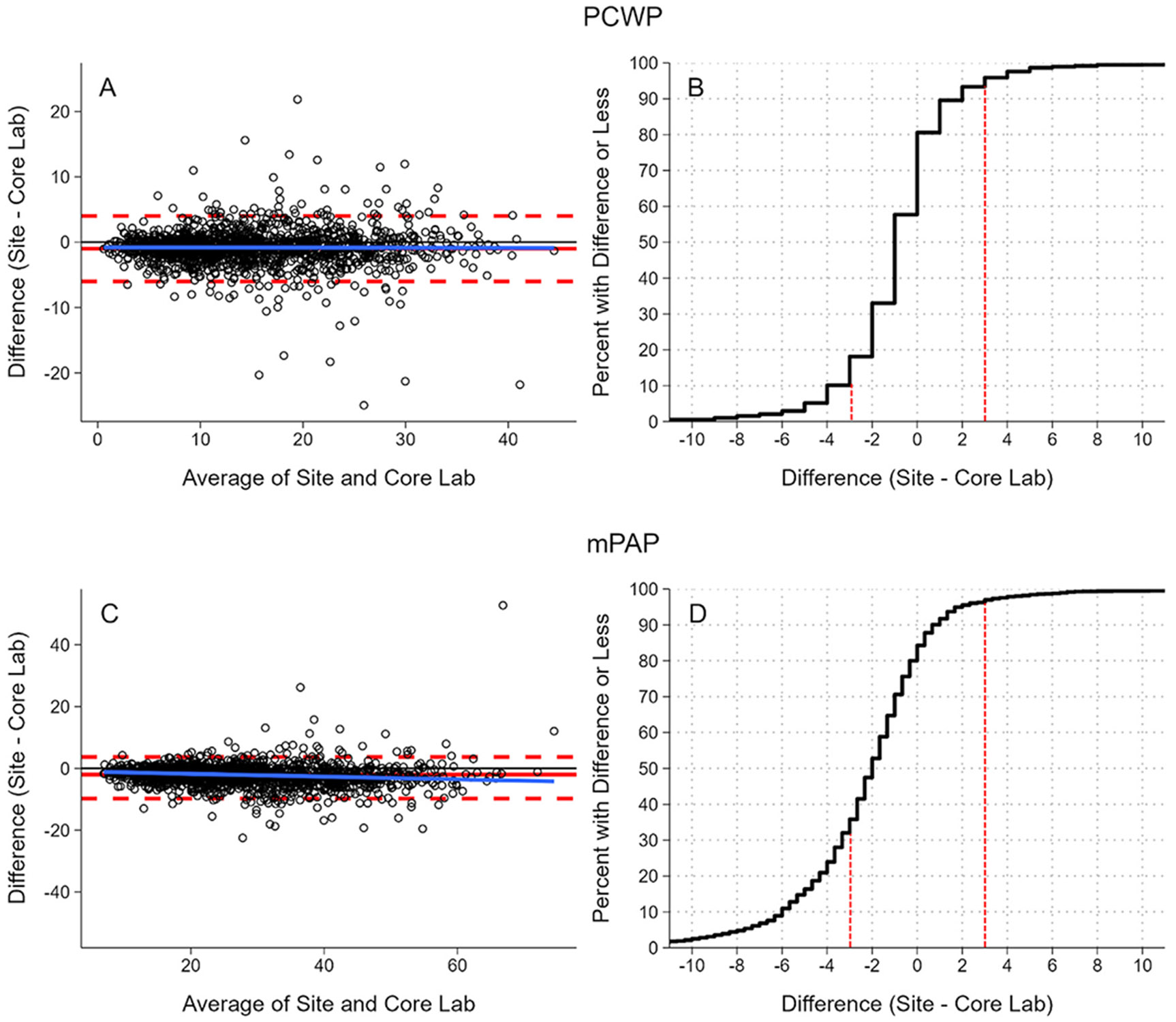 Figure 1
Peer Reviews
No public reviews on file for this paper yet. If you reviewed it on a platform where reviews are public (OpenReview, ICLR, NeurIPS, ICML), you can paste yours below so the community can read it here.
Videos
No videos yet. Explain this paper in a talk, walkthrough, or lecture? Add one.
Taxonomy
TopicsHemodynamic Monitoring and Therapy · Pulmonary Hypertension Research and Treatments · Cardiovascular Function and Risk Factors