Random subspace-based ensemble classifier for high-dimensional data Using SPARK
Venkaiah Chowdary Bhimineni, Rajiv Senapati, Razieh Sheikhpour, Razieh Sheikhpour, Razieh Sheikhpour

TL;DR
This paper introduces a new ensemble classifier for high-dimensional data using Spark, which improves accuracy and scalability.
Contribution
A novel ensemble classifier (ISSBEC) is proposed with feature fusion and improved clustering for high-dimensional data.
Findings
ISSBEC improves accuracy and robustness in high-dimensional classification.
The framework uses IDFC and SVM-MRFE for efficient data partitioning and feature selection.
Experimental results show ISSBEC outperforms existing methods in performance metrics.
Abstract
High-dimensional data classification remains challenging for machine learning models due to sparsity and overfitting caused by the ‘curse of dimensionality‘. As the number of features increases, data points become sparse, hindering generalization in classification and leading to higher computational costs and reduced accuracy. To address these issues, we propose an ensemble classifier based on random subspaces implemented in the Spark framework. The proposed framework comprises three key stages. First, the high-dimensional data is normalised through min-max normalisation. Second, the master node partitions the data by using improved deep fuzzy clustering (IDFC). In contrast, the slave node applies support vector machine-modified recursive feature elimination (SVM-MRFE) for efficient feature selection, followed by feature fusion. Finally, we introduced an improved subspace-based ensemble…
Genes, proteins, chemicals, diseases, species, mutations and cell lines named across the full text — each resolved to its canonical identifier and authoritative record.
Click any figure to enlarge with its caption.
 Figure 1
 Figure 2
 Figure 3
 Figure 4
 Figure 5
 Figure 6
 Figure 7
 Figure 8
 Figure 9
 Figure 10
 Figure 11
 Figure 12
 Figure 13
 Figure 14
 Figure 15
 Figure 16
 Figure 17
 Figure 18
 Figure 19
 Figure 20
 Figure 21
 Figure 22
 Figure 23
 Figure 24
 Figure 25
 Figure 26
 Figure 27
 Figure 28
 Figure 29
 Figure 30
 Figure 31
 Figure 32
 Figure 33
 Figure 34
 Figure 35
 Figure 36
 Figure 37
 Figure 38
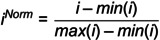 Figure 39
 Figure 40
 Figure 41
 Figure 42
 Figure 43
 Figure 44
 Figure 45
 Figure 46
 Figure 47
 Figure 48
 Figure 49
 Figure 50
Peer Reviews
No public reviews on file for this paper yet. If you reviewed it on a platform where reviews are public (OpenReview, ICLR, NeurIPS, ICML), you can paste yours below so the community can read it here.
Videos
No videos yet. Explain this paper in a talk, walkthrough, or lecture? Add one.
Taxonomy
TopicsFace and Expression Recognition · Machine Learning and Data Classification · Imbalanced Data Classification Techniques