Is chronological age predictable on panoramic images using the Demirjian method on third molars? Insights from a Turkish population-based study
Ayse Tas, Nelli Agbulut, Yasemin Oztoprak, Kader Aydin

TL;DR
This study shows that the modified Demirjian method can accurately estimate age in Turkish adolescents using third molar development stages from panoramic X-rays.
Contribution
The study validates the modified Demirjian method for age estimation in a Turkish population and identifies interaction effects between gender, impaction, and tooth development.
Findings
Third molar development stages strongly correlate with chronological age in Turkish adolescents.
Generalized linear models confirmed age as a significant predictor of tooth development stages.
Interactions between gender and impaction classifications influence developmental patterns.
Abstract
Third molars are crucial in forensic age estimation during adolescence due to their late and variable development. The modified Demirjian method employs a nine-stage classification (0-H) for assessing dental maturity. However, population-specific validation is essential for forensic accuracy. This study aims to evaluate the relationship between chronological age and M3 development stages in a Turkish population using panoramic radiographs, and to investigate the influence of gender and anatomical location, including impaction classifications (Pell-Gregory and Winter). A total of 1656 individuals (mean age: 13.9±3.78 years) underwent digital panoramic radiography. Developmental stages of 2770 mandibular and 2553 maxillary M3s were assessed using the modified Demirjian method. Statistical analyses included Spearman correlation, Kruskal-Wallis tests and generalized linear models. Third…
Genes, proteins, chemicals, diseases, species, mutations and cell lines named across the full text — each resolved to its canonical identifier and authoritative record.
Click any figure to enlarge with its caption.
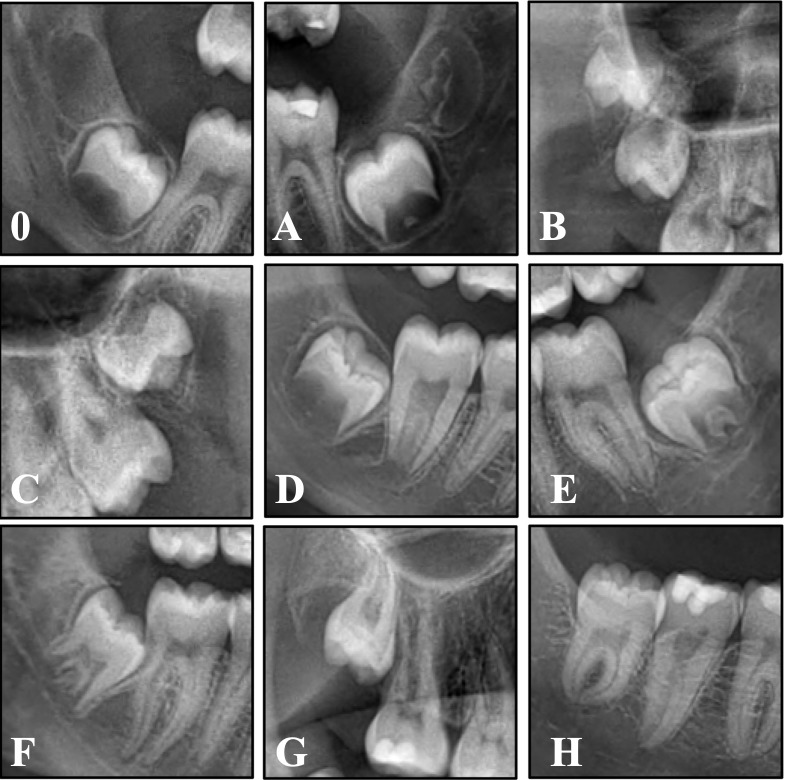 Figure 1
Peer Reviews
No public reviews on file for this paper yet. If you reviewed it on a platform where reviews are public (OpenReview, ICLR, NeurIPS, ICML), you can paste yours below so the community can read it here.
Videos
No videos yet. Explain this paper in a talk, walkthrough, or lecture? Add one.
Taxonomy
TopicsForensic Anthropology and Bioarchaeology Studies · Dental Radiography and Imaging · dental development and anomalies