AI-Enhanced Conversational Agents for Personalized Asthma Support in People With Asthma: Factors for Engagement, Value, and Efficacy in a Cross-Sectional Survey Study
Laura Moradbakhti, Dorian Peters, Jennifer K Quint, Björn Schuller, Darren Cook, Rafael A Calvo

TL;DR
A survey of 1257 asthma patients found that 53% are interested in using a chatbot for asthma support, with preferences for 24/7 access and personalization.
Contribution
The study identifies key factors influencing patient engagement with asthma chatbots and provides seven actionable recommendations for developers.
Findings
53% of asthma patients are interested in using a chatbot for asthma support.
Patients with more severe asthma and lower self-management confidence are more likely to use a chatbot.
WhatsApp is the preferred platform for chatbot access, with 24/7 availability and personalization being highly valued.
Abstract
Asthma-related deaths in the United Kingdom are the highest in Europe, and only 30% of patients access basic care. There is a need for alternative approaches to reaching people with asthma to provide health education, self-management support, and better bridges to care. This study aimed to examine patients’ interest in using a chatbot for asthma and to identify factors that influence engagement. Automated conversational agents (specifically, mobile chatbots) present opportunities for providing alternative and individually tailored access to health education, self-management support, and risk self-assessment. But would patients engage with a chatbot, and what factors influence engagement? We present results from a patient survey (N=1257) developed by a team of asthma clinicians, patients, and technology developers, conducted to identify optimal factors for efficacy, value, and…
Genes, proteins, chemicals, diseases, species, mutations and cell lines named across the full text — each resolved to its canonical identifier and authoritative record.
Click any figure to enlarge with its caption.
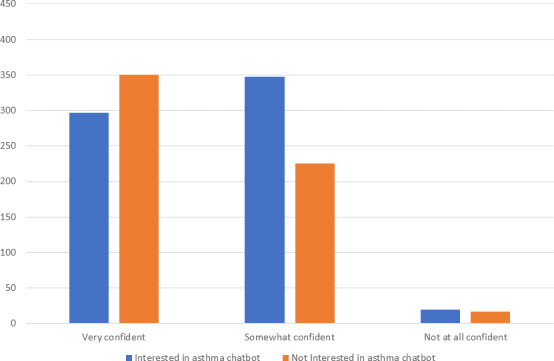 Figure 1
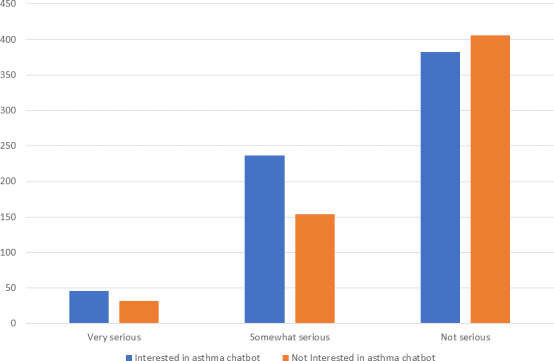 Figure 2
Peer Reviews
No public reviews on file for this paper yet. If you reviewed it on a platform where reviews are public (OpenReview, ICLR, NeurIPS, ICML), you can paste yours below so the community can read it here.
Videos
No videos yet. Explain this paper in a talk, walkthrough, or lecture? Add one.
Taxonomy
TopicsDigital Mental Health Interventions · AI in Service Interactions · Artificial Intelligence in Healthcare and Education