Patient-reported outcome measures in central disorders of hypersomnolence: consensus of a sleep consortium/RARE-X expert working group
Karmen Trzupek, Claire Wylds-Wright, Cynthia Kuan, Lynn Marie Trotti, Lynn Marie Trotti, Kiran Maski, Yves Dauvilliers, Luis Ortiz, Diego Mazzoti, Michelle Chadwick, Joshua Steinerman, Jennifer Gudeman, Deborah Hartman, Michael Doane, Suresh Kotagal, Fang Han, Murat Sincan

TL;DR
Experts and patients collaborate to identify key outcome measures for studying central disorders of hypersomnolence, aiming to improve diagnosis and treatment.
Contribution
A community-led working group defines patient- and caregiver-reported outcome measures to standardize CDoH research.
Findings
An expert working group identified essential clinical outcome measures for evaluating CDoH symptoms and impacts.
The measures were implemented in a direct-to-patient online study to capture patient and caregiver experiences.
The initiative aims to support standardization of assessments in CDoH research, particularly for primary disorders.
Abstract
Central disorders of hypersomnolence (CDoH), including the primary hypersomnolence disorders of narcolepsy type 1 (NT1), narcolepsy type 2 (NT2), idiopathic hypersomnia (IH), and Kleine-Levin syndrome (KLS), as well as secondary hypersomnolence disorders, represent an underdiagnosed and under-treated population. Continuing advancements in understanding and treating CDoH rely on an understanding of the patient and caregiver experience. To address this need, a community-led, patient-owned online research study was launched by the nonprofit organizations Sleep Consortium and Global Genes, using the RARE-X research platform. An expert working group of stakeholders with expertise in hypersomnolence disorders, including clinicians, therapy developers, and patient advocates, was convened to identify key patient- and caregiver-reported clinical outcome measures essential for evaluating CDoH…
Genes, proteins, chemicals, diseases, species, mutations and cell lines named across the full text — each resolved to its canonical identifier and authoritative record.
Click any figure to enlarge with its caption.
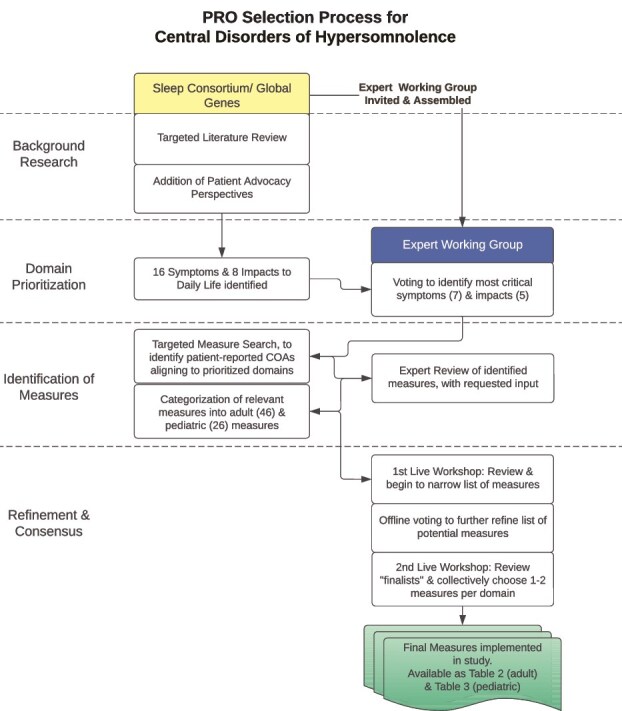 Figure 1
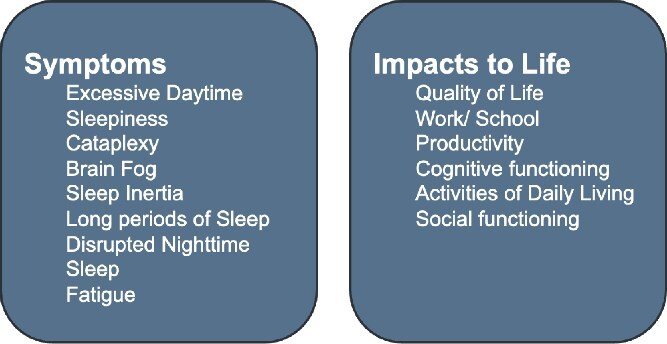 Figure 2
Peer Reviews
No public reviews on file for this paper yet. If you reviewed it on a platform where reviews are public (OpenReview, ICLR, NeurIPS, ICML), you can paste yours below so the community can read it here.
Videos
No videos yet. Explain this paper in a talk, walkthrough, or lecture? Add one.
Taxonomy
TopicsSleep and Wakefulness Research · Sleep and related disorders · Mind wandering and attention