Prevalence of diagnosed idiopathic hypersomnia among adults in the United States 2019–2023: analysis of healthcare claims
Sarah C Markt, Jed Black, Richard K Bogan, Elizabeth T Jensen, Patricia Prince, Adina Estrin, Monica Iyer, Marisa Whalen, Jessica K Alexander, Weiyi Ni, Adeniyi T Togun, David T Plante

TL;DR
This study estimates the diagnosed prevalence of idiopathic hypersomnia among US adults from 2019 to 2023 using healthcare claims data.
Contribution
The study provides updated and consistent prevalence estimates for idiopathic hypersomnia using a large healthcare claims database.
Findings
Annual prevalence of diagnosed idiopathic hypersomnia ranged from 10.5 to 12.1 per 100,000 persons from 2019 to 2023.
All-time lookback prevalence estimates increased over time, reaching 49.0 per 100,000 persons in 2023.
Both annual and all-time prevalence estimates support the rare disease designation for idiopathic hypersomnia.
Abstract
National prevalence estimates for idiopathic hypersomnia (IH) are difficult to obtain. This study estimated the diagnosed IH prevalence among US adults. Symphony Integrated Dataverse claims (01/2015–12/2023) were analyzed. Eligible patients were aged ≥18 years with at least one medical/prescription claim in the year of interest (2019–2023) and prior year. IH was defined by ≥1 medical claim with an IH diagnosis code. Prevalence was estimated among all eligible patients in two ways: annual (IH diagnoses during year of interest) and all-time (IH diagnoses looking back all-time in the database from 2015 through year of interest). Age- and sex-adjusted prevalence estimates were also calculated using the US Census Bureau. Over 179, 182, 193, 205, and 198 million adults were assessed for diagnosed IH prevalence in each respective year 2019–2023. Unweighted annual prevalence of diagnosed IH…
Genes, proteins, chemicals, diseases, species, mutations and cell lines named across the full text — each resolved to its canonical identifier and authoritative record.
Click any figure to enlarge with its caption.
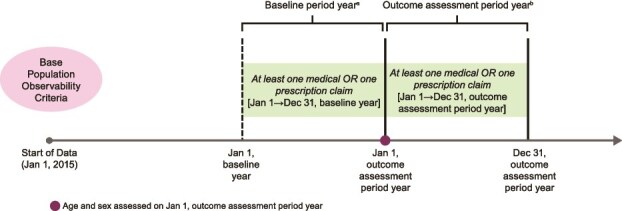 Figure 1
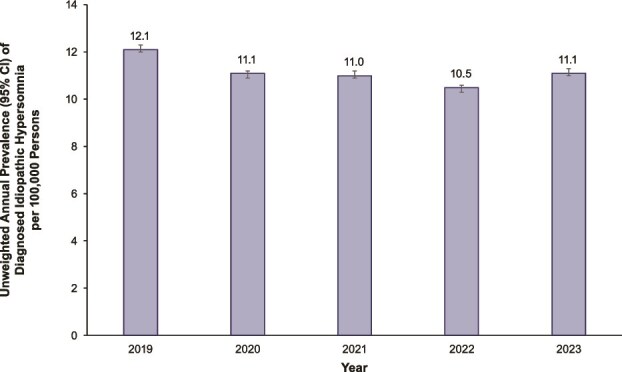 Figure 2
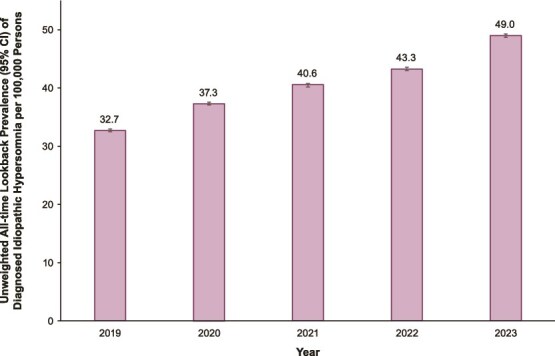 Figure 3
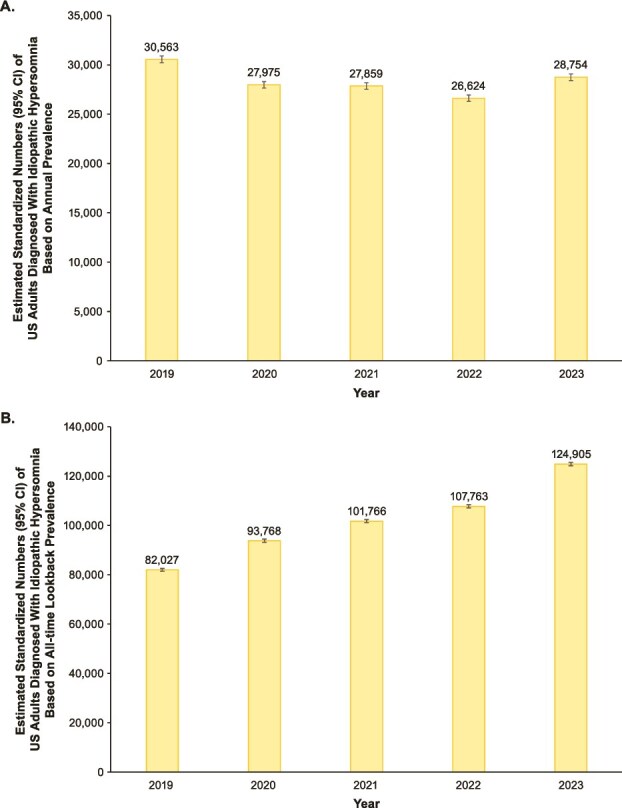 Figure 4
Peer Reviews
No public reviews on file for this paper yet. If you reviewed it on a platform where reviews are public (OpenReview, ICLR, NeurIPS, ICML), you can paste yours below so the community can read it here.
Videos
No videos yet. Explain this paper in a talk, walkthrough, or lecture? Add one.
Taxonomy
TopicsSleep and Wakefulness Research · Sleep and related disorders · Restless Legs Syndrome Research