The UTRs of Leishmania donovani vary in length and are enriched in potential regulatory structures
Franck Dumetz, Kaylee J. Watson, Melissa Perry, Robin E. Bromley, Anushka R. Shome, Julie C. Dunning Hotopp, Iqbal Hamza, David Serre, Michael Boshart, Michael Boshart, Michael Boshart

TL;DR
This study provides a detailed analysis of untranslated regions in Leishmania donovani, revealing their role in gene regulation and structural variations.
Contribution
The paper presents the first comprehensive genome-wide annotation of UTRs in Leishmania donovani using advanced sequencing technologies.
Findings
UTRs in Leishmania donovani are enriched in RNA G-quadruplex structures, suggesting a role in post-transcriptional regulation.
Significant stage-specific UTR length polymorphisms were observed in promastigotes and amastigotes.
The study identified thousands of UTRs and validated gene expression patterns across life stages.
Abstract
Leishmania spp. regulate gene expression posttranscriptionally, yet untranslated regions (UTRs) that can affect mRNA stability and translation remain poorly delineated. We generated a de novo assembled genome for Leishmania donovani strain 1S2D (Ld1S) using PacBio HiFi and characterized the transcriptomes of promastigotes and axenic amastigotes with Oxford Nanopore direct RNA sequencing. The genome assembly consists of 65 scaffolds totaling ~33.3 Mb. Structural comparisons to LdBPK282A1 revealed numerous rearrangements, including genes reshuffled among polycistronic transcription units and validated by RNA sequencing of polycistronic reads. Promastigote and amastigote RNA sequencing produced 469,010 and 46,729 monocistronic reads containing a spliced-leader and a polyA tail sequences, defining 8,479 transcripts and supporting 7,415 of the 7,969 annotated protein-coding genes, as well as…
Genes, proteins, chemicals, diseases, species, mutations and cell lines named across the full text — each resolved to its canonical identifier and authoritative record.
Click any figure to enlarge with its caption.
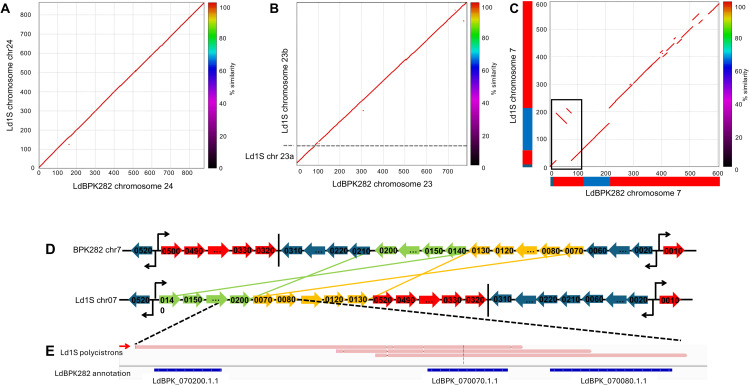 Figure 1
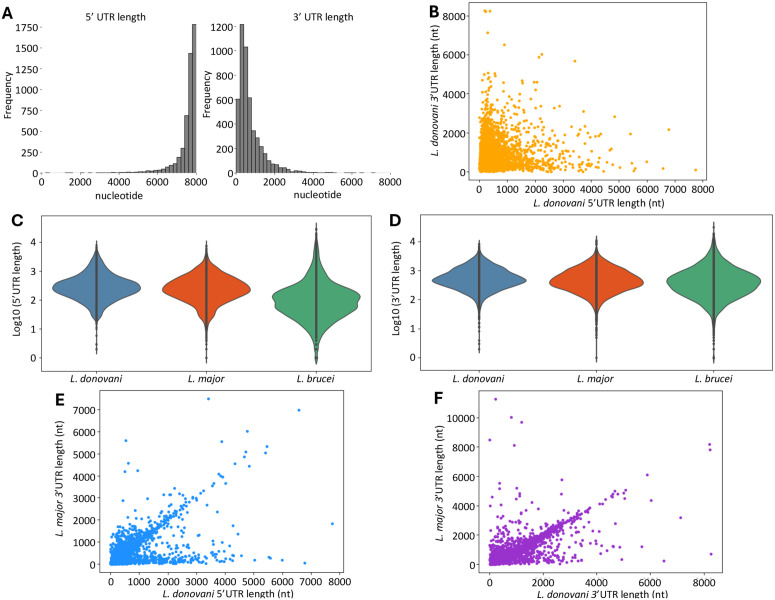 Figure 2
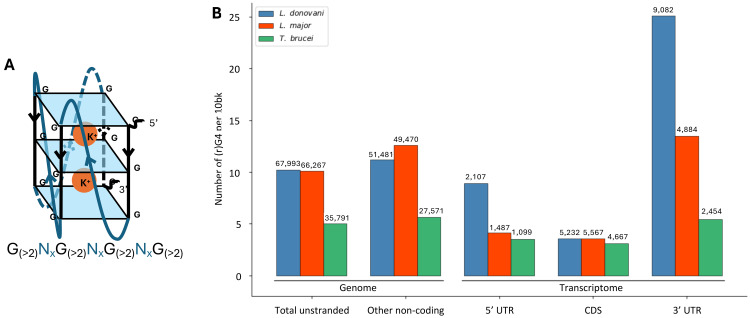 Figure 3
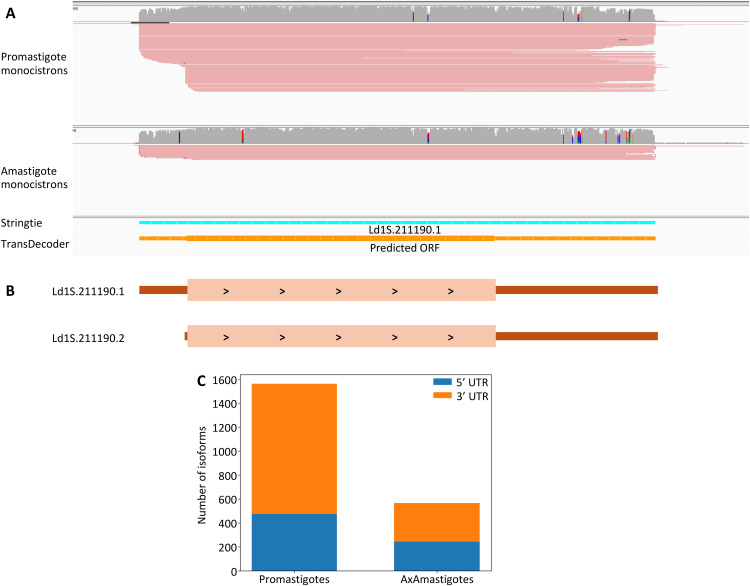 Figure 4
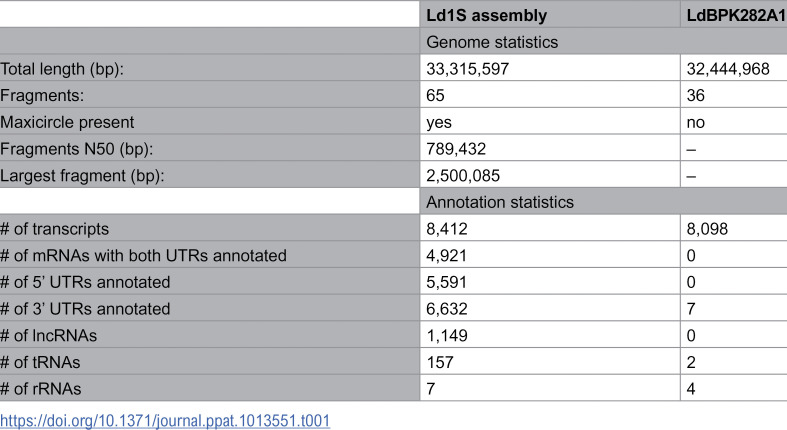 Figure 5
Peer Reviews
No public reviews on file for this paper yet. If you reviewed it on a platform where reviews are public (OpenReview, ICLR, NeurIPS, ICML), you can paste yours below so the community can read it here.
Videos
No videos yet. Explain this paper in a talk, walkthrough, or lecture? Add one.
Taxonomy
TopicsResearch on Leishmaniasis Studies · Trypanosoma species research and implications · DNA and Nucleic Acid Chemistry