Contrastive learning for passive acoustic monitoring: A framework for sound source discovery and cross-site comparison in marine soundscapes
Richard Acs, Ali Ibrahim, Hanqi Zhuang, Laurent M. Chérubin

TL;DR
This paper introduces a self-supervised machine learning framework for analyzing underwater sounds, enabling discovery of acoustic patterns without needing labeled data.
Contribution
The novel contribution is a contrastive learning framework that organizes marine sounds into meaningful clusters without manual labels.
Findings
The framework reveals recurring acoustic patterns corresponding to biological and anthropogenic sounds across multiple sites.
It produces more stable and coherent sound groupings compared to conventional feature-based and supervised methods.
The approach identifies both site-shared and site-specific acoustic signatures in marine soundscapes.
Abstract
Passive acoustic monitoring (PAM) is a powerful tool for studying marine biodiversity, but large-scale analysis of underwater recordings is constrained by noise, overlapping signals, and limited labeled data. Here, we present a scalable, unsupervised contrastive learning framework for marine soundscapes. Using a large PAM dataset spanning multiple biogeographies, we show that the proposed approach organizes recordings into clusters with well-defined internal structure, as assessed using intrinsic clustering metrics and within-cluster similarity. The resulting clusters reveal recurring acoustic patterns that correspond to broad sound-source categories, including biological sounds such as fish calls and choruses, and anthropogenic sounds such as vessel noise, without explicitly enforcing these distinctions during training. Compared with established approaches, including cepstral features,…
Genes, proteins, chemicals, diseases, species, mutations and cell lines named across the full text — each resolved to its canonical identifier and authoritative record.
Click any figure to enlarge with its caption.
 Figure 1
 Figure 2
 Figure 3
 Figure 4
 Figure 5
 Figure 6
 Figure 7
 Figure 8
 Figure 9
 Figure 10
 Figure 11
 Figure 12
 Figure 13
 Figure 14
 Figure 15
 Figure 16
 Figure 17
 Figure 18
 Figure 19
 Figure 20
 Figure 21
 Figure 22
 Figure 23
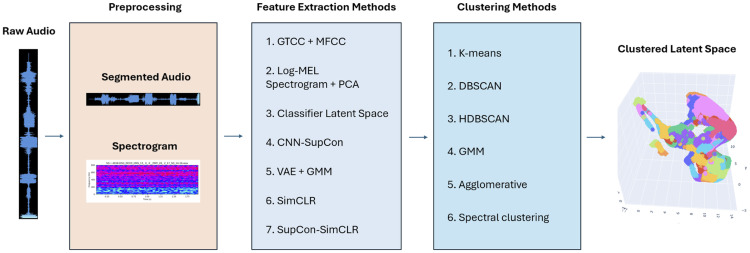 Figure 24
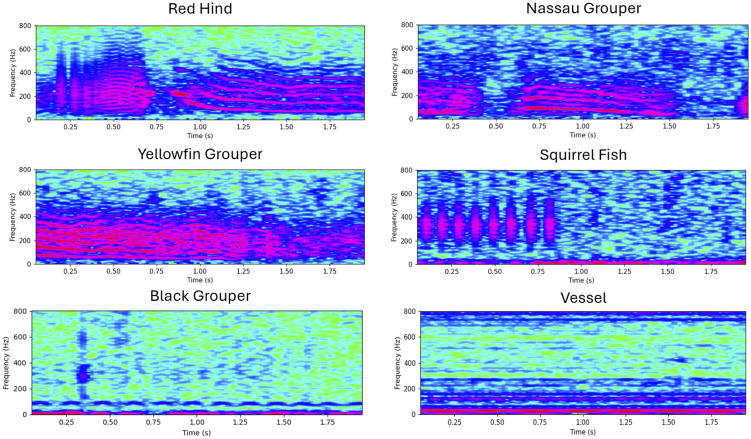 Figure 25
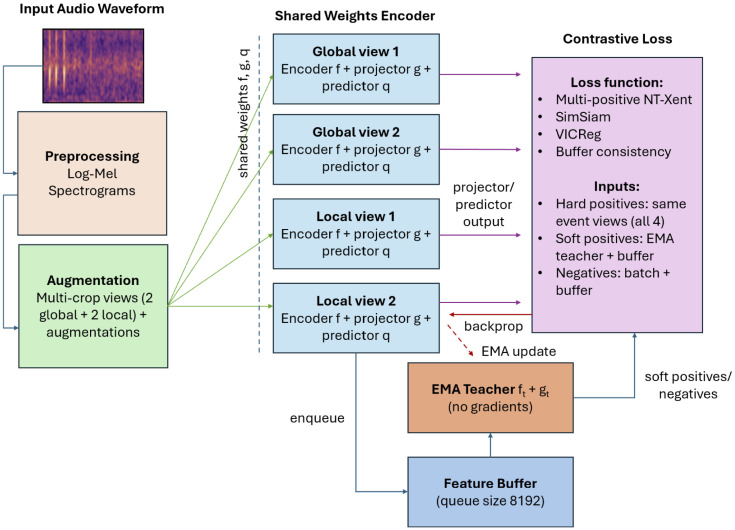 Figure 26
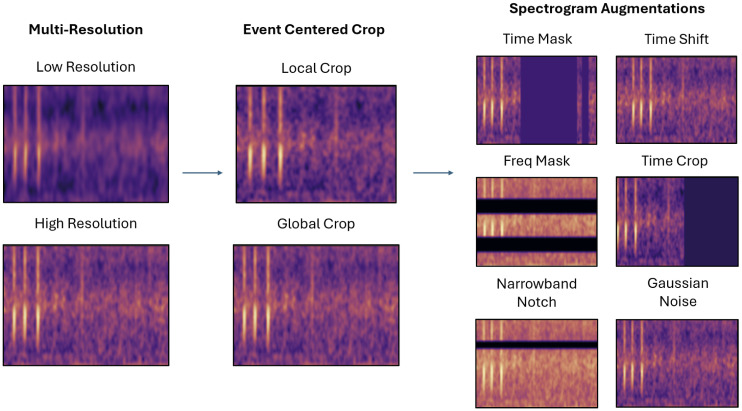 Figure 27
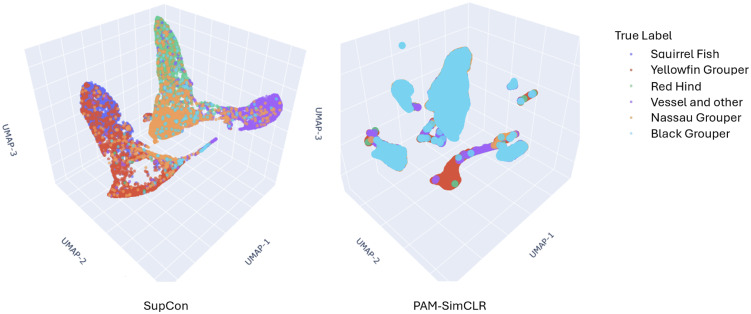 Figure 28
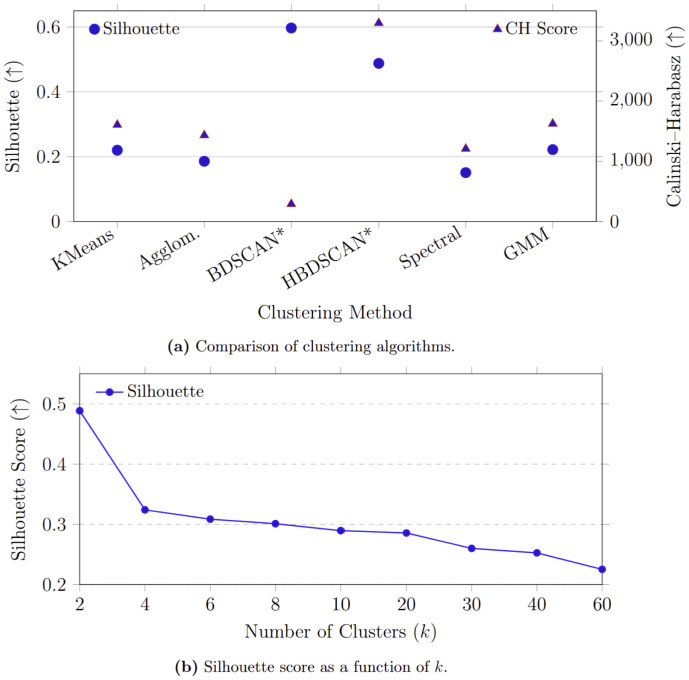 Figure 29
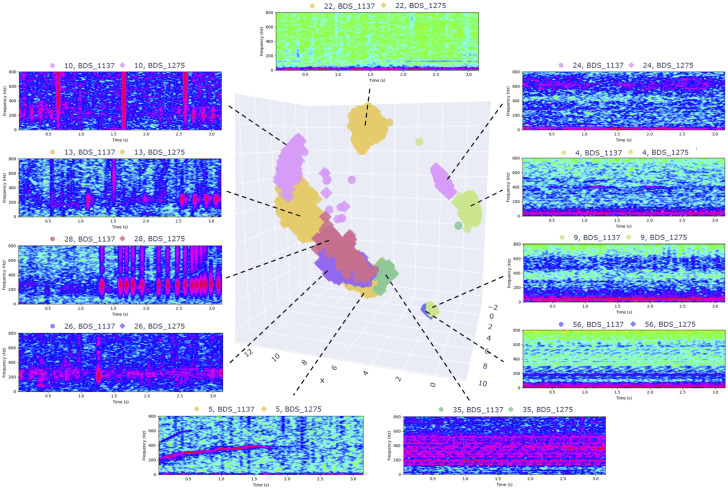 Figure 30
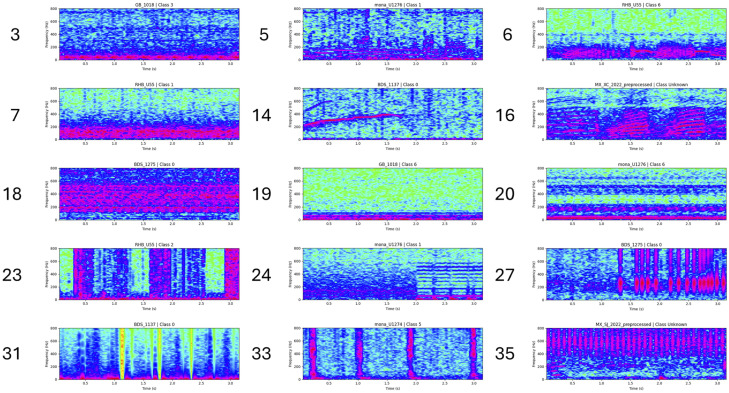 Figure 31
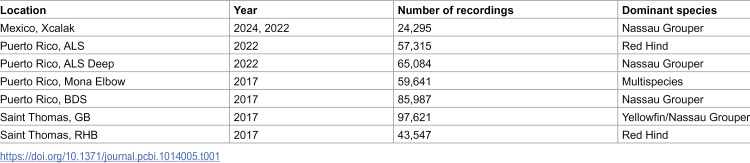 Figure 32
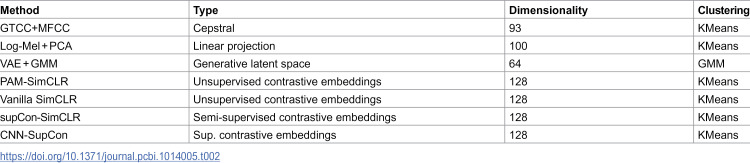 Figure 33
 Figure 34
 Figure 35
 Figure 36
 Figure 37
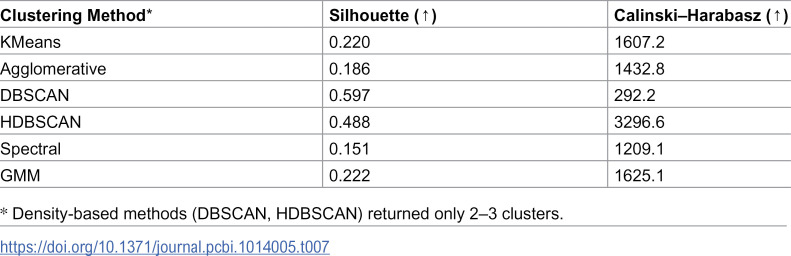 Figure 38
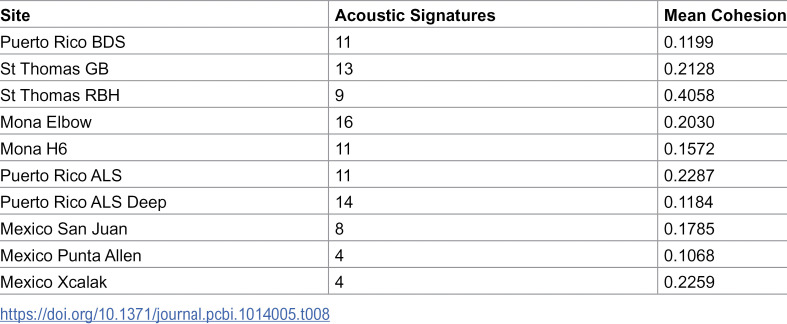 Figure 39
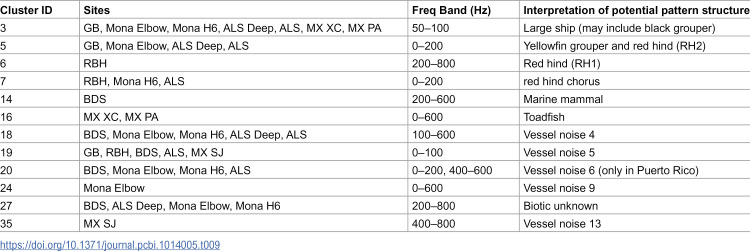 Figure 40
Peer Reviews
No public reviews on file for this paper yet. If you reviewed it on a platform where reviews are public (OpenReview, ICLR, NeurIPS, ICML), you can paste yours below so the community can read it here.
Videos
No videos yet. Explain this paper in a talk, walkthrough, or lecture? Add one.
Taxonomy
TopicsMarine animal studies overview · Animal Vocal Communication and Behavior · Underwater Acoustics Research