Association of avian biodiversity and West Nile Virus circulation in Culex mosquitoes in Emilia-Romagna, Italy
Yiran Wang, Mattia Calzolari, Gianpiero Calvi, Victoria M. Cox, Paola Angelini, Michele Dottori, William Wint, Sally Jahn, Giovanni Marini, Ilaria Dorigatti, Ran Wang, Ran Wang, Ran Wang, Ran Wang

TL;DR
This study finds that higher bird diversity in Italy is linked to lower West Nile Virus activity in mosquitoes, suggesting conservation could help control outbreaks.
Contribution
The study provides the first empirical evidence supporting the dilution effect hypothesis for West Nile Virus in Europe.
Findings
Higher avian biodiversity is associated with reduced West Nile Virus activity in Culex mosquitoes.
Non-passerine bird species richness is linked to lower transmission risk, while passerine species richness is associated with higher risk.
Findings support the dilution effect hypothesis in a European WNV hotspot.
Abstract
West Nile Virus (WNV) is a zoonotic arbovirus maintained in a transmission cycle between Culex mosquitoes and birds, occasionally spilling over into humans. The impact of avian biodiversity on WNV circulation remains debated, with studies reporting both negative and positive correlations (dilution and amplification effects respectively) across different settings. In Europe, this relationship remains largely unexplored, particularly in regions with high WNV transmission, such as Emilia-Romagna in Northern Italy. We explored the association between avian biodiversity and WNV circulation in Culex mosquitoes in Emilia-Romagna using 11 years (2013–2023) of entomological surveillance data paired with two avian data sources. We calculated avian biodiversity indices (Shannon’s, Simpson’s, and Chao2) from observation records from the Farmland Bird Index project and applied linear regression…
Genes, proteins, chemicals, diseases, species, mutations and cell lines named across the full text — each resolved to its canonical identifier and authoritative record.
Click any figure to enlarge with its caption.
 Figure 1
 Figure 2
 Figure 3
 Figure 4
 Figure 5
 Figure 6
 Figure 7
 Figure 8
 Figure 9
 Figure 10
 Figure 11
 Figure 12
 Figure 13
 Figure 14
 Figure 15
 Figure 16
 Figure 17
 Figure 18
 Figure 19
 Figure 20
 Figure 21
 Figure 22
 Figure 23
 Figure 24
 Figure 25
 Figure 26
 Figure 27
 Figure 28
 Figure 29
 Figure 30
 Figure 31
 Figure 32
 Figure 33
 Figure 34
 Figure 35
 Figure 36
 Figure 37
 Figure 38
 Figure 39
 Figure 40
 Figure 41
 Figure 42
 Figure 43
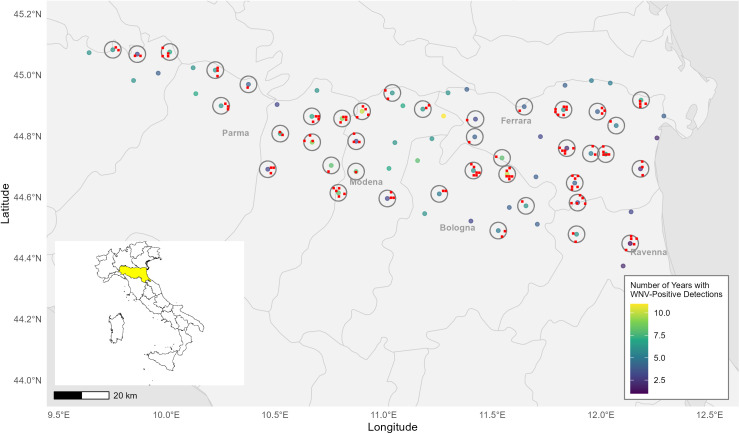 Figure 44
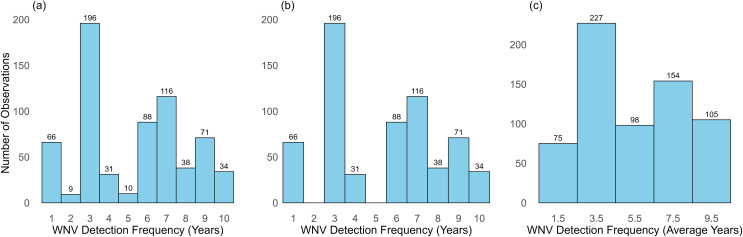 Figure 45
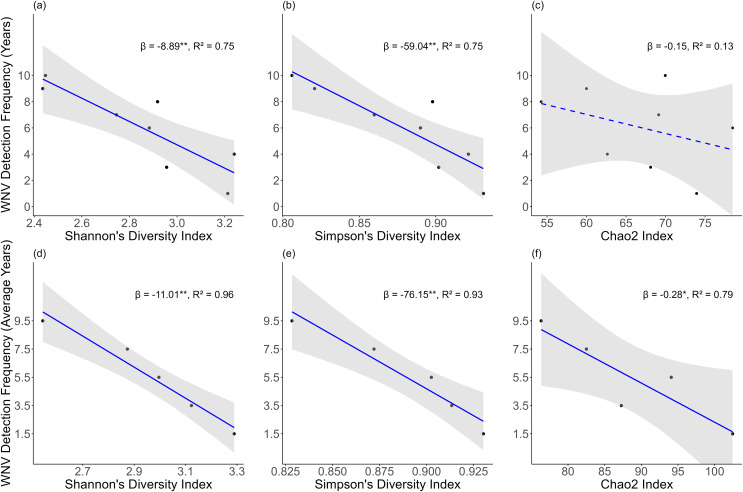 Figure 46
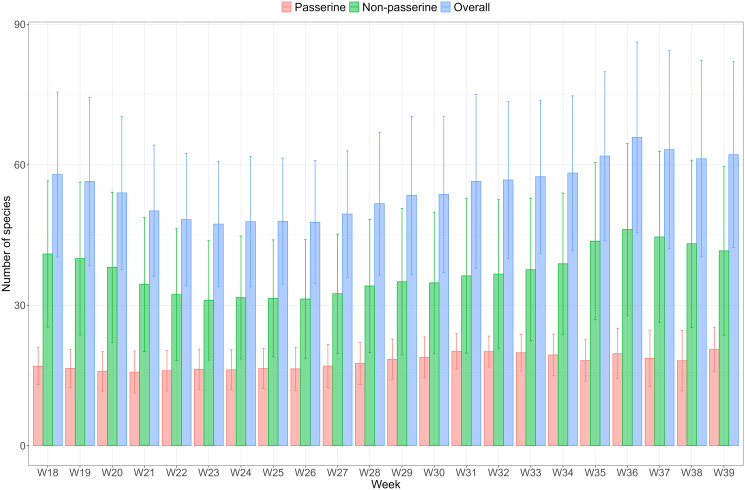 Figure 47
 Figure 48
Peer Reviews
No public reviews on file for this paper yet. If you reviewed it on a platform where reviews are public (OpenReview, ICLR, NeurIPS, ICML), you can paste yours below so the community can read it here.
Videos
No videos yet. Explain this paper in a talk, walkthrough, or lecture? Add one.
Taxonomy
TopicsMosquito-borne diseases and control · Vector-Borne Animal Diseases · Zoonotic diseases and public health