Prenatal Diagnosis and Neurodevelopmental Outcome of Children With Marked Opening of the Fourth Ventricle: Challenges and Pitfalls in MRI Diagnostic Criteria
Léa Schieffer, Catherine Garel, Laurent Guibaud, Christelle Rougeot‐Jung, Lydie Burglen, Mona Massoud, Dorothée Ville, Eléonore Blondiaux, Jean Marie Jouannic, Sara Cabet, Vincent DesPortes, Stéphanie Valence

TL;DR
This study improves MRI criteria for prenatal diagnosis of brain malformations and identifies factors affecting child development outcomes.
Contribution
The study introduces the tegmento-tentorial angle as a diagnostic tool and the tegmento-vermian angle as a prognostic marker.
Findings
Dandy Walker malformation (DWM) and Blake's pouch cyst (BPC) can be distinguished using the tegmento-tentorial angle.
The fetal tegmento-vermian angle correlates with neurodevelopmental outcomes.
Prognostic factors include diagnosis type, associated malformations, and ventriculomegaly.
Abstract
The neurodevelopmental outcome of ‘Cystic’ malformations of the posterior fossa with marked opening of the fourth ventricle, such as Dandy Walker malformation (DWM) and large Blake's pouch cyst (BPC), is a major issue. This study aimed to refine relevant MRI criteria for distinguishing DWM from BPC and identify prognostic factors. Inclusion criteria were prenatal retrocerebellar fluid space diameter > 10 mm, marked opening of the fourth ventricle with a tegmento‐vermian angle (TVA) > 40°, and postnatal follow‐up > 2 years. 27 patients were classified as follows: 6 DWM characterized by an overall upward orientation of the tentorium, an open tegmento‐tentorial angle (TTA > 78 ) and a high TVA (median 132°); 15 BPC with a normal downward orientation of the proximal part of the tentorium (TTA < 68°) and distal upward displacement (median TVA 74°); 3 PHACE syndromes (Posterior fossa…
Genes, proteins, chemicals, diseases, species, mutations and cell lines named across the full text — each resolved to its canonical identifier and authoritative record.
Click any figure to enlarge with its caption.
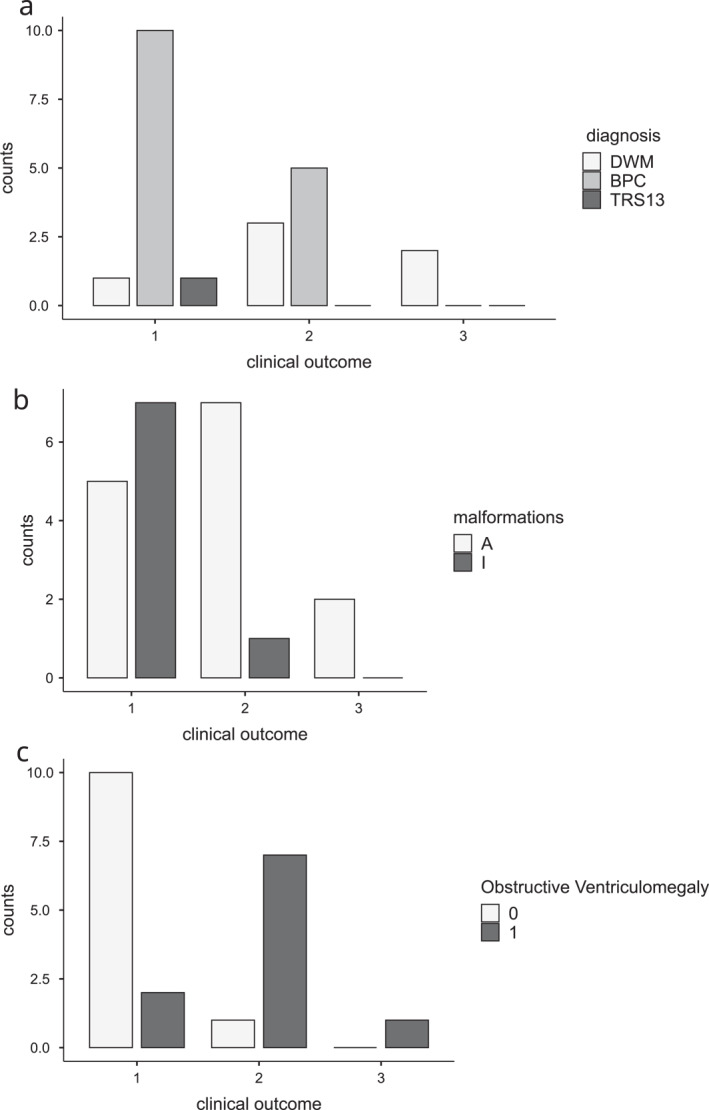 Figure 1
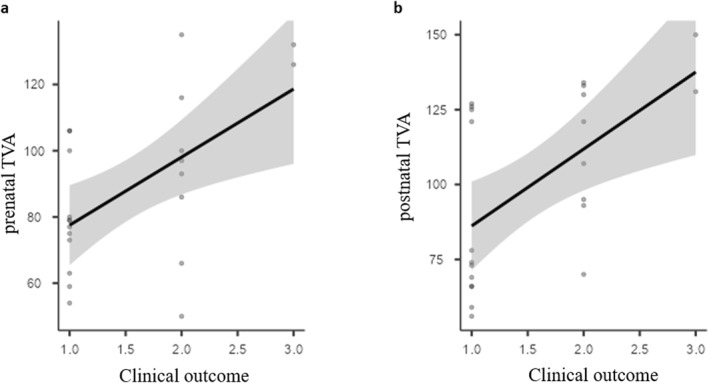 Figure 2
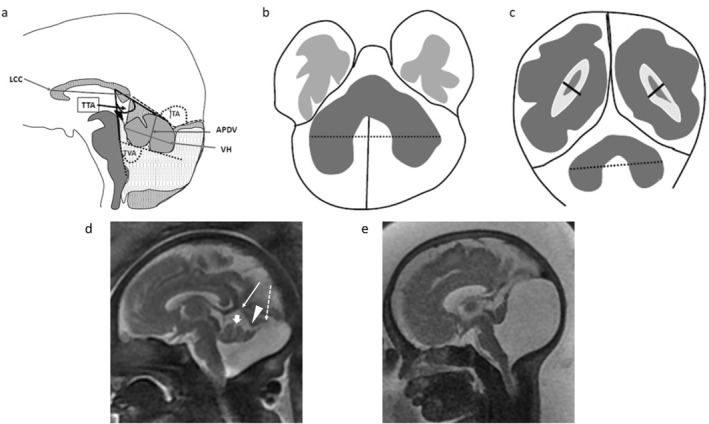 Figure 3
 Figure 4
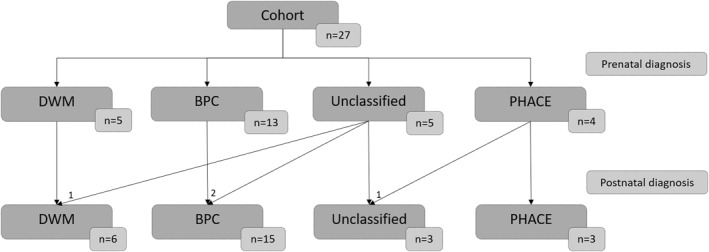 Figure 5
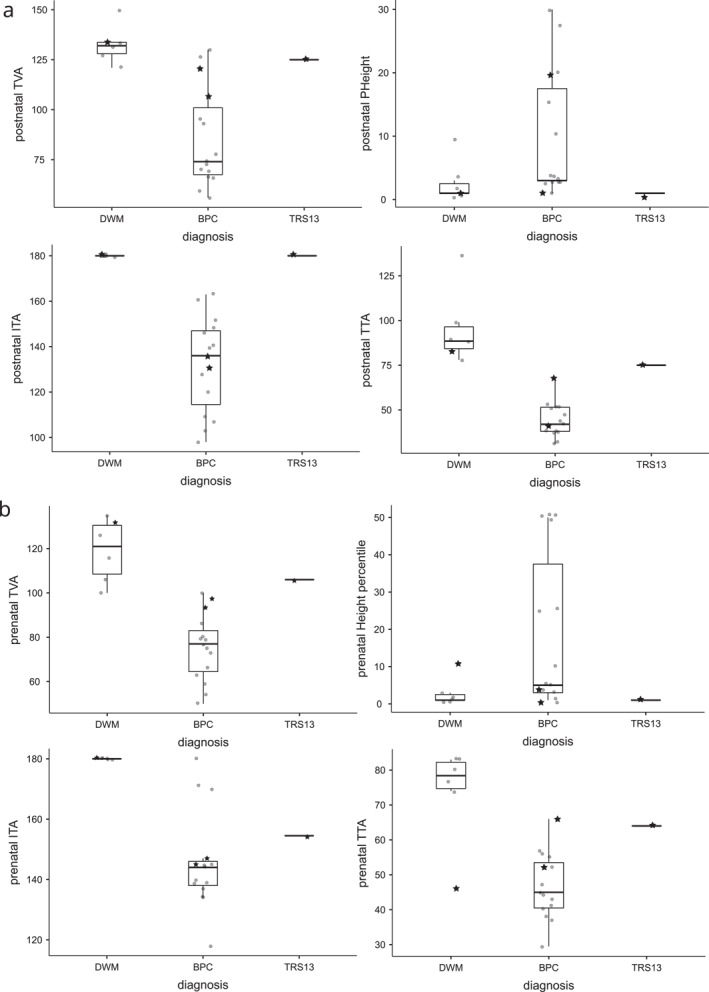 Figure 6
Peer Reviews
No public reviews on file for this paper yet. If you reviewed it on a platform where reviews are public (OpenReview, ICLR, NeurIPS, ICML), you can paste yours below so the community can read it here.
Videos
No videos yet. Explain this paper in a talk, walkthrough, or lecture? Add one.
Taxonomy
TopicsFetal and Pediatric Neurological Disorders · Spinal Dysraphism and Malformations · Advanced Neuroimaging Techniques and Applications