Bifurcations and optimal control in Nipah virus epidemiology
Zasmin Haque, Md. Mashih Ibn Yasin Adan, Md. Sabab Zulfiker, Faizunnesa Khondaker, Md. Kamrujjaman

TL;DR
This paper develops a mathematical model to study Nipah virus spread and optimal control strategies to reduce its impact.
Contribution
A novel six-compartment model with waning immunity and optimal control analysis for Nipah virus epidemiology.
Findings
The model confirms a forward bifurcation at the epidemic threshold.
Optimal control strategies significantly reduce infection burden and costs.
Combined interventions can minimize final epidemic size and increase immunity.
Abstract
Nipah virus (NiV) is a zoonotic pathogen with a high case fatality rate, posing a significant and ongoing threat to public health in Asia. This study develops a comprehensive mathematical framework to analyze its transmission dynamics and evaluate effective control strategies. We introduce a novel six-compartment model (SEAIHR) that stratifies the population into Susceptible, Exposed, Asymptomatic, Symptomatic Infected, Hospitalized, and Recovered individuals, incorporating key features such as waning immunity. Analytical results determine the basic reproduction number and establish the global stability of both the disease-free and disease equilibria, confirming a forward bifurcation at the epidemic threshold. A sensitivity analysis identifies the recruitment rate and the disease transmission rate as the most influential parameters on outbreak potential. Furthermore, we formulate an…
Genes, proteins, chemicals, diseases, species, mutations and cell lines named across the full text — each resolved to its canonical identifier and authoritative record.
Click any figure to enlarge with its caption.
 Figure 1
 Figure 2
 Figure 3
 Figure 4
 Figure 5
 Figure 6
 Figure 7
 Figure 8
 Figure 9
 Figure 10
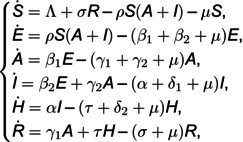 Figure 11
 Figure 12
 Figure 13
 Figure 14
 Figure 15
 Figure 16
 Figure 17
 Figure 18
 Figure 19
 Figure 20
 Figure 21
 Figure 22
 Figure 23
 Figure 24
 Figure 25
 Figure 26
 Figure 27
 Figure 28
 Figure 29
 Figure 30
 Figure 31
 Figure 32
 Figure 33
 Figure 34
 Figure 35
 Figure 36
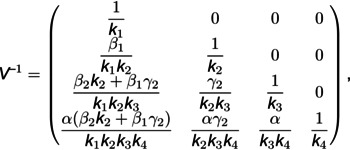 Figure 37
 Figure 38
 Figure 39
 Figure 40
 Figure 41
 Figure 42
 Figure 43
 Figure 44
 Figure 45
 Figure 46
 Figure 47
 Figure 48
 Figure 49
 Figure 50
Peer Reviews
No public reviews on file for this paper yet. If you reviewed it on a platform where reviews are public (OpenReview, ICLR, NeurIPS, ICML), you can paste yours below so the community can read it here.
Videos
No videos yet. Explain this paper in a talk, walkthrough, or lecture? Add one.
Taxonomy
TopicsVirology and Viral Diseases · COVID-19 epidemiological studies · Mosquito-borne diseases and control