Trends and determinants of prelacteal feeding practice in rural Bangladesh from 2004 to 2019: A multivariate decomposition analysis
Ya Gao, Amanda C. Palmer, Andrew L. Thorne-Lyman, Saijuddin Shaikh, Hasmot Ali, Hannah Tong, Monica M. Pasqualino, Lee S. Wu, Kelsey Alland, Kerry J. Schulze, Alain B. Labrique, Rolf D. Klemm, Parul Christian, Keith P. West

TL;DR
Prelacteal feeding in rural Bangladesh dropped from 89% in 2004 to 24% in 2019, with changes linked to factors like health facility deliveries and birth weight.
Contribution
This study identifies shifts in factors associated with prelacteal feeding and quantifies the role of socio-demographic changes in its decline.
Findings
The prevalence of prelacteal feeding decreased significantly from 89% in 2004 to 24% in 2019.
Institutional deliveries and higher birth weight were key factors associated with reduced prelacteal feeding.
Only 15% of the decline in prelacteal feeding was explained by measured variables, leaving 85% unaccounted for.
Abstract
Prelacteal feeding (PLF)—giving infants food or liquid other than breastmilk within the first 3 days of life—remains common and hinders optimal breastfeeding in Bangladesh. This study assessed changes in PLF practices in rural Bangladesh from 2004 to 2019 and examined associate household, maternal, and infant factors. We analyzed data from two cluster-randomized trials in rural northwest Bangladesh (n = 16,551; n = 4,401). Trained staff collected sociodemographic and birth data through household visits. We used multivariable logistic regression to examine associations between household, maternal, and infant characteristics and PLF and a non-linear approximation of the Oaxaca-Blinder regression decomposition to understand the factors associated with the changing prevalence of PLF. The prevalence of PLF declined from 89% in 2004 to 24% in 2019. Factors associated with PLF shifted over…
Genes, proteins, chemicals, diseases, species, mutations and cell lines named across the full text — each resolved to its canonical identifier and authoritative record.
Click any figure to enlarge with its caption.
 Figure 1
 Figure 2
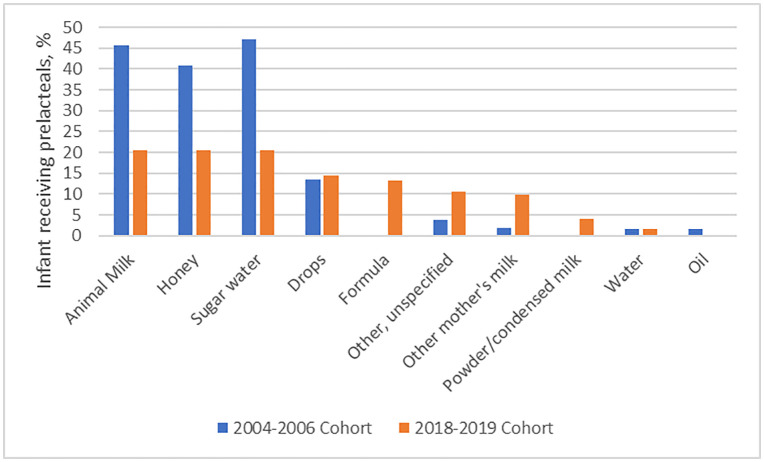 Figure 3
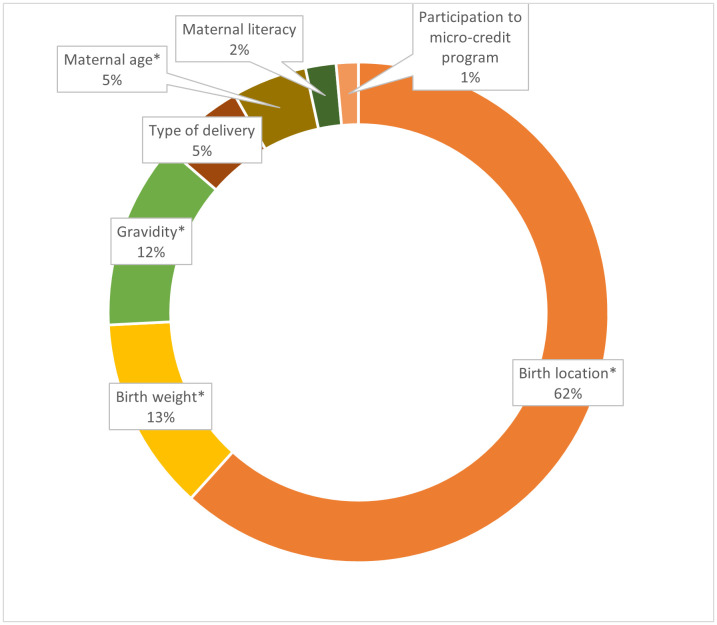 Figure 4
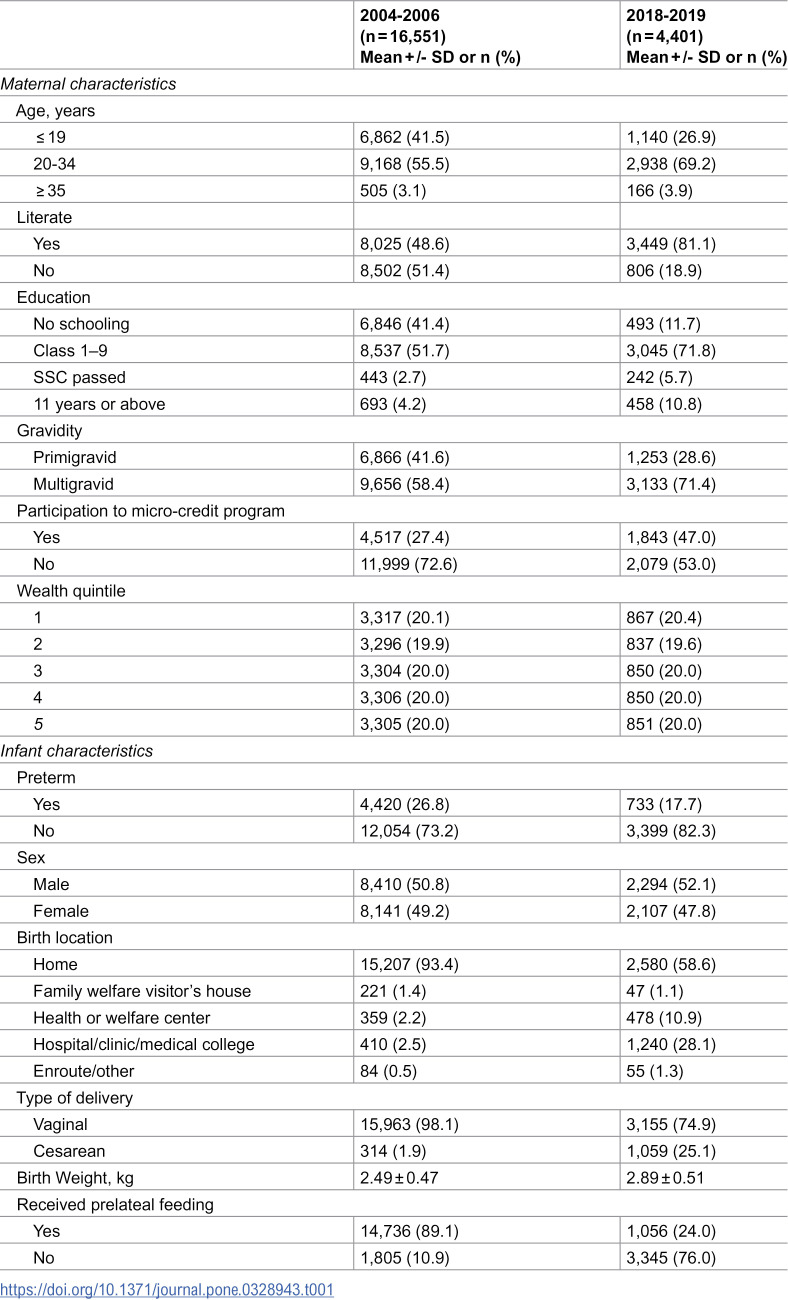 Figure 5
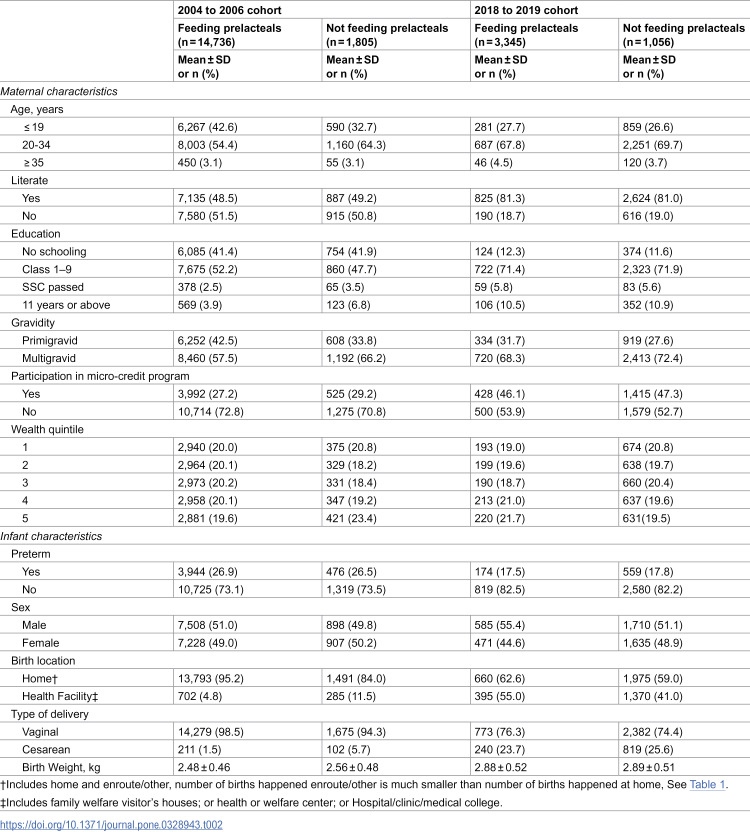 Figure 6
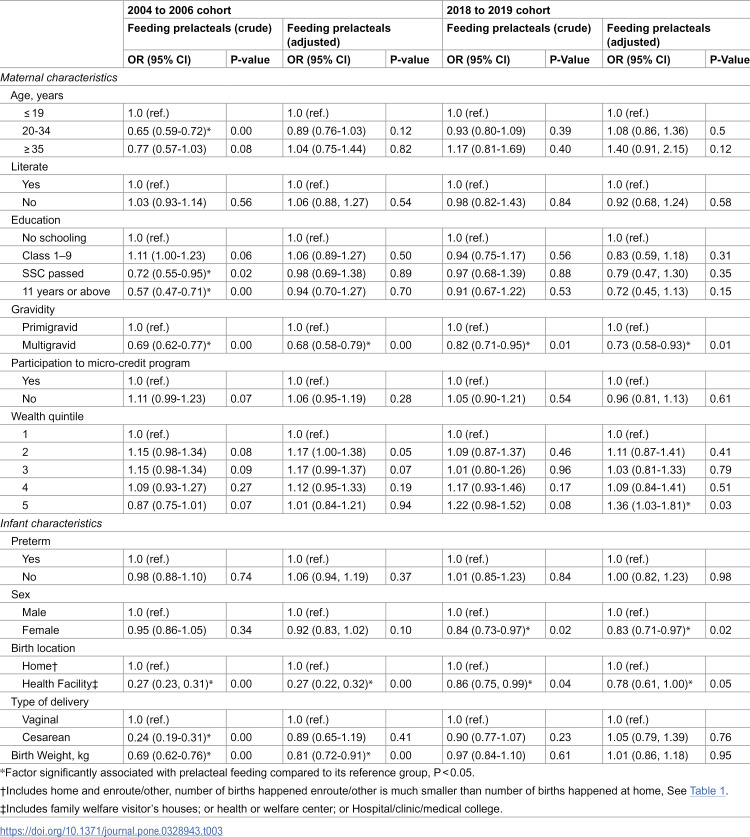 Figure 7
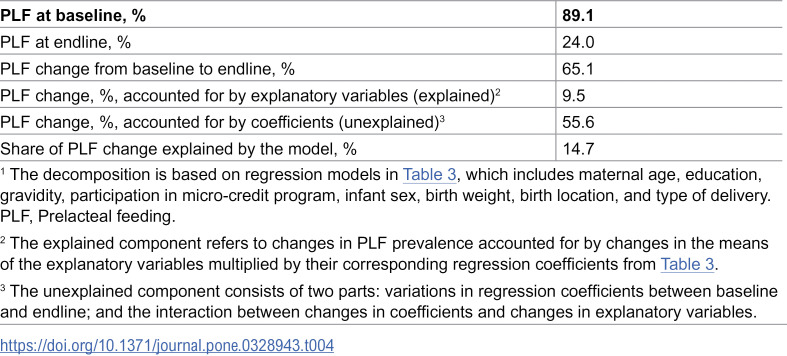 Figure 8
Peer Reviews
No public reviews on file for this paper yet. If you reviewed it on a platform where reviews are public (OpenReview, ICLR, NeurIPS, ICML), you can paste yours below so the community can read it here.
Videos
No videos yet. Explain this paper in a talk, walkthrough, or lecture? Add one.
Taxonomy
TopicsBreastfeeding Practices and Influences · Child Nutrition and Water Access · Maternal Mental Health During Pregnancy and Postpartum