Using reinforcement algorithms to improve the collaboration efficiency of entrepreneurial teams
Jieqiong Wang, Linghong Jiang

TL;DR
This paper explores using reinforcement learning to enhance the efficiency of entrepreneurial teams in dynamic environments.
Contribution
It introduces a MARL-based approach to improve collaboration, resource use, and task allocation in entrepreneurial teams.
Findings
MARL improved resource utilization and communication efficiency in entrepreneurial teams.
PPO-based agents achieved higher task completion rates in dynamic scenarios.
The method showed adaptability across software development, manufacturing, and logistics cases.
Abstract
Entrepreneurial Team (ET) plays an essential role in the business process by driving innovation and optimizing ideas via adaptability, collaboration, and resourcefulness. The team performance is continuously affected because of resource imbalance, poor communication and inefficient task allocation. The importance of ET in organization growth is the main reason for this analysis. Therefore, this work uses Multi-Agent Reinforcement Learning (MARL) to handle efficient dynamic decisions and coordination to improve ET efficiency in dynamic and complex environments. The main intention of this work is to improve resource utilization, communication efficiency and optimize task allocation. During the analysis, Proximal Policy Optimization (PPO) is utilized to direct agents toward achieving collaborative goals. In every state, the agent receives rewards and penalties for their actions, which…
Genes, proteins, chemicals, diseases, species, mutations and cell lines named across the full text — each resolved to its canonical identifier and authoritative record.
Click any figure to enlarge with its caption.
 Figure 1
 Figure 2
 Figure 3
 Figure 4
 Figure 5
 Figure 6
 Figure 7
 Figure 8
 Figure 9
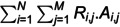 Figure 10
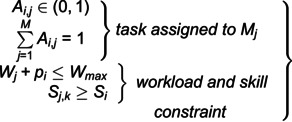 Figure 11
 Figure 12
 Figure 13
 Figure 14
 Figure 15
 Figure 16
 Figure 17
 Figure 18
 Figure 19
 Figure 20
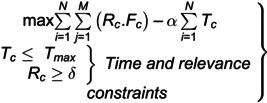 Figure 21
 Figure 22
 Figure 23
 Figure 24
 Figure 25
 Figure 26
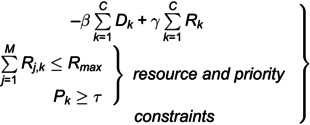 Figure 27
 Figure 28
 Figure 29
 Figure 30
 Figure 31
 Figure 32
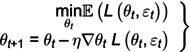 Figure 33
 Figure 34
 Figure 35
 Figure 36
 Figure 37
 Figure 38
 Figure 39
 Figure 40
 Figure 41
 Figure 42
 Figure 43
 Figure 44
 Figure 45
 Figure 46
 Figure 47
 Figure 48
 Figure 49
 Figure 50
Peer Reviews
No public reviews on file for this paper yet. If you reviewed it on a platform where reviews are public (OpenReview, ICLR, NeurIPS, ICML), you can paste yours below so the community can read it here.
Videos
No videos yet. Explain this paper in a talk, walkthrough, or lecture? Add one.
Taxonomy
TopicsMobile Crowdsensing and Crowdsourcing · Open Source Software Innovations · Advanced Multi-Objective Optimization Algorithms