Scenario-based forecasting of the global energy demand and carbon footprint of artificial intelligence
Berke M. Turkay, Ipek Pehlivan, Nuri C. Onat, Murat Kucukvar, Metin Türkay, John Adebisi, John Adebisi, John Adebisi

TL;DR
This study forecasts that AI could consume 30% of global electricity by 2050, but strategic changes could significantly reduce its carbon footprint.
Contribution
A novel scenario-based modeling framework links AI computational demand with global energy and emissions projections through 2050.
Findings
AI electricity demand could reach 30% of global consumption by 2050 under current trends.
Consolidating models and using low-carbon electricity could cut emissions by up to 40%.
Even with efficiency gains, AI electricity demand remains over six times higher than 2024 levels.
Abstract
Artificial intelligence (AI) is advancing rapidly and is emerging as a significant driver of global electricity consumption, yet its long-term energy and emissions implications remain poorly quantified. This study develops a scenario-based, simulation-driven modeling framework that links mathematical representations of AI computational demand with life-cycle carbon accounting for global AI-related energy use and emissions through 2050. We evaluate alternative development pathways that differ in model scale, deployment structure, and electricity mix assumptions. Across all scenarios, improvements in hardware and algorithmic efficiency substantially reduce energy use per operation; however, aggregate AI electricity demand still increases by roughly an order of magnitude due to rapid growth in training and inference workloads. Under the continuation of current trends, AI electricity…
Genes, proteins, chemicals, diseases, species, mutations and cell lines named across the full text — each resolved to its canonical identifier and authoritative record.
Click any figure to enlarge with its caption.
 Figure 1
 Figure 2
 Figure 3
 Figure 4
 Figure 5
 Figure 6
 Figure 7
 Figure 8
 Figure 9
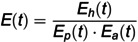 Figure 10
 Figure 11
 Figure 12
 Figure 13
 Figure 14
 Figure 15
 Figure 16
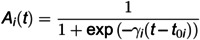 Figure 17
 Figure 18
 Figure 19
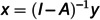 Figure 20
 Figure 21
 Figure 22
 Figure 23
 Figure 24
 Figure 25
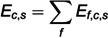 Figure 26
 Figure 27
 Figure 28
 Figure 29
 Figure 30
 Figure 31
 Figure 32
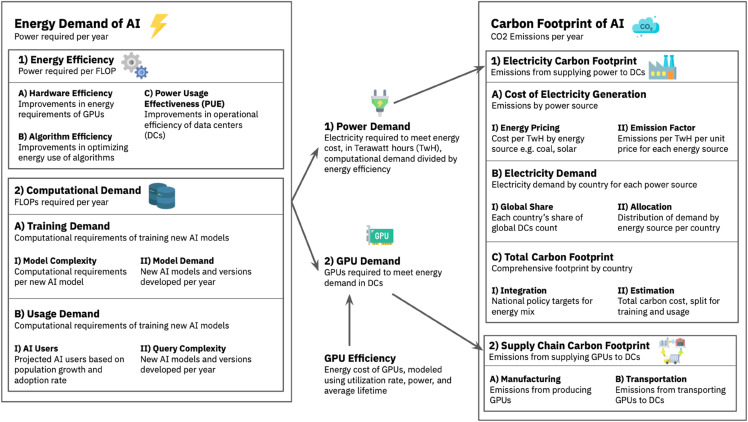 Figure 33
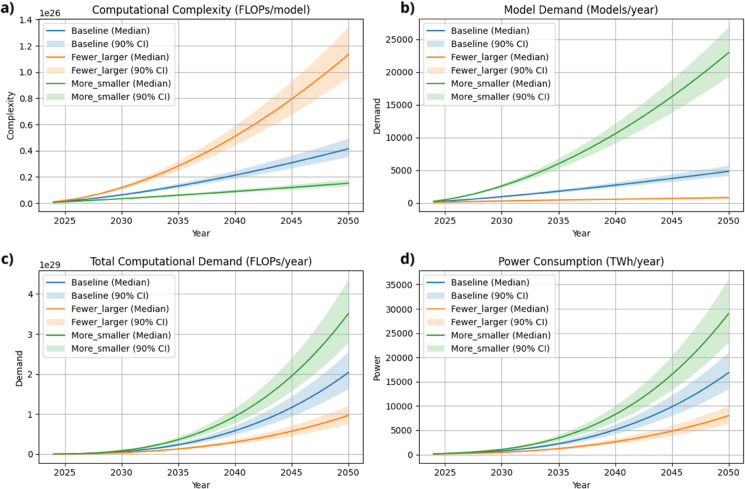 Figure 34
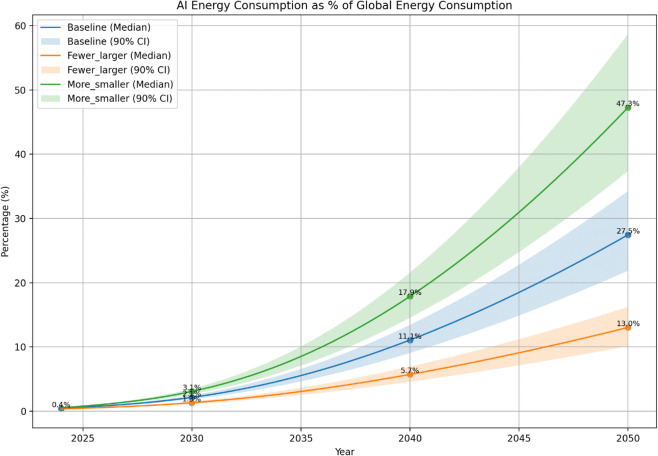 Figure 35
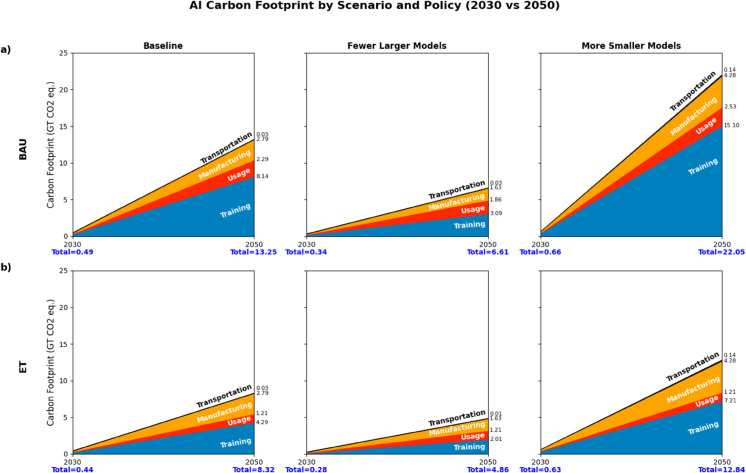 Figure 36
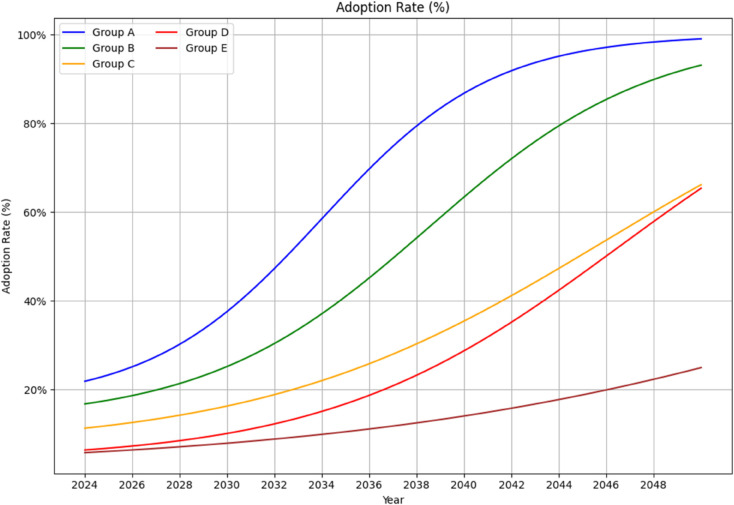 Figure 37
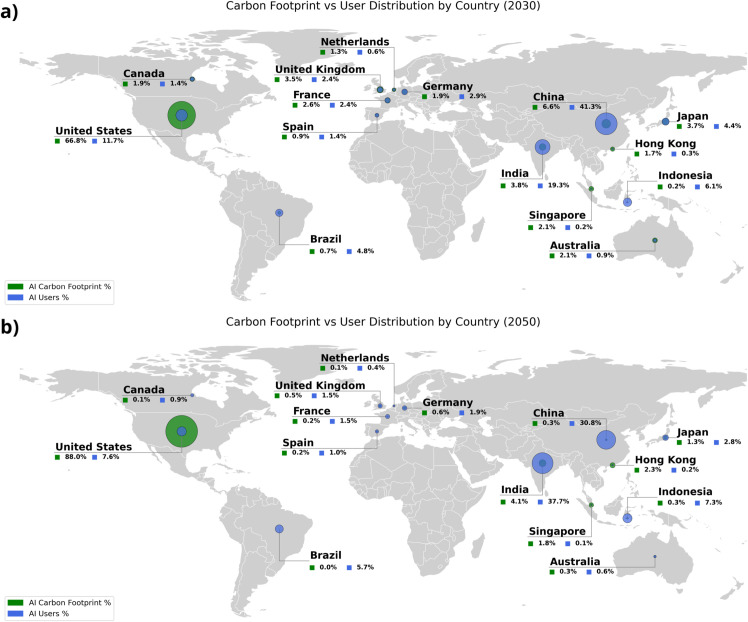 Figure 38
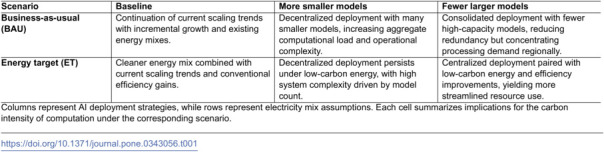 Figure 39
Peer Reviews
No public reviews on file for this paper yet. If you reviewed it on a platform where reviews are public (OpenReview, ICLR, NeurIPS, ICML), you can paste yours below so the community can read it here.
Videos
No videos yet. Explain this paper in a talk, walkthrough, or lecture? Add one.
Taxonomy
TopicsIntegrated Energy Systems Optimization · Energy Load and Power Forecasting · Environmental Impact and Sustainability