Social familiarity strengthens neural and vocal responses to conspecific calls in zebra finches
Carlos M. Gomez-Guzman, Daniela Vallentin, Jonathan I. Benichov, Iris Vilares, Iris Vilares, Iris Vilares, Iris Vilares

TL;DR
Zebra finches respond more strongly to familiar calls, and their brain activity shows stronger and longer responses to these calls, helping them communicate effectively in social groups.
Contribution
This study reveals how social familiarity modulates neural activity in a vocal premotor nucleus to enhance specific vocal responses in zebra finches.
Findings
HVC interneurons show stronger and more sustained responses to familiar calls compared to unfamiliar ones.
Vocal response rates and consistency correlate with elevated neural firing rates and prolonged activity in HVC interneurons.
Birds respond faster and more precisely to familiar calls, indicating a link between neural activity and behavioral output.
Abstract
Across animals, dyadic vocal interactions often occur within complex acoustic environments containing numerous signalers. The influence of socially relevant acoustic signals on the neural circuits controlling interactive vocal behavior remains poorly understood. We examined this issue in zebra finches, highly social songbirds that maintain nearly continuous vocal contact through the exchange of short innate calls. We developed a behavioral paradigm that elicits differential responses to familiar and unfamiliar vocal partners, enabling the prediction of social context based on individual birds’ response patterns. We then used high-density Neuropixels probes to record neural activity within a vocal premotor nucleus in the songbird forebrain, while birds listened to familiar and unfamiliar contact calls. We found that the activity of putative projection neurons and interneurons in this…
Genes, proteins, chemicals, diseases, species, mutations and cell lines named across the full text — each resolved to its canonical identifier and authoritative record.
Click any figure to enlarge with its caption.
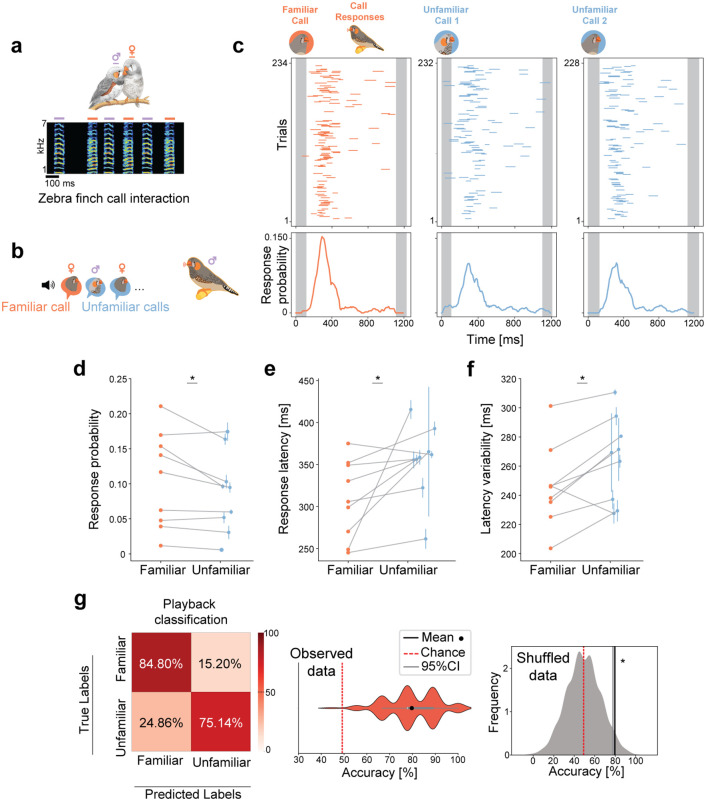 Figure 1
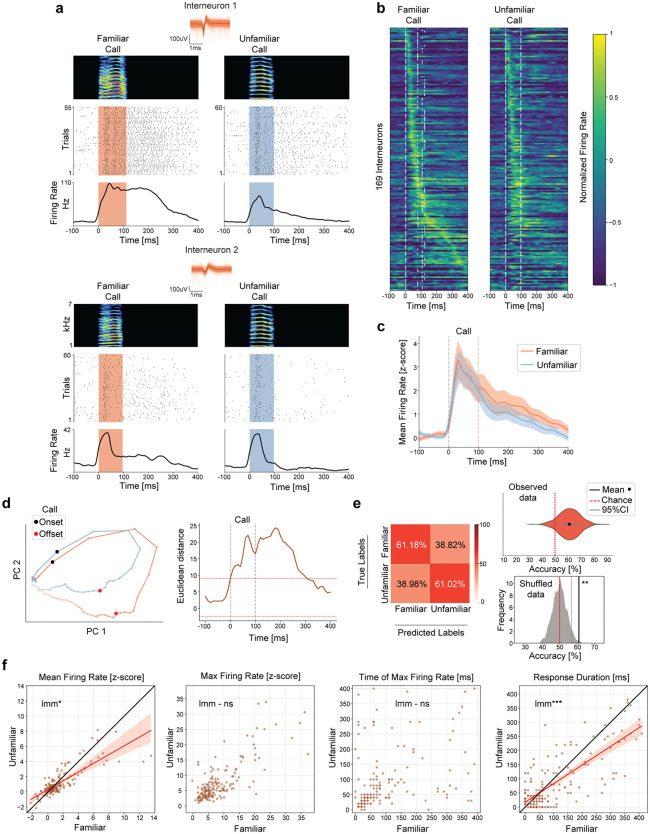 Figure 2
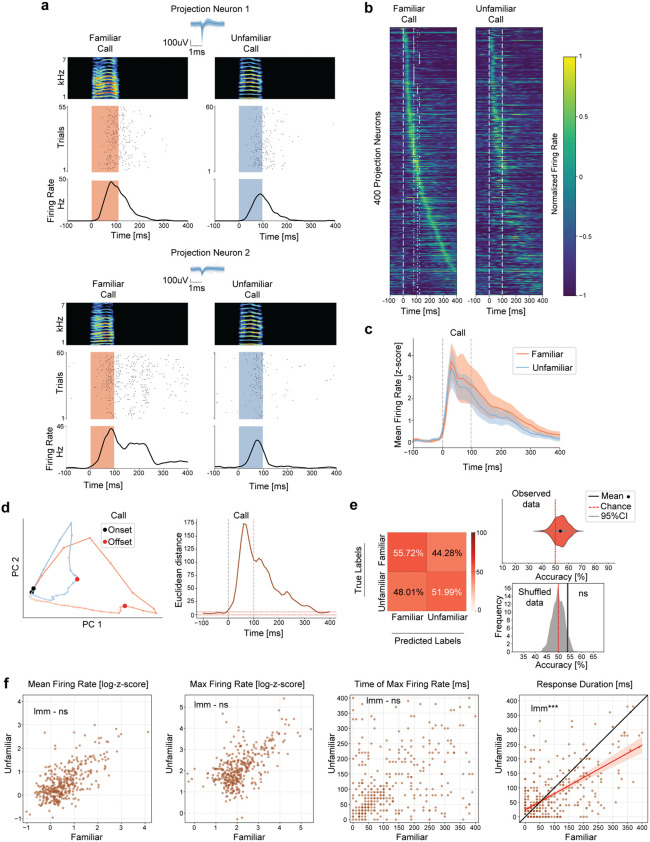 Figure 3
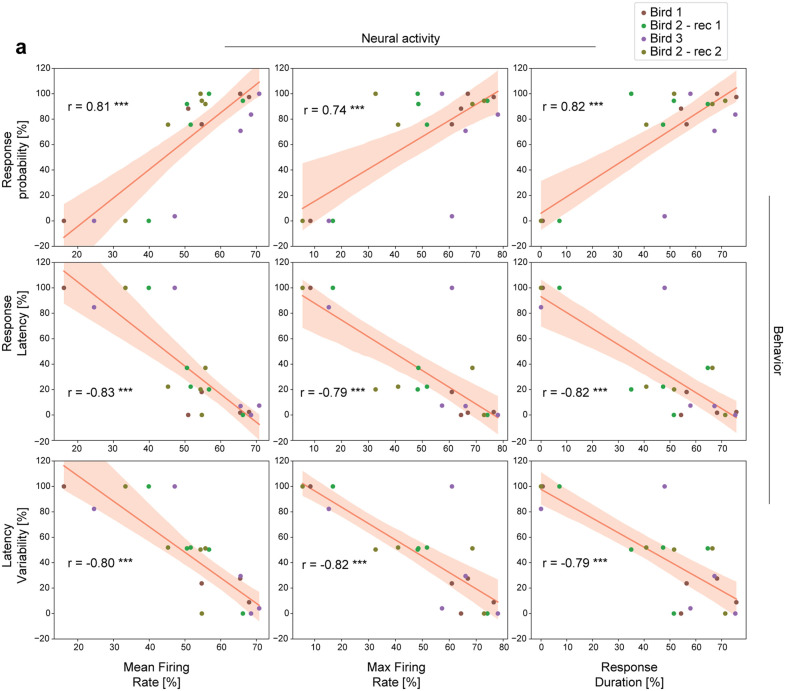 Figure 4
Peer Reviews
No public reviews on file for this paper yet. If you reviewed it on a platform where reviews are public (OpenReview, ICLR, NeurIPS, ICML), you can paste yours below so the community can read it here.
Videos
No videos yet. Explain this paper in a talk, walkthrough, or lecture? Add one.
Taxonomy
TopicsAnimal Vocal Communication and Behavior · Marine animal studies overview · Neuroscience and Music Perception