Decoding living systems: Reassessing crop model frontiers via biological dynamics and optimized phenotype
Edgar S. Correa, Paulo Eduardo Teodoro, Paulo Eduardo Teodoro, Paulo Eduardo Teodoro, Paulo Eduardo Teodoro

TL;DR
This paper introduces a framework to model and optimize crop performance by integrating biological processes and AI, revealing strategies for yield under varying water conditions.
Contribution
A novel inverse engineering framework combining sensitivity analysis, genetic algorithms, and similarity analysis to optimize crop phenotypes.
Findings
Eight genetic coefficients were identified as key yield drivers with consistent rankings.
Two adaptive strategies were found: extended growth under high water and shortened cycles under water deficit.
WAB56−50 and DKAP2 were identified as top breeding candidates with a 22–30% genetic gap to computational optima.
Abstract
Modeling and optimizing phenotypic performance of biological systems demands understanding how physiological processes mediate genotype-by-environment interactions. While AI-driven approaches achieve predictive accuracy, they often function as black boxes that obscure biological causality. Process-based models address this limitation through explicit mechanistic representation, enabling both quantitative optimization and biological interpretation. This study contributes an inverse engineering framework with three integrated layers: sensitivity analysis validating biological coherence, genetic algorithm exploring virtual phenotypes to identify adaptive strategies, and similarity analysis quantifying routes from computational optima to field-validated cultivars. Sensitivity analysis identified eight genetic-based coefficients governing yield with robust rankings (95% CI width = 0.04). The…
Genes, proteins, chemicals, diseases, species, mutations and cell lines named across the full text — each resolved to its canonical identifier and authoritative record.
Click any figure to enlarge with its caption.
 Figure 1
 Figure 2
 Figure 3
 Figure 4
 Figure 5
 Figure 6
 Figure 7
 Figure 8
 Figure 9
 Figure 10
 Figure 11
 Figure 12
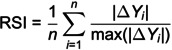 Figure 13
 Figure 14
 Figure 15
 Figure 16
 Figure 17
 Figure 18
 Figure 19
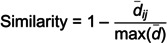 Figure 20
 Figure 21
 Figure 22
 Figure 23
 Figure 24
 Figure 25
 Figure 26
 Figure 27
 Figure 28
 Figure 29
 Figure 30
 Figure 31
 Figure 32
 Figure 33
 Figure 34
 Figure 35
 Figure 36
 Figure 37
 Figure 38
 Figure 39
 Figure 40
 Figure 41
 Figure 42
 Figure 43
 Figure 44
 Figure 45
 Figure 46
 Figure 47
 Figure 48
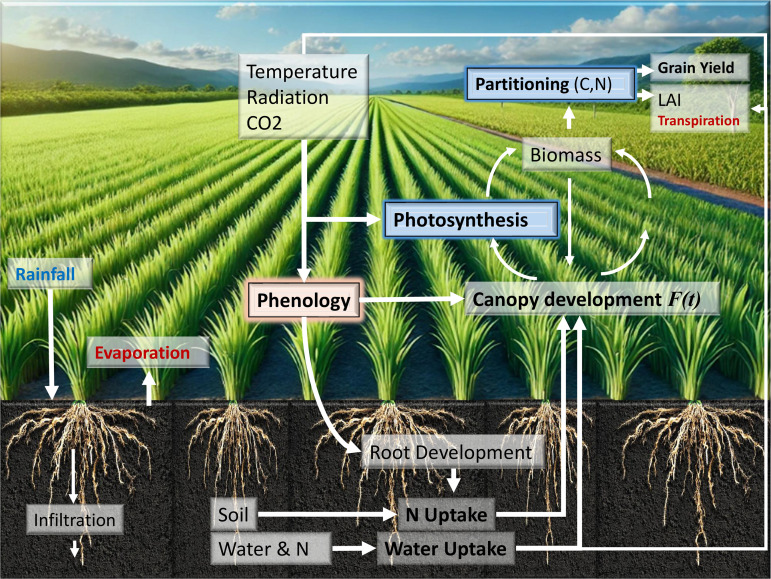 Figure 49
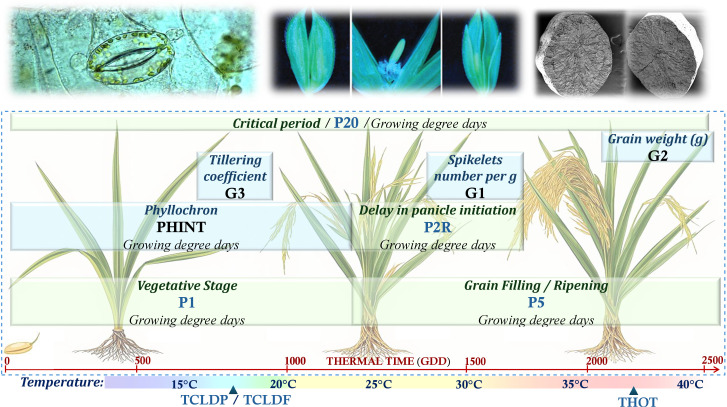 Figure 50
Peer Reviews
No public reviews on file for this paper yet. If you reviewed it on a platform where reviews are public (OpenReview, ICLR, NeurIPS, ICML), you can paste yours below so the community can read it here.
Videos
No videos yet. Explain this paper in a talk, walkthrough, or lecture? Add one.
Taxonomy
TopicsGreenhouse Technology and Climate Control · Climate change impacts on agriculture · Plant Molecular Biology Research