Brain-injury and Alzheimer’s disease biomarkers are elevated in patients with suspected infection and physiological derangement: importance for context-specific interpretation of Alzheimer’s biomarkers
Daniel P Whitehouse, Jack Cafferkey, Andrew Ferguson, Soraya Ebrahimi, Timothy Rittman, Michael Hornberger, Alasdair Gray, Alasdair R Corfield, Virginia F J Newcombe, Edward J Needham

TL;DR
The study finds that brain injury and Alzheimer's biomarkers are elevated in patients with suspected infection, suggesting these biomarkers may be influenced by non-brain factors like infection.
Contribution
The paper is the first to show that p-tau-217, a key Alzheimer’s biomarker, is elevated in sepsis patients, potentially complicating its use in diagnosing Alzheimer’s.
Findings
Total tau and NfL levels were significantly higher in suspected sepsis patients compared to controls.
p-tau-217 levels in sepsis patients were comparable to those in Alzheimer’s disease patients.
Serum total tau levels correlated strongly with cytokine profiles in sepsis patients.
Abstract
Following acute infective illness, patients frequently exhibit neurological symptoms, with persistent neurological symptoms commonly observed following severe infection. However, the association between systemic infection and the concentration of blood-based biomarkers of brain injury and the relationship between these and markers of the host response to infection are poorly characterized in the literature. Further, the association between acute illness and the Alzheimer’s disease–associated biomarker phosphorylated-tau-217 (p-tau-217) is unknown. In acute samples from 26 patients attending the emergency department with suspected sepsis (clinically suspected or proven infection, a National Early Warning Score or National Early Warning Score 2 score ≥ 5), the levels of serum biomarkers of brain injury (neurofilament light [NfL], glial fibrillary acidic protein (GFAP), total tau and…
Genes, proteins, chemicals, diseases, species, mutations and cell lines named across the full text — each resolved to its canonical identifier and authoritative record.
Click any figure to enlarge with its caption.
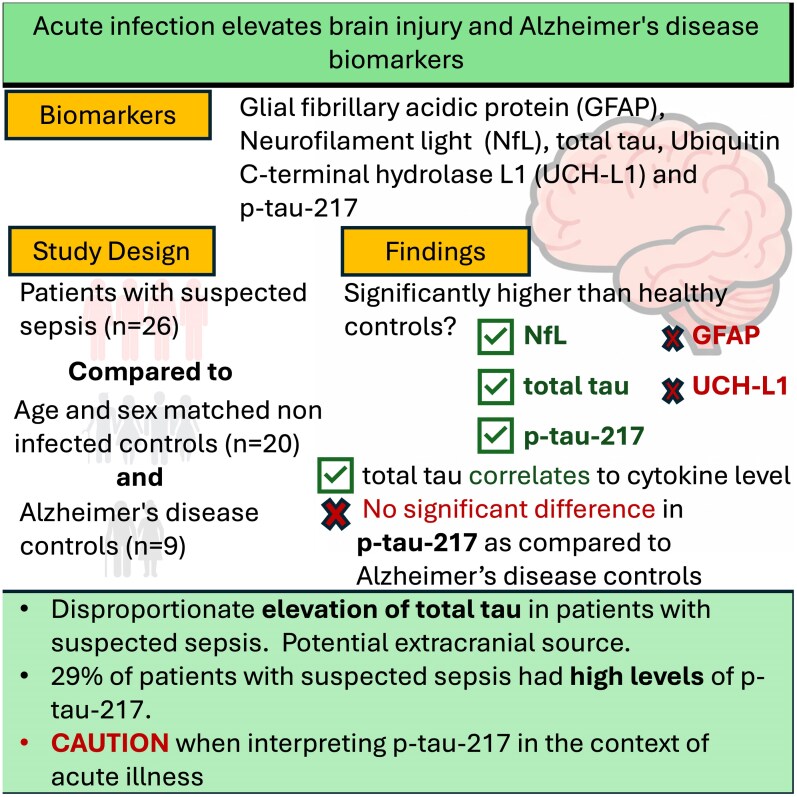 Figure 1
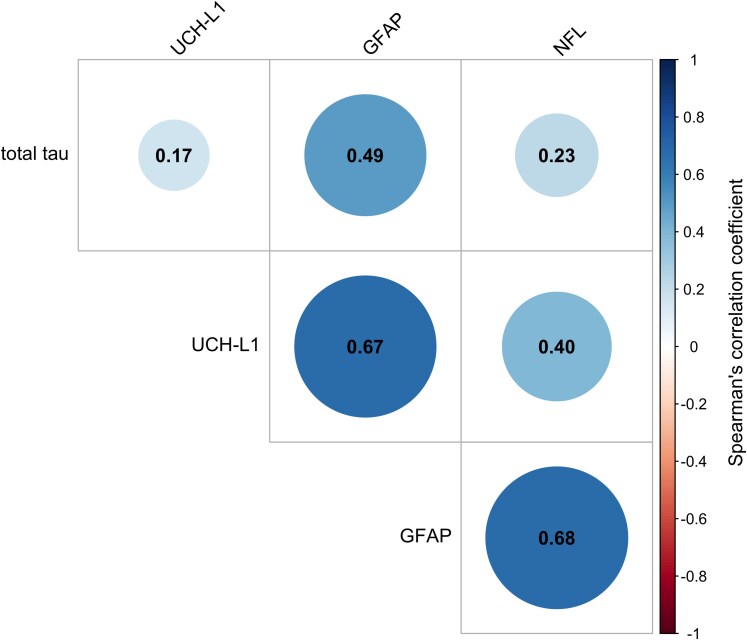 Figure 2
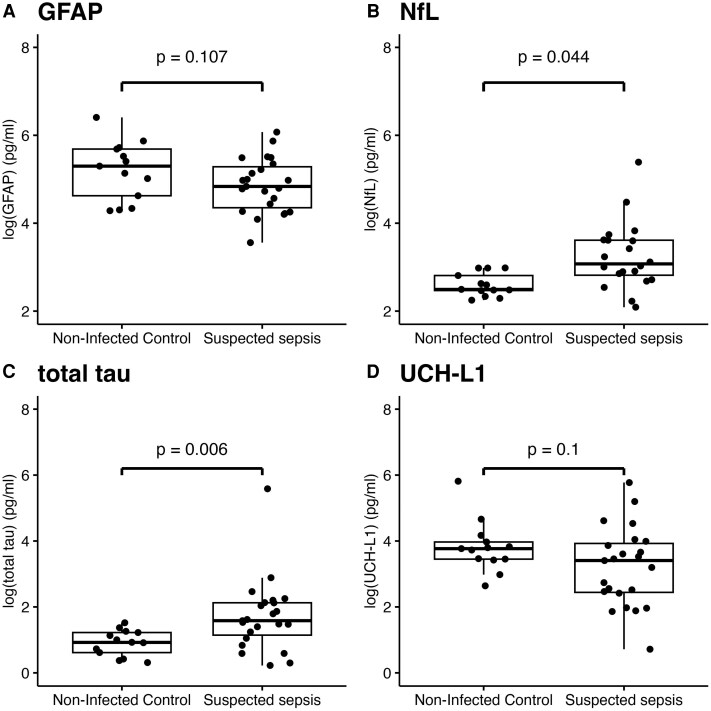 Figure 3
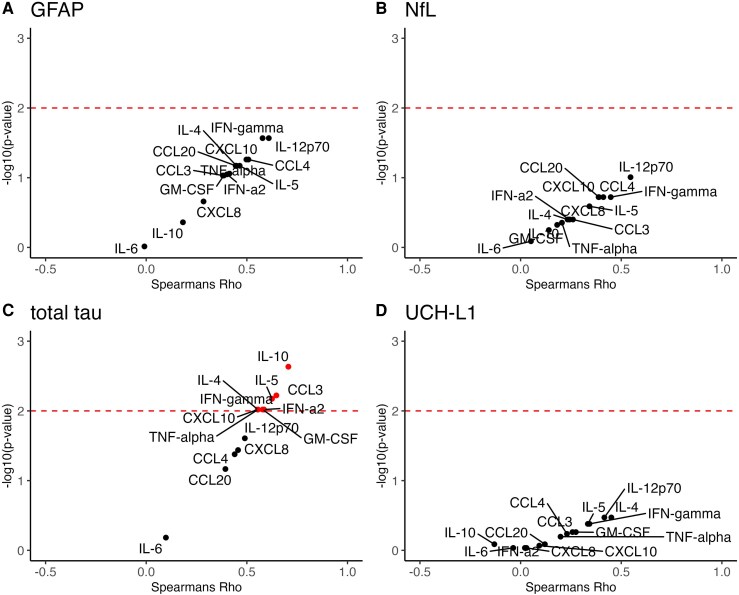 Figure 4
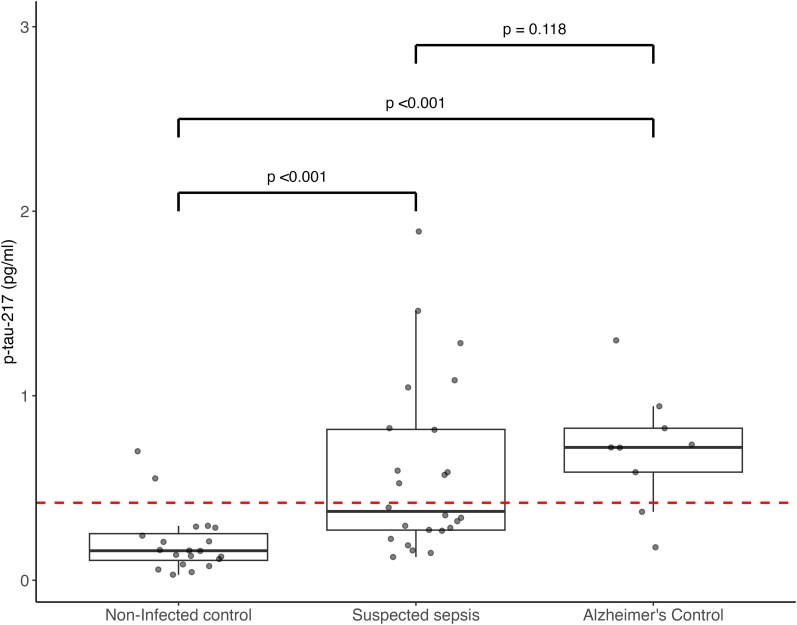 Figure 5
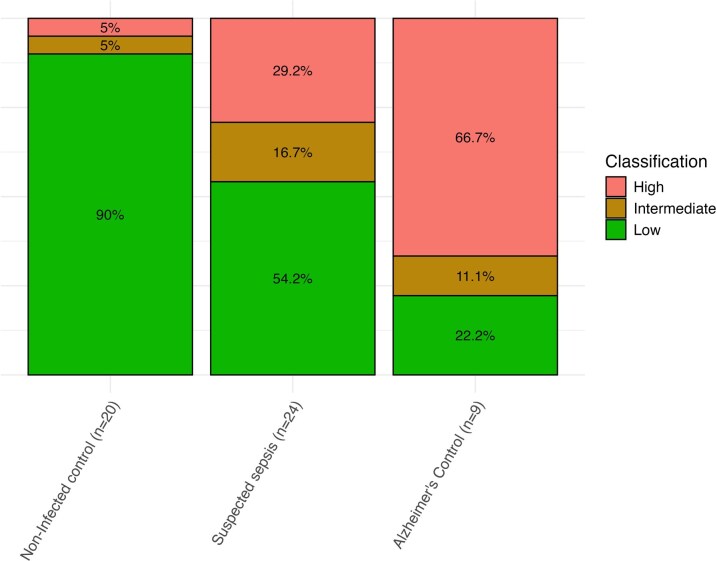 Figure 6
Peer Reviews
No public reviews on file for this paper yet. If you reviewed it on a platform where reviews are public (OpenReview, ICLR, NeurIPS, ICML), you can paste yours below so the community can read it here.
Videos
No videos yet. Explain this paper in a talk, walkthrough, or lecture? Add one.
Taxonomy
TopicsIntensive Care Unit Cognitive Disorders · S100 Proteins and Annexins · Sepsis Diagnosis and Treatment