A prospective external validation of the GRade, Age, Nodes and Tumor score in the ECOG-ACRIN EA8143 PROSPER trial
Sebastiano Buti, Se-Eun Kim, Michele Maffezzoli, Mohamad E Allaf, Giulia Claire Giudice, Giuseppe L Banna, Satoru Taguchi, Naomi B Haas, Michael A Carducci

TL;DR
The GRANT score, a tool for predicting cancer recurrence risk in kidney cancer patients, was successfully validated in a large clinical trial, showing better outcomes for patients with favorable scores.
Contribution
The GRANT score was prospectively validated in a phase III clinical trial for surgically treated renal cell carcinoma patients.
Findings
Patients with favorable GRANT scores had significantly longer relapse-free and overall survival compared to those with unfavorable scores.
The GRANT score showed better prognostic performance in nonclear cell renal cell carcinoma subtypes.
The model's discrimination was moderate with c-indices of 0.63 for relapse-free survival and 0.66 for overall survival.
Abstract
The GRade, Age, Nodes and Tumor (GRANT) score is one of the prognostic models recommended by international guidelines to refine recurrence risk stratification in patients with surgically treated renal cell carcinoma (RCC) and integrates age, tumor size, grade, and nodal status. In this study, we aimed to validate the GRANT score within the ECOG-ACRIN EA8143 PROSPER prospective trial. We conducted a validation analysis of the GRANT score within the phase III randomized EA8143 PROSPER study of perioperative nivolumab in surgically treated RCC. Patients were classified into 2 risk groups, favorable (0-1 risk factors) versus unfavorable (2-4 risk factors). Relapse-free survival (RFS) and overall survival (OS) were estimated using the Kaplan–Meier method. Model discrimination were evaluated using Harrell’s C-index. Among 714 patients included, 58.3% were favorable and 41.7% unfavorable…
Genes, proteins, chemicals, diseases, species, mutations and cell lines named across the full text — each resolved to its canonical identifier and authoritative record.
Click any figure to enlarge with its caption.
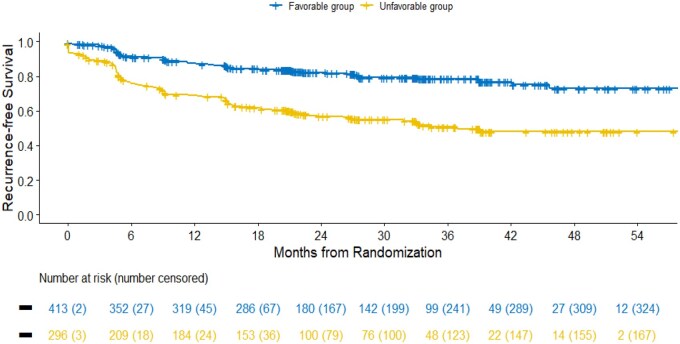 Figure 1
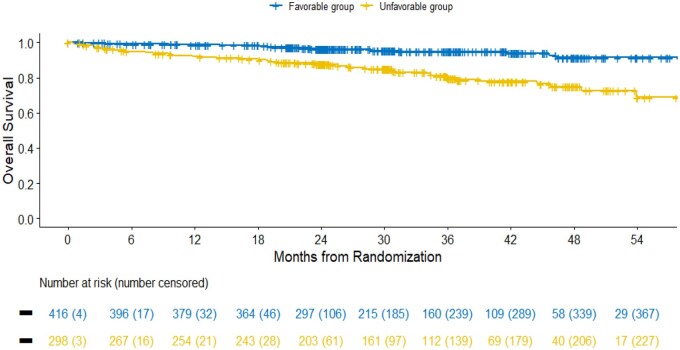 Figure 2
Peer Reviews
No public reviews on file for this paper yet. If you reviewed it on a platform where reviews are public (OpenReview, ICLR, NeurIPS, ICML), you can paste yours below so the community can read it here.
Videos
No videos yet. Explain this paper in a talk, walkthrough, or lecture? Add one.
Taxonomy
TopicsRenal cell carcinoma treatment · Ferroptosis and cancer prognosis · Bladder and Urothelial Cancer Treatments