Expression of Bruton’s Tyrosine Kinase Reflects Immune Cells Infiltration and Cell Proliferation in Breast Cancer
Tamrah AlRammah, Rongrong Wu, Kohei Chida, Kei Kawashima, Kenichi Hakamada, Takashi Ishikawa, John M.L. Ebos, Kazuaki Takabe

TL;DR
This study explores how Bruton’s tyrosine kinase (BTK) levels in breast cancer relate to immune cell infiltration and tumor growth, finding it linked to immune activity but not treatment outcomes.
Contribution
The study reveals BTK as a marker of immune activity in breast cancer subtypes, particularly TNBC, but shows it lacks predictive value for treatment response.
Findings
BTK expression is highest in triple-negative breast cancer and correlates with proliferation in ER+/HER2– tumors.
BTK-high tumors show strong immune pathway enrichment and increased immune cell infiltration.
BTK levels do not predict survival or response to chemotherapy or immunotherapy.
Abstract
Bruton’s tyrosine kinase (BTK) is a downstream mediator in B-cell receptor (BCR) signaling and is essential for B-cell differentiation and proliferation. BTK inhibitors are approved and in clinical use for hematological cancers such as lymphoma and leukemia, with testing underway in solid tumors. Because BTK is expressed in myeloid-derived suppressor cells (MDSCs) known to worsen breast cancer (BC) outcomes, we investigated the clinical relevance of BTK expression in multiple BC subtypes as a predictor of progression and/or response to treatment. We performed an integrative transcriptomic analysis of tumor BTK expression across three large BC cohorts (The Cancer Genome Atlas (TCGA), Molecular Taxonomy of Breast Cancer International Consortium (METABRIC), and Sweden Cancerome Analysis Network-Breast (SCAN-B); total n = 5,240), 10 neoadjuvant chemotherapy (NAC) datasets, and the I-SPY2…
Genes, proteins, chemicals, diseases, species, mutations and cell lines named across the full text — each resolved to its canonical identifier and authoritative record.
Click any figure to enlarge with its caption.
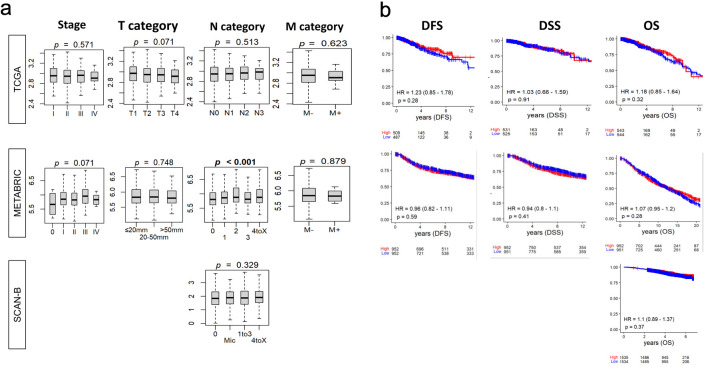 Figure 1
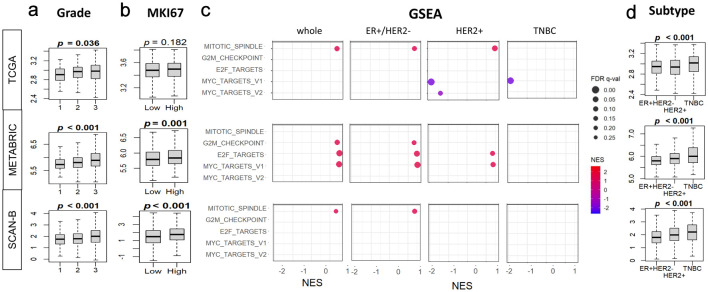 Figure 2
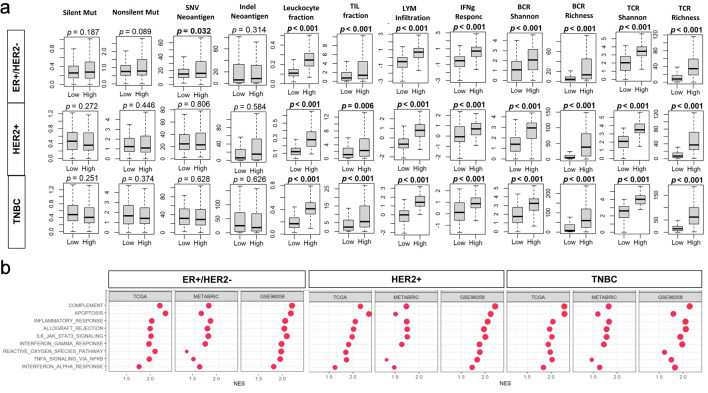 Figure 3
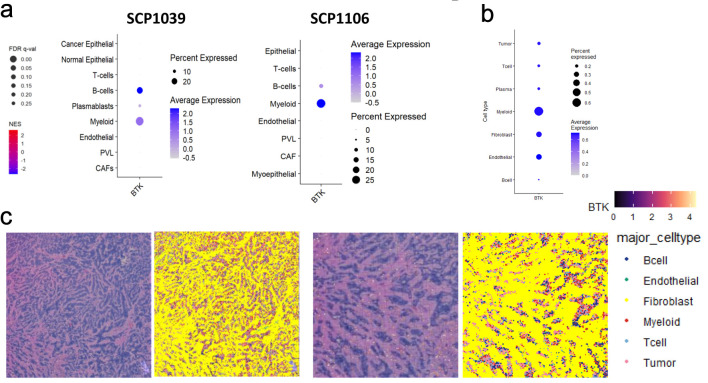 Figure 4
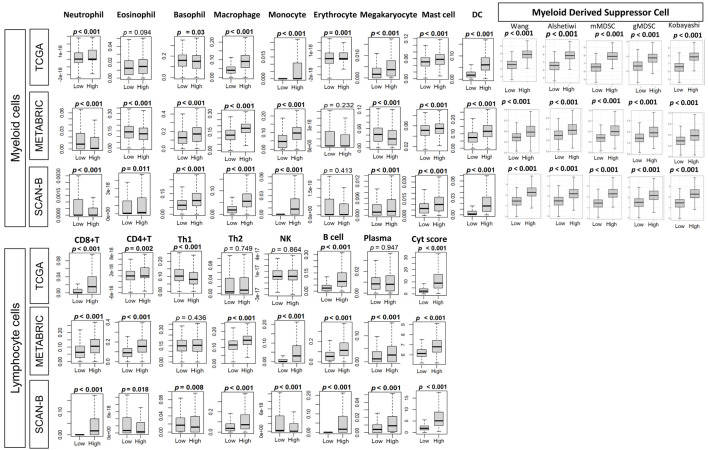 Figure 5
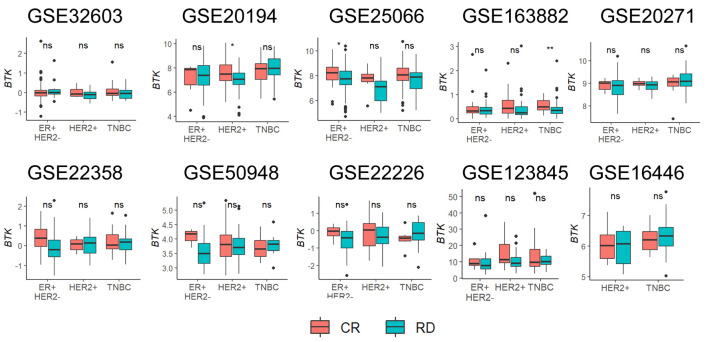 Figure 6
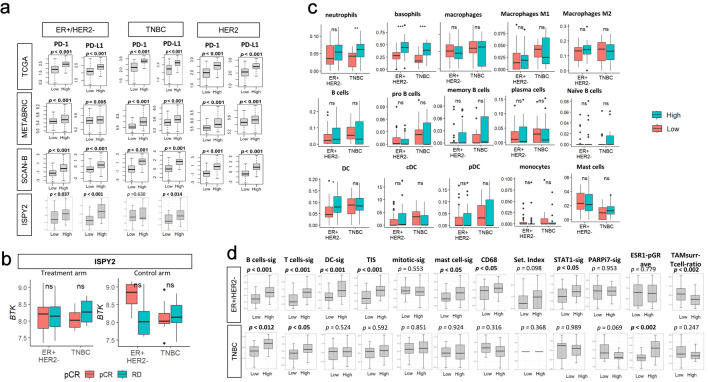 Figure 7
Peer Reviews
No public reviews on file for this paper yet. If you reviewed it on a platform where reviews are public (OpenReview, ICLR, NeurIPS, ICML), you can paste yours below so the community can read it here.
Videos
No videos yet. Explain this paper in a talk, walkthrough, or lecture? Add one.
Taxonomy
TopicsChronic Lymphocytic Leukemia Research · Phagocytosis and Immune Regulation · HER2/EGFR in Cancer Research