Characterization of Acute Myeloid Leukemia With t(16;21) Translocation: Cytogenetic, Molecular, and Immunophenotypic Findings
Milder Bravo-Davila, Dayana Espinoza-Rodrigez, Javier Orejon-Huarancca, Richard Junior Zapata Dongo

TL;DR
This study characterizes a rare type of leukemia with a specific genetic translocation, revealing differences in survival and genetic features based on chromosomal breakpoints.
Contribution
The study provides a detailed characterization of AML with t(16;21) translocation, highlighting survival differences and molecular/immunophenotypic profiles based on chromosomal breakpoints.
Findings
t(16;21)(p11;q22) was the most common translocation and associated with higher 5-year mortality compared to t(16;21)(q24;q22).
t(16;21)(p11;q22) cases frequently expressed CD56 and had FUS::ERG fusion, while t(16;21)(q24;q22) cases had RUNX1::RUNX1T3 fusion.
Relapse rates were high in t(16;21)(p11;q22) cases, with 76.1% relapsing within available data.
Abstract
Acute myeloid leukemia (AML) with t(16;21) translocation is an infrequent hematological neoplasia. This study aimed to describe the cytogenetic, molecular and immunophenotypic profiles of this disease. We conducted a descriptive observational study using secondary data. AML cases with the t(16;21) translocation were identified from the Mitelman database and systematic searches in PubMed, Scopus, SciELO and Genetics and Cytogenetics in Oncology and Hematology databases. Cytogenetic, molecular, immunophenotypic and clinical variables were extracted. We performed descriptive and survival statistical analyses at 2 and 5 years. We identified 103 cases with AML with t(16;21). Most cases were t(16;21)(p11;q22) (n = 90, 87.4%), with recurrent additional abnormalities including +10 (14.4%), –16 (7.8%), add(11) (5.6%), and del(6) (4.4%), while t(16;21)(q24;q22) cases mainly showed +8 (45.5%)…
Genes, proteins, chemicals, diseases, species, mutations and cell lines named across the full text — each resolved to its canonical identifier and authoritative record.
Click any figure to enlarge with its caption.
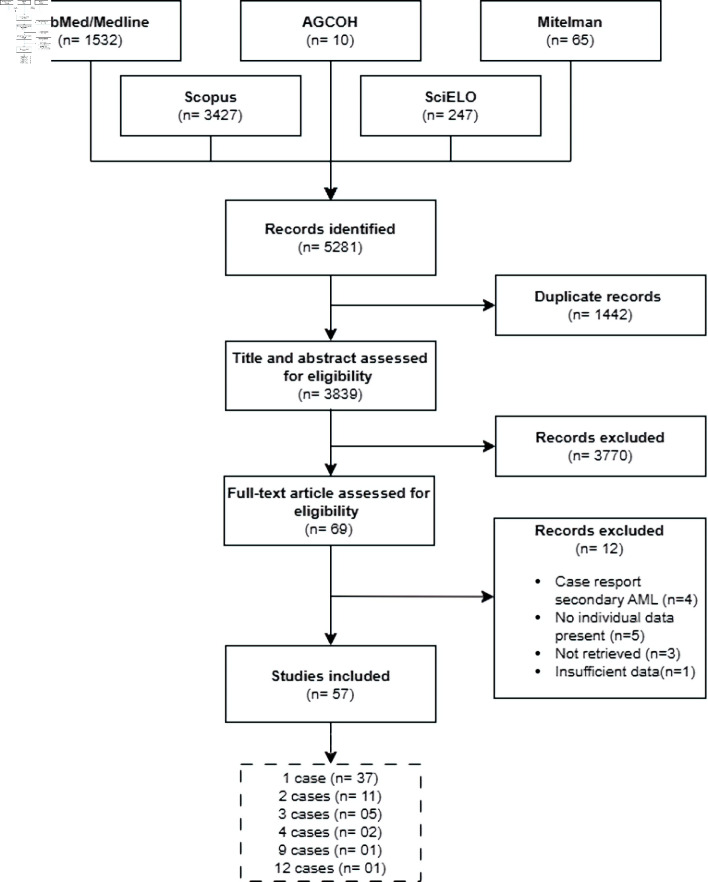 Figure 1
 Figure 2
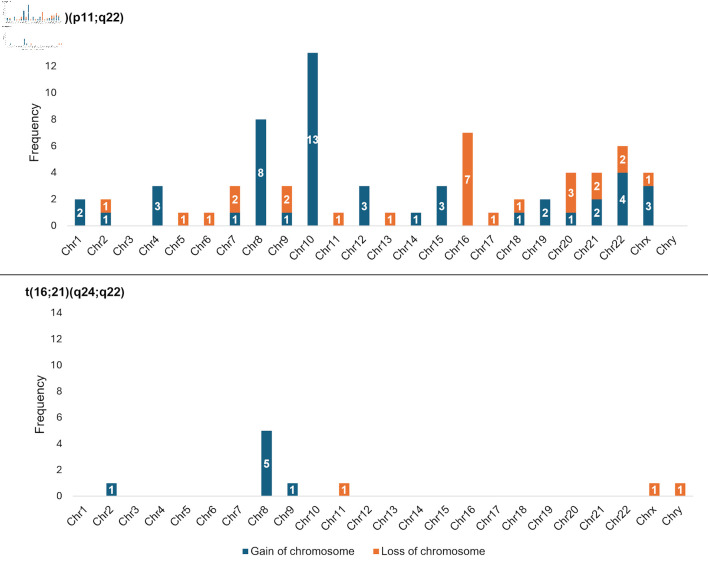 Figure 3
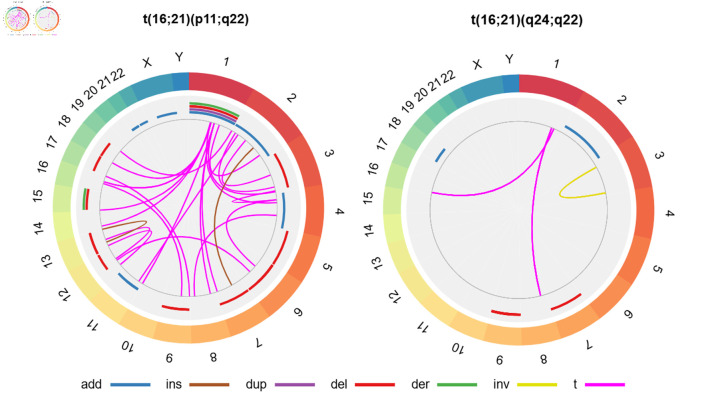 Figure 4
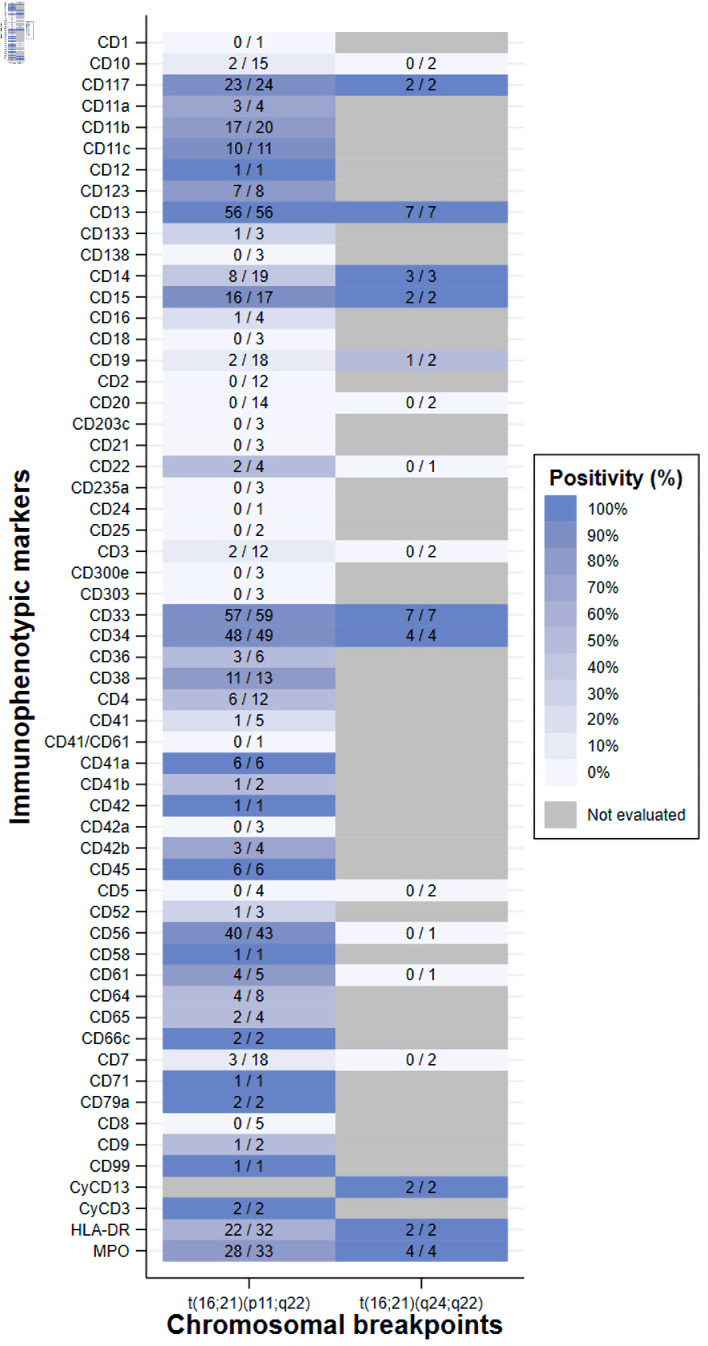 Figure 5
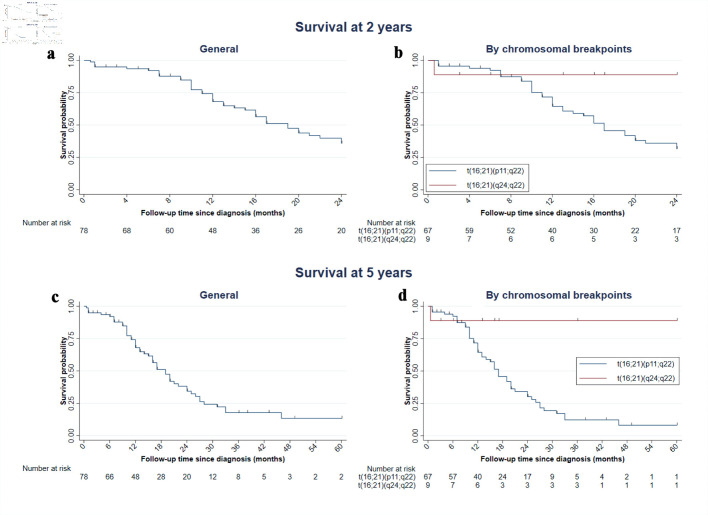 Figure 6
Peer Reviews
No public reviews on file for this paper yet. If you reviewed it on a platform where reviews are public (OpenReview, ICLR, NeurIPS, ICML), you can paste yours below so the community can read it here.
Videos
No videos yet. Explain this paper in a talk, walkthrough, or lecture? Add one.
Taxonomy
TopicsAcute Myeloid Leukemia Research · Chronic Myeloid Leukemia Treatments · Acute Lymphoblastic Leukemia research