TP53 Loss Fuels mTORC1 Activation and Autophagy Suppression to Drive Immune-Cold Colorectal Cancer
Eunseuk Lee, Dana Al-Assi, Randy Rivera-Rueda, Sharon Susan Paul, Aksa Joy

TL;DR
This study shows that loss of the TP53 gene in colorectal cancer leads to immune suppression by activating mTORC1 and reducing autophagy, making the tumor 'immune-cold'.
Contribution
The paper provides protein- and phosphosite-level evidence linking TP53 loss to immune suppression in microsatellite-stable colorectal cancer.
Findings
TP53-mutant tumors show increased mTORC1 signaling and reduced autophagy across multiple datasets.
Proteomic data confirm sustained mTORC1 activity in p53-deficient tumors through phosphorylation changes.
TP53 loss is associated with FOXP3-dominant immune-cold features in colorectal cancer.
Abstract
Microsatellite-stable colorectal cancer (MSS CRC) is typically resistant to immune checkpoint blockade and remains an “immune-cold” disease. Wild-type p53 is known to restrain mTOR signaling and support autophagy, yet how TP53 loss integrates metabolic rewiring with immune suppression in MSS CRC—especially with protein- and phosphosite-level validation—remains incompletely defined. We tested whether p53 deficiency is associated with coordinated mTORC1 activation, autophagy attenuation, and immune-cold remodeling across multi-omics datasets. We analyzed GSE146009 (paired tumor-normal RNA-seq pairs), TCGA-COAD/READ (n = 647, mutation annotated), GSE108989 (11,138 tumor-infiltrating T cells), and CPTAC colon proteome/phosphoproteome cohorts. Pathway activities were quantified by single-sample gene set enrichment analysis (ssGSEA) and Seurat module scoring. Group differences were tested by…
Genes, proteins, chemicals, diseases, species, mutations and cell lines named across the full text — each resolved to its canonical identifier and authoritative record.
Click any figure to enlarge with its caption.
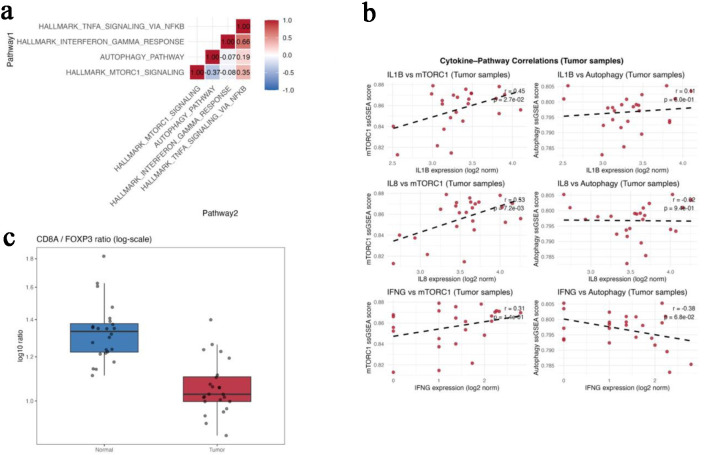 Figure 1
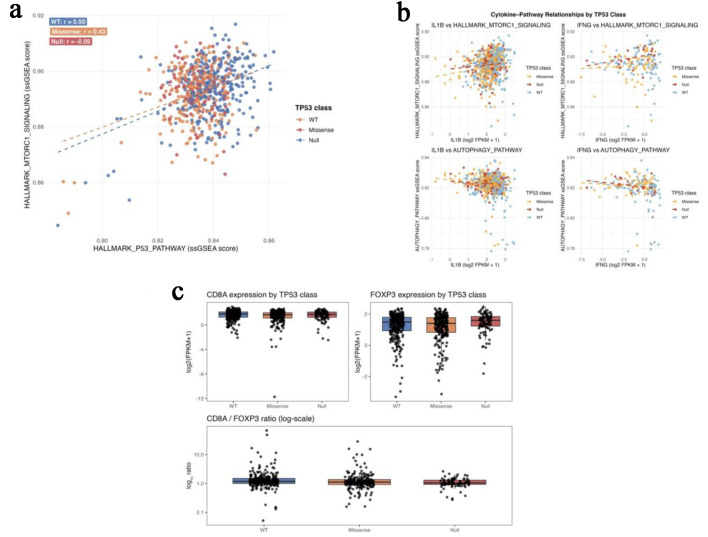 Figure 2
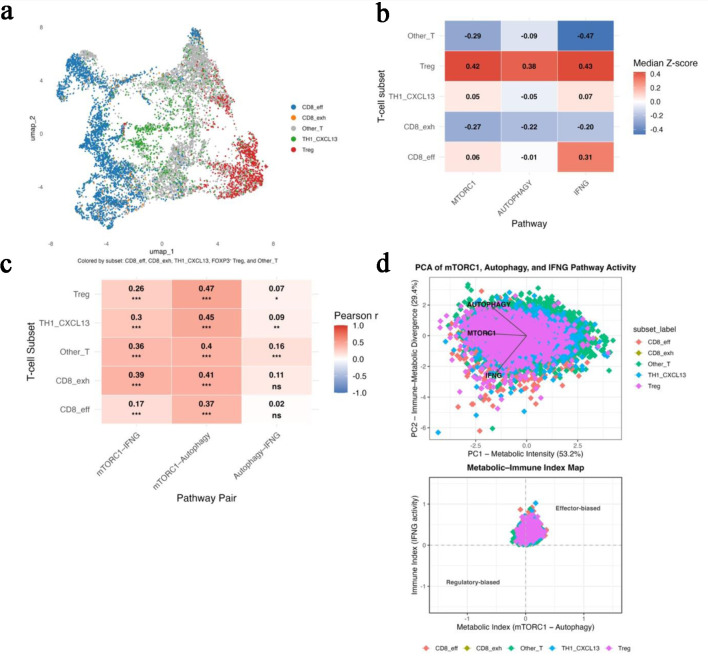 Figure 3
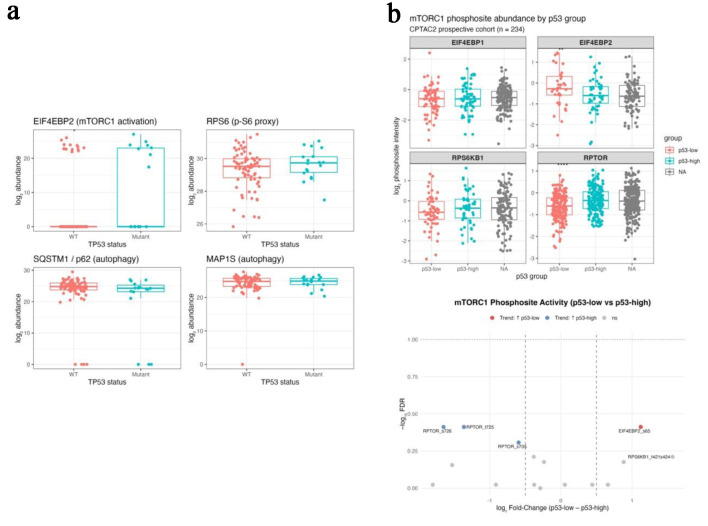 Figure 4
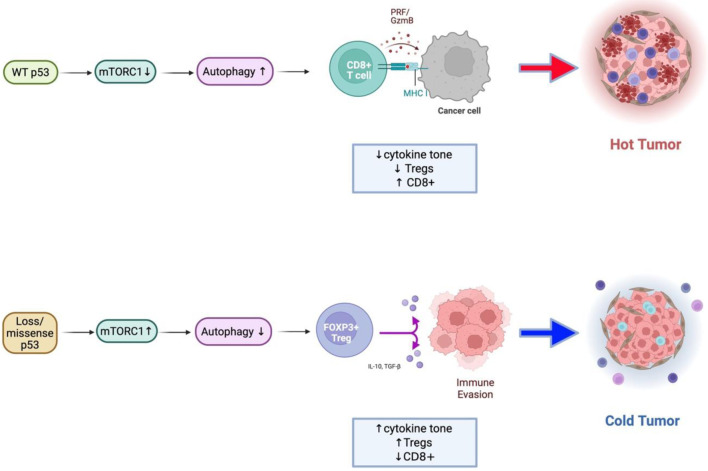 Figure 5
Peer Reviews
No public reviews on file for this paper yet. If you reviewed it on a platform where reviews are public (OpenReview, ICLR, NeurIPS, ICML), you can paste yours below so the community can read it here.
Videos
No videos yet. Explain this paper in a talk, walkthrough, or lecture? Add one.
Taxonomy
TopicsAutophagy in Disease and Therapy · PI3K/AKT/mTOR signaling in cancer · Cancer-related molecular mechanisms research