Strong Signals of Adverse Events in Tyrosine Kinase Inhibitor Therapy for Liver Cancer Treatment
Wen Xuan Zhou, Jun Hao Fan, Qian Wen Ni, Ming Kai Liu, Zhen Peng, Yuan Xu, Su Su Luo

TL;DR
This study identifies strong signals of adverse events linked to four tyrosine kinase inhibitors used in liver cancer treatment, highlighting differences in real-world data and regulatory profiles.
Contribution
The study provides a comprehensive comparison of adverse event signals across four TKIs and global regulatory data, revealing significant discrepancies and novel associations.
Findings
816 strong adverse event signals were identified across four TKIs, with sorafenib having the highest number.
Notable adverse events included pharyngeal hemorrhage, retinal artery occlusion, intracranial aneurysm, and mood swings.
Significant discrepancies in adverse event profiles were observed among regulatory agencies and real-world data.
Abstract
This study was to identify strong adverse event (AE) signals associated with four tyrosine kinase inhibitors (TKIs) (sorafenib, regorafenib, lenvatinib, and cabozantinib), and compare these signals with regulatory drug facts from multiple global agencies. Data from the US Food and Drug Administration (FDA) Adverse Event Reporting System (FAERS, 2007 - 2024) were analyzed. Each AE was treated as a binary variable, and logistic regression with robust error estimation was used to identify strong signals (odds ratio > 2, lower 95% confidence interval > 1). AE signals were compared with drug facts from the FDA (USA), European Medicines Agency (EMA, European Union), Pharmaceuticals and Medical Devices Agency (PMDA, Japan), and National Medical Products Administration (NMPA, China). Among 33,801 identifiers (137,345 records), 816 strong AE signals were found. Sorafenib had the most (373),…
Genes, proteins, chemicals, diseases, species, mutations and cell lines named across the full text — each resolved to its canonical identifier and authoritative record.
Click any figure to enlarge with its caption.
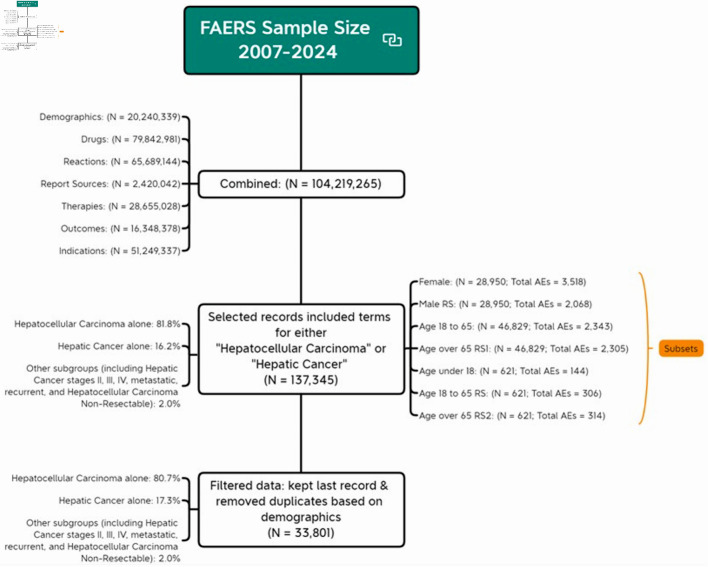 Figure 1
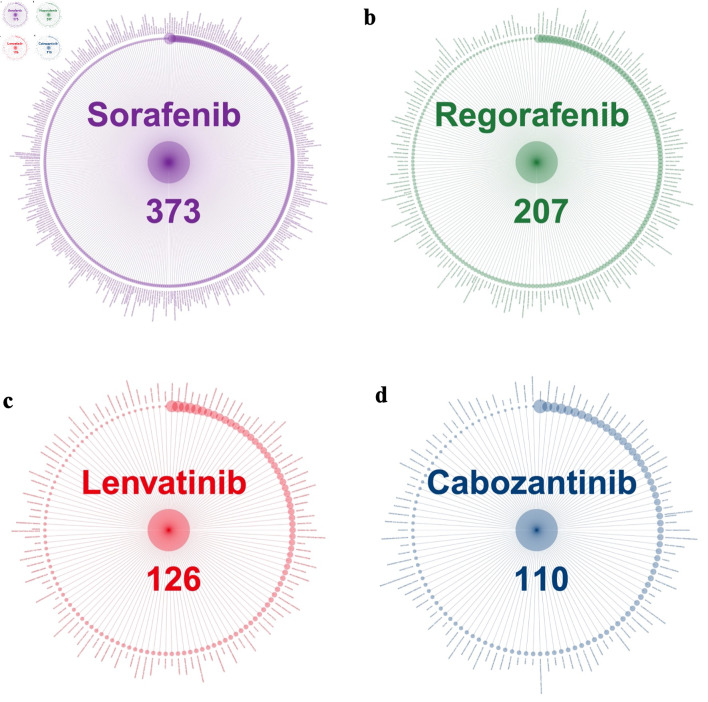 Figure 2
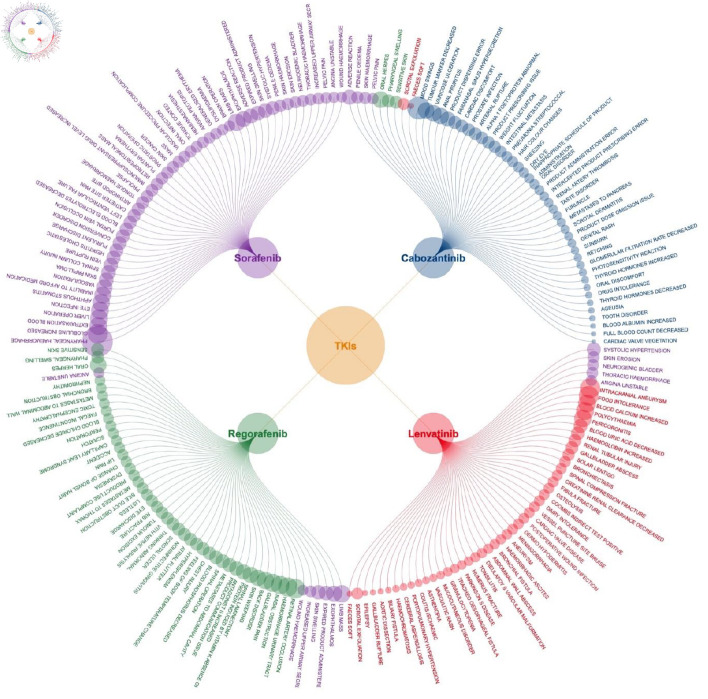 Figure 3
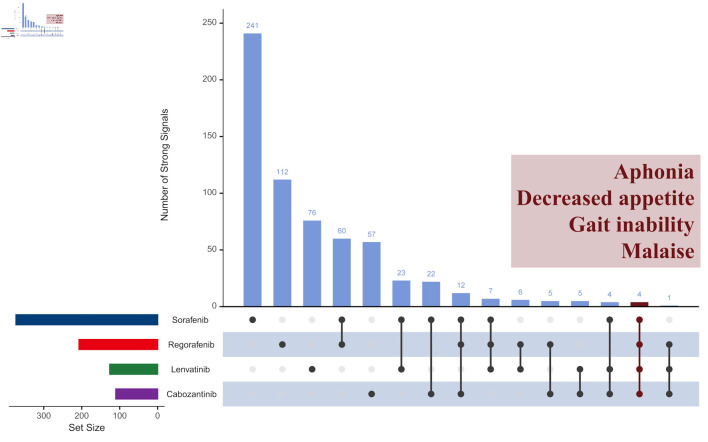 Figure 4
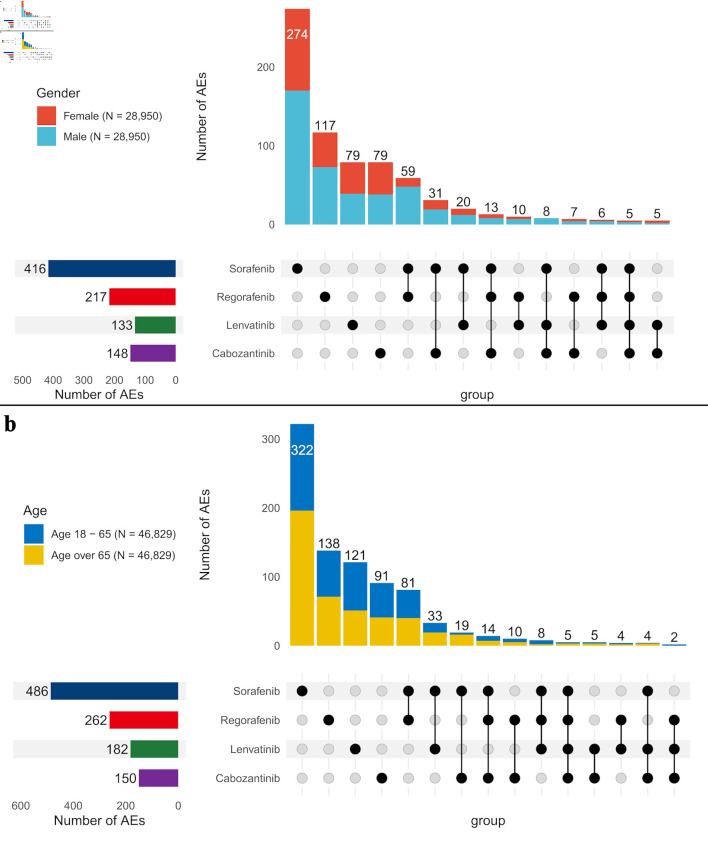 Figure 5
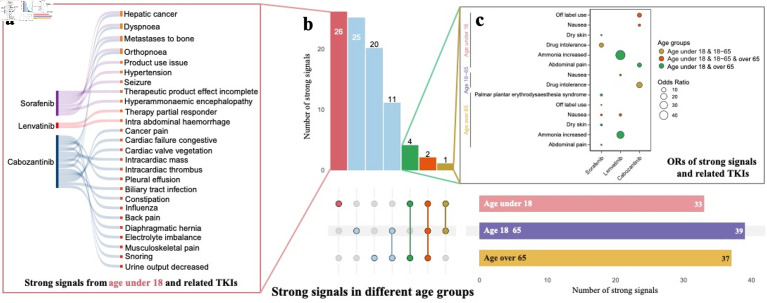 Figure 6
Peer Reviews
No public reviews on file for this paper yet. If you reviewed it on a platform where reviews are public (OpenReview, ICLR, NeurIPS, ICML), you can paste yours below so the community can read it here.
Videos
No videos yet. Explain this paper in a talk, walkthrough, or lecture? Add one.
Taxonomy
TopicsHepatocellular Carcinoma Treatment and Prognosis · Cytokine Signaling Pathways and Interactions · Liver physiology and pathology