Interpeak intervals of cortical components (P1-N1-P2): a comparative study between typical individuals and those with tinnitus disorder
Hélinton Goulart Moreira, Christine Grellmann Schumacher, João Vitor de Aguiar Barcelos, Bruna Ribas Maia, Fabiana Cristina Toillier, Larissa Coradini, Isabela Pohlmann de Ávila Lourenço, Pedro Vinícius de Godoy Ferrão, Dayane Domeneghini Didoné, Michele Vargas Garcia

TL;DR
The study found that people with tinnitus have longer neural response times in certain brainwave components compared to those without tinnitus.
Contribution
This study introduces new evidence linking tinnitus to altered central auditory processing through LLAEP interpeak interval analysis.
Findings
Individuals with tinnitus had significantly longer P1-P2 interpeak intervals in both ears.
There was a trend toward significance in N1-P2 interpeak intervals in the right ear.
These findings suggest central auditory processing dysfunction in tinnitus patients.
Abstract
To compare neural response times among cortical components of the Long-Latency Auditory Evoked Potential (LLAEP) by measuring latency and interpeak intervals in individuals with and without tinnitus. This was an analytical, cross-sectional, and quantitative study. A total of 28 participants were included, divided into two groups: the Control Group, comprising 12 individuals without tinnitus perception, and the Study Group, comprising 16 individuals diagnosed with tinnitus disorder. Assessments were conducted over two sessions. Initially, all participants underwent a semi-structured anamnesis, basic audiological evaluation, behavioral tests of central auditory processing, as well as neuropsychological and tinnitus assessments. On the second day, verbal LLAEP and neurodiagnostic ABR were performed. The responses were compared by analyzing the latency of P1, N1, and P2 potentials. A…
Genes, proteins, chemicals, diseases, species, mutations and cell lines named across the full text — each resolved to its canonical identifier and authoritative record.
Click any figure to enlarge with its caption.
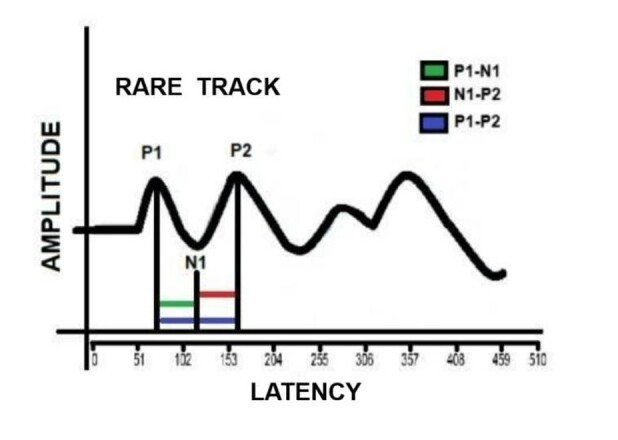 Figure 1
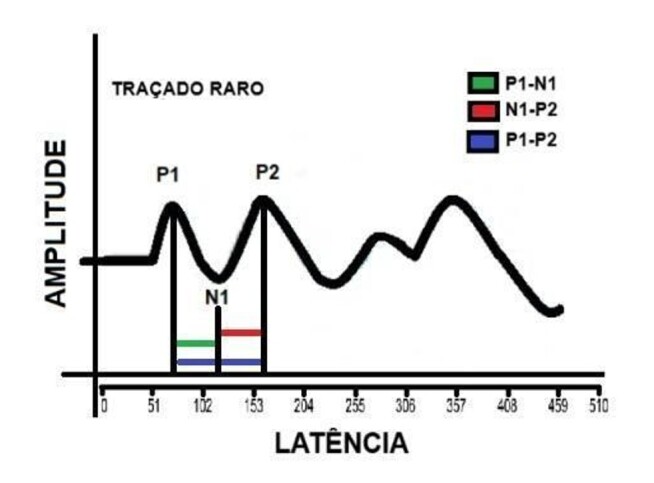 Figure 2
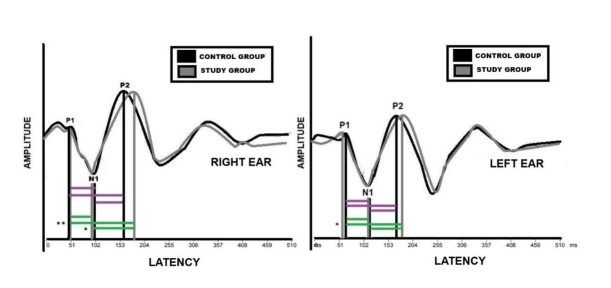 Figure 3
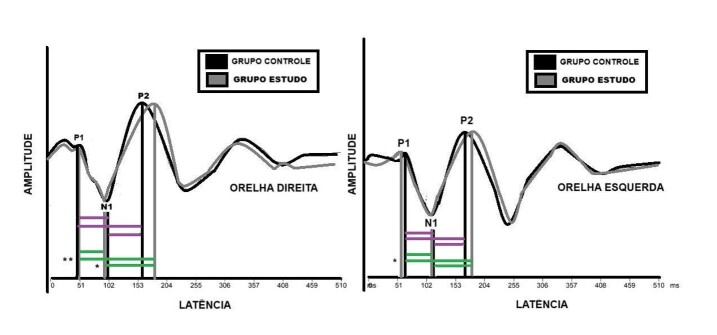 Figure 4
Peer Reviews
No public reviews on file for this paper yet. If you reviewed it on a platform where reviews are public (OpenReview, ICLR, NeurIPS, ICML), you can paste yours below so the community can read it here.
Videos
No videos yet. Explain this paper in a talk, walkthrough, or lecture? Add one.
Taxonomy
TopicsHearing, Cochlea, Tinnitus, Genetics · Hearing Loss and Rehabilitation · Neuroscience and Music Perception