Visual reinforcement audiometry and its association with neonatal hearing screening and the offer of speech therapists, services and equipment
Monique Ramos Paschoal Dutra, Rodrigo Oliveira da Fonsêca, Aryelly Dayane da Silva Nunes-Araújo, Sheila Andreoli Balen, Monique Ramos Paschoal Dutra, Rodrigo Oliveira da Fonsêca, Aryelly Dayane da Silva Nunes-Araújo, Sheila Andreoli Balen

TL;DR
This study examines the use of visual reinforcement audiometry in Brazil's public health system from 2004 to 2021 and finds it is unevenly distributed and not linked to neonatal hearing screening or available services.
Contribution
The study provides the first national analysis of VRA performance rates and their lack of association with key health variables in Brazil.
Findings
The VRA rate in Brazil was 11.8 per 10,000 inhabitants between 2004 and 2021.
VRA rates varied widely among Brazilian states, from 0 to 125.1 per 10,000 inhabitants.
No significant correlation was found between VRA performance and neonatal hearing screening or available services.
Abstract
To analyze the outpatient production of the visual reinforcement audiometry (VRA) in the Unified Health System (SUS), in the Federation Units (UFs) of Brazil, between 2004 and 2021, and its association with Neonatal Hearing Screening (NHS) and offering audiologists, hearing health services and VRA equipment. Ecological mixed study, which used data from the SUS Outpatient Information System, of the National Registry of Health Establishments and of the Brazilian Institute of Geography and Statistics. The dependent variable was the rate of performance of the “visual reinforcement audiometry (air/bone route)” procedure, per 10 thousand inhabitants, while the independent variables were the rates of NHS, speech therapists, hearing health services and VRA equipment. Descriptive and inferential statistics and spatial analysis were performed. The VRA rate in Brazil was 11.8/10 thousand…
Genes, proteins, chemicals, diseases, species, mutations and cell lines named across the full text — each resolved to its canonical identifier and authoritative record.
Click any figure to enlarge with its caption.
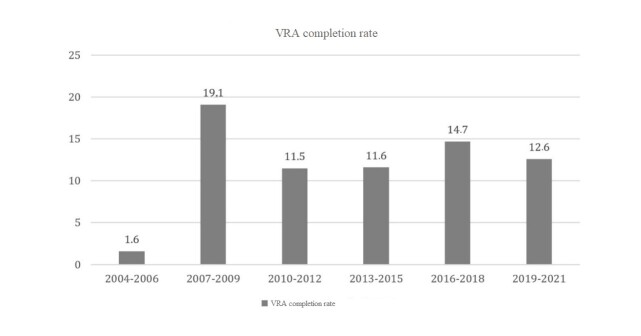 Figure 1
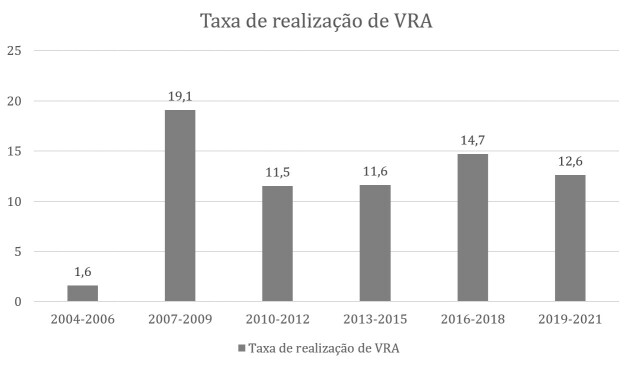 Figure 2
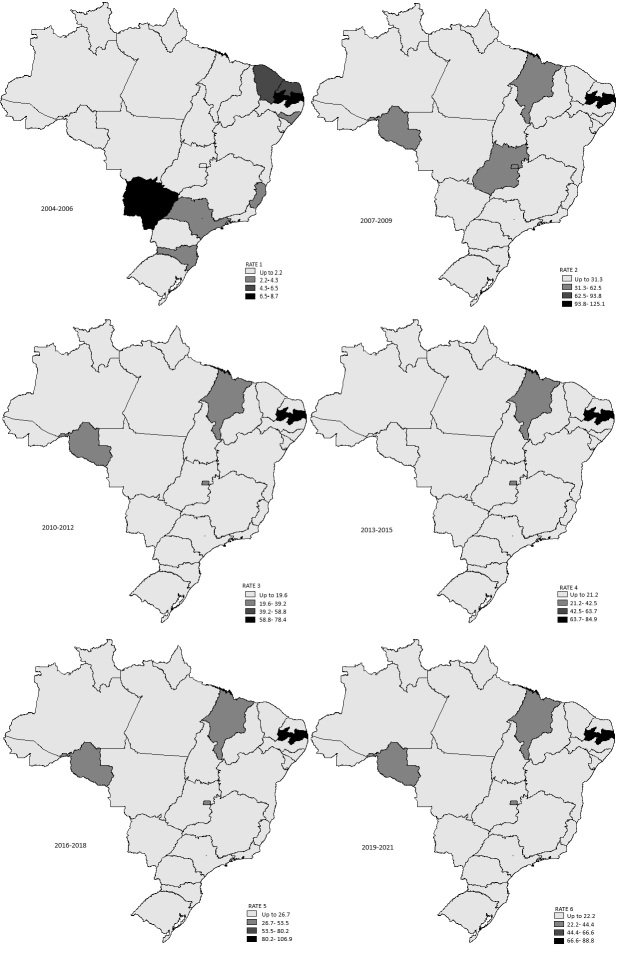 Figure 3
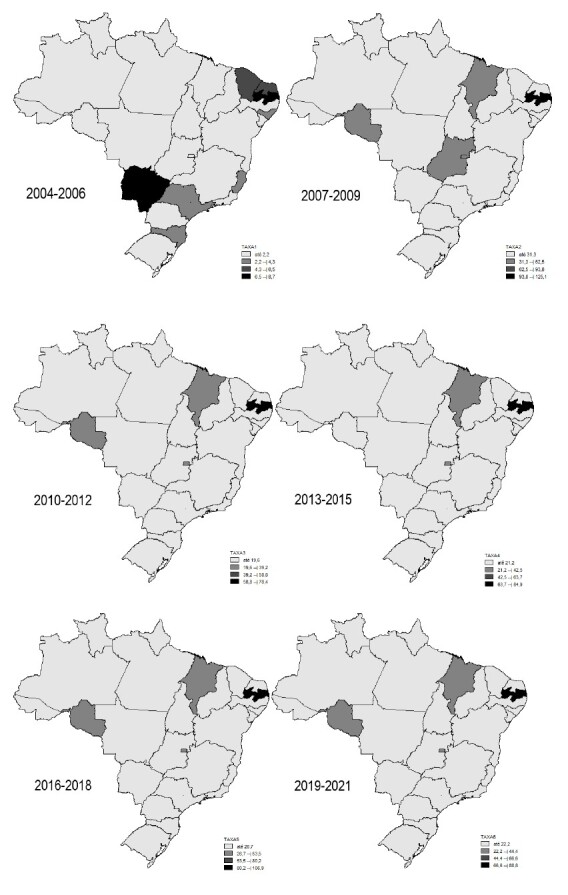 Figure 4
Peer Reviews
No public reviews on file for this paper yet. If you reviewed it on a platform where reviews are public (OpenReview, ICLR, NeurIPS, ICML), you can paste yours below so the community can read it here.
Videos
No videos yet. Explain this paper in a talk, walkthrough, or lecture? Add one.
Taxonomy
TopicsHearing, Cochlea, Tinnitus, Genetics · Hearing Loss and Rehabilitation · Maternal and Neonatal Healthcare