A multi-model fusion approach incorporating conventional radiological and machine learning features across age spectrum for periorbital fat status prediction
Meng Wang, Yudi Han, Li Li, Xi Lu, Yiqing Jia, Lingli Guo, Yan Han

TL;DR
This paper introduces an ensemble learning model that combines radiomics and machine learning features to predict periorbital fat status across different age groups using MRI data.
Contribution
The novel contribution is the development of an ensemble learning model that outperforms conventional and fusion models in predicting periorbital fat status across age groups.
Findings
The ensemble model achieved an AUC-macro of 0.833 and an F1-score of 0.614 on the test set.
The model demonstrated superior performance compared to CR, ML, and CR-ML fusion models.
It provides a reliable non-invasive method for assessing periorbital fat status across the age spectrum.
Abstract
To develop an ensemble learning model fusing conventional radiomics (CR) and machine learning (ML) features to assess periorbital fat status across the entire age spectrum. Retrospective analysis was conducted on preoperative cranial and facial MRI data of meningioma patients. Patients were categorized into youth, middle-aged, and senior groups and allocated to training and test sets through stratified random sampling. CR and ML features of fat in three periorbital regions were extracted to develop an ensemble learning model, with its clinical application value subsequently evaluated. 237 patients were enrolled: 165 in the training set and 72 in the test set. The training set comprised 19 youth cases (28.5 ± 5.0, 7 male), 41 middle-aged cases (42.9 ± 4.7, 9 male), and 105 senior cases (60.0 ± 6.5, 26 male). The test set included 8 youth cases (28.6 ± 5.6, 4 male), 18 middle-aged cases…
Genes, proteins, chemicals, diseases, species, mutations and cell lines named across the full text — each resolved to its canonical identifier and authoritative record.
Click any figure to enlarge with its caption.
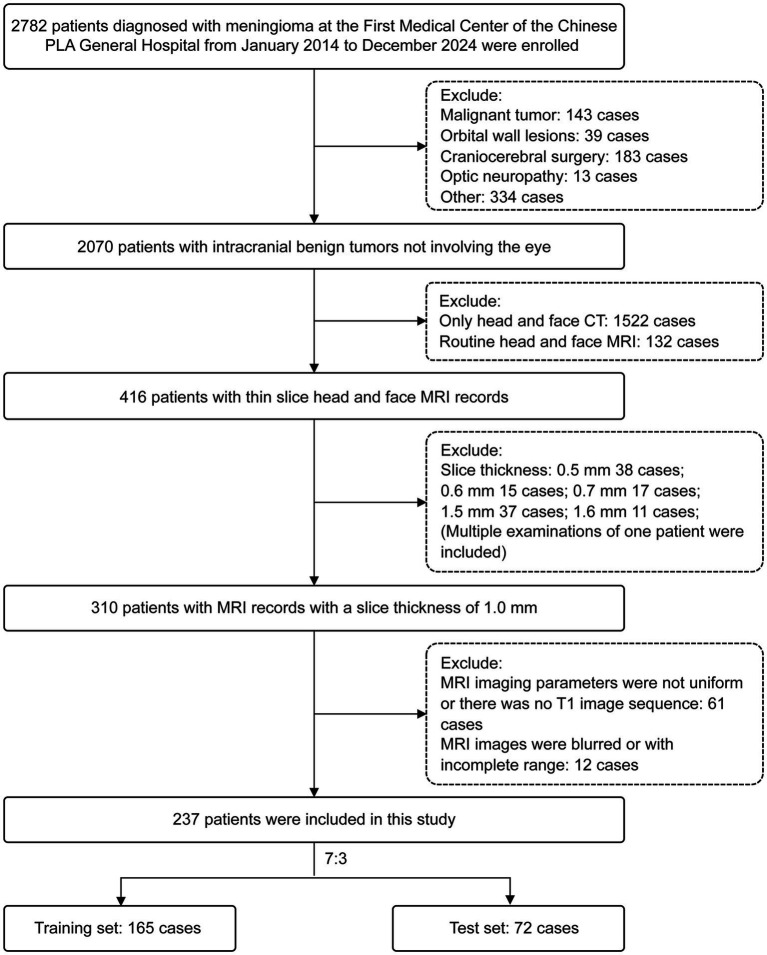 Figure 1
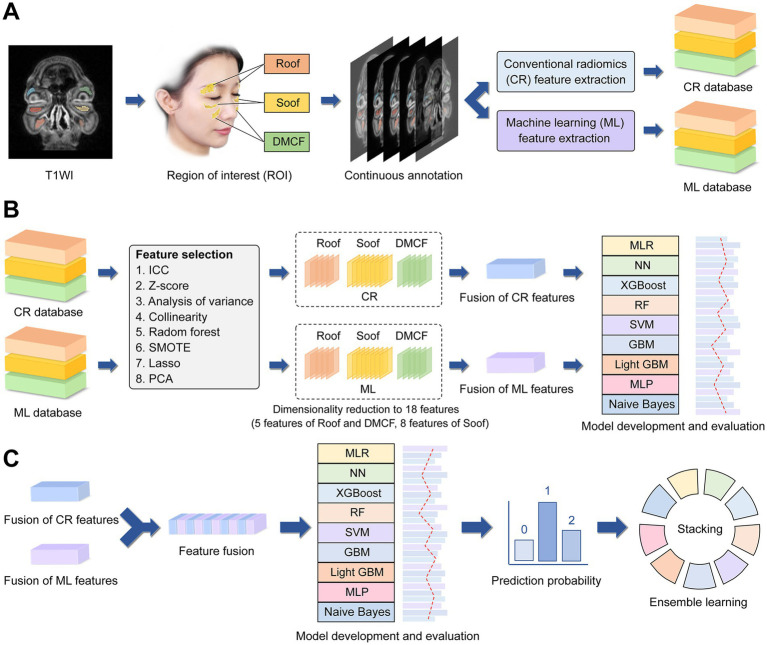 Figure 2
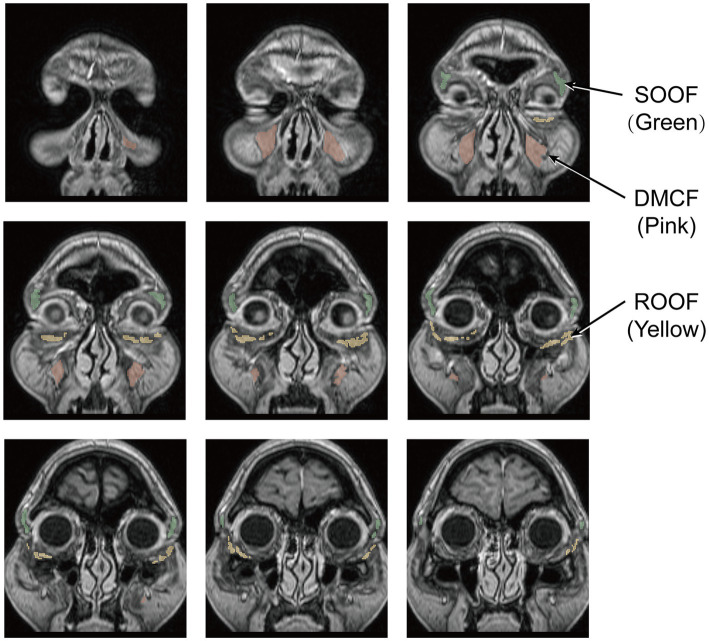 Figure 3
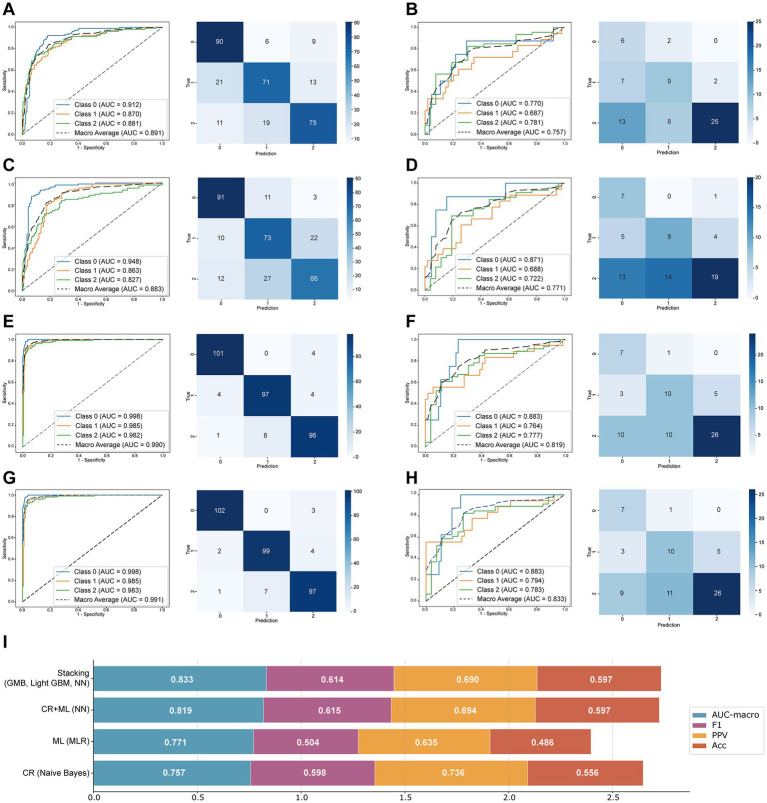 Figure 4
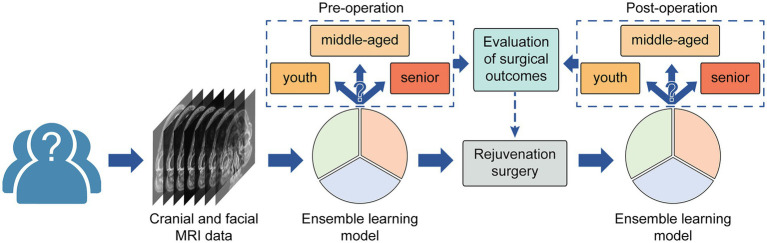 Figure 5
Peer Reviews
No public reviews on file for this paper yet. If you reviewed it on a platform where reviews are public (OpenReview, ICLR, NeurIPS, ICML), you can paste yours below so the community can read it here.
Videos
No videos yet. Explain this paper in a talk, walkthrough, or lecture? Add one.
Taxonomy
TopicsMeningioma and schwannoma management · Cerebral Venous Sinus Thrombosis · Facial Nerve Paralysis Treatment and Research