Chromosomal instability shapes the tumor microenvironment of esophageal adenocarcinoma via a cGAS–chemokine–myeloid axis
Bruno Beernaert, Rose L. Jady-Clark, Parin Shah, Erik Ramon-Gil, Nora M. Lawson, Zack D. Brodtman, Somnath Tagore, Frederik Stihler, Alfie S. Carter, Shannique Clarke, Tong Liu, Winston M. Zhu, Juliet E. Martin, Erkin Erdal, Alistair Easton, Leticia Campo, Molly Browne

TL;DR
Chromosomal instability in esophageal cancer promotes tumor growth by triggering inflammation through a specific immune pathway.
Contribution
The study reveals a novel CIN-driven cGAS–chemokine–myeloid axis that promotes immunosuppression in esophageal adenocarcinoma.
Findings
CIN drives expression of myeloid-attracting chemokines like CXCL8 in EAC.
High CIN correlates with poor patient outcomes and disrupted cGAS–STING signaling.
CIN activates innate immune responses that lead to tumor-promoting inflammation.
Abstract
Chromosomal instability (CIN), a pervasive feature of esophageal adenocarcinoma (EAC), drives tumor aggressiveness and metastasis. CIN stimulates the cGAS–STING pathway, typically linked to antitumor immunity. However, despite the high CIN burden in EAC, the cGAS–STING pathway remains largely intact. To address this paradox, we interrogated multiple esophageal cancer models, finding myeloid-attracting chemokines—with CXCL8 as a prominent hit—as conserved CIN-driven targets in EAC. Using multiplexed immunofluorescence microscopy, we quantified ongoing CIN in human EAC tumors by measuring cGAS-positive micronuclei, validated by whole-genome sequencing. Coupling in situ CIN detection with single-nucleus RNA sequencing and multiplex immunophenotyping of human EAC, we link CIN to tumor-intrinsic innate immune activation, CXCL8 expression, and myeloid cell–mediated immunosuppression. In…
Genes, proteins, chemicals, diseases, species, mutations and cell lines named across the full text — each resolved to its canonical identifier and authoritative record.
Click any figure to enlarge with its caption.
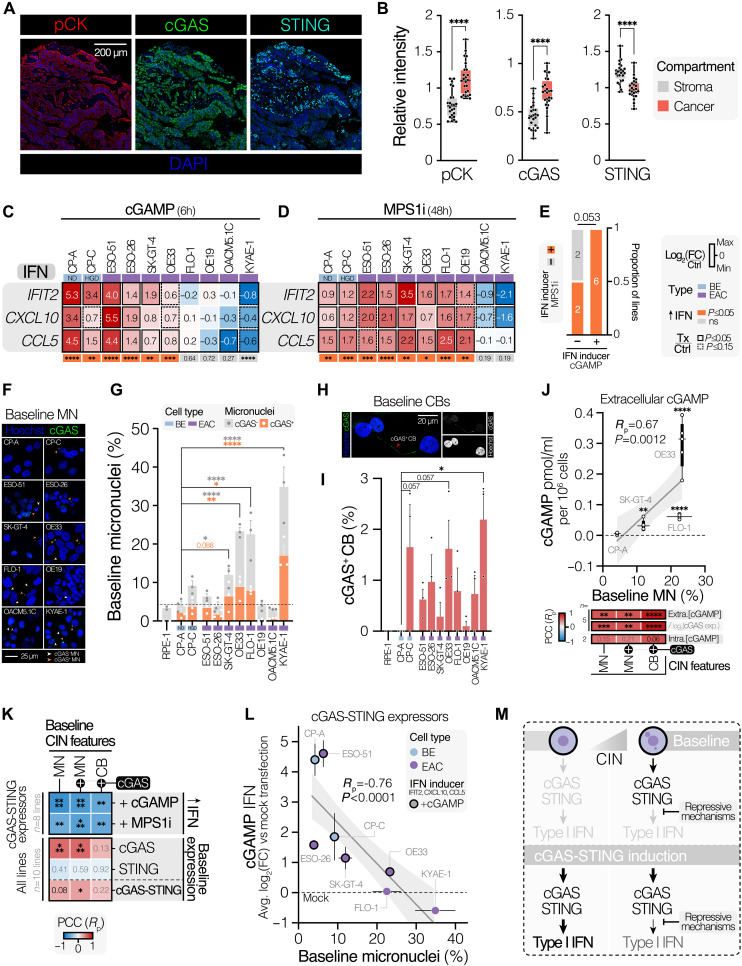 Figure 1
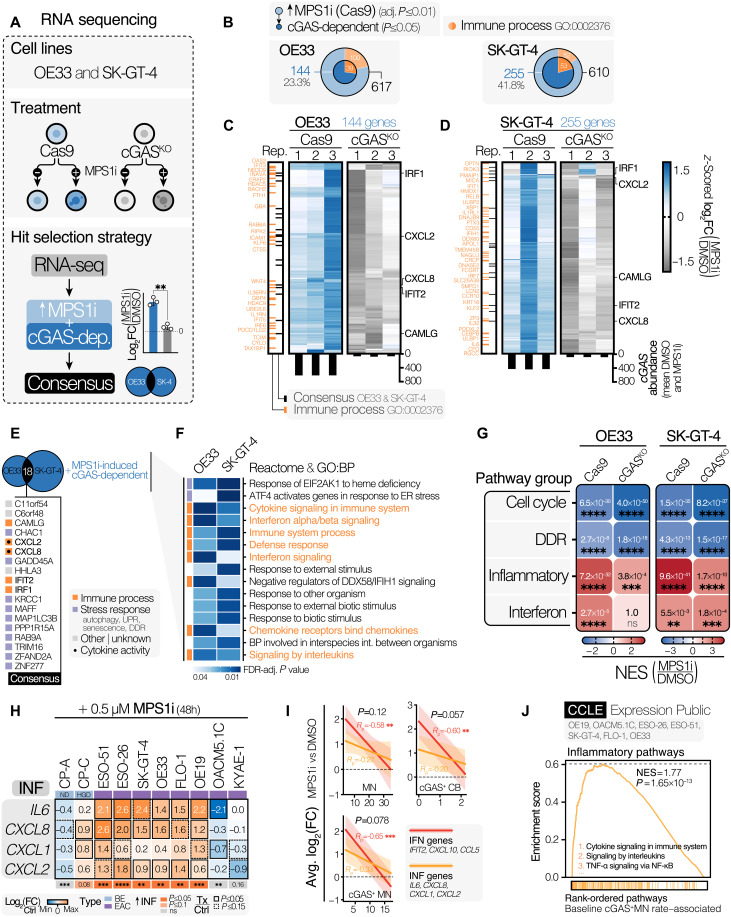 Figure 2
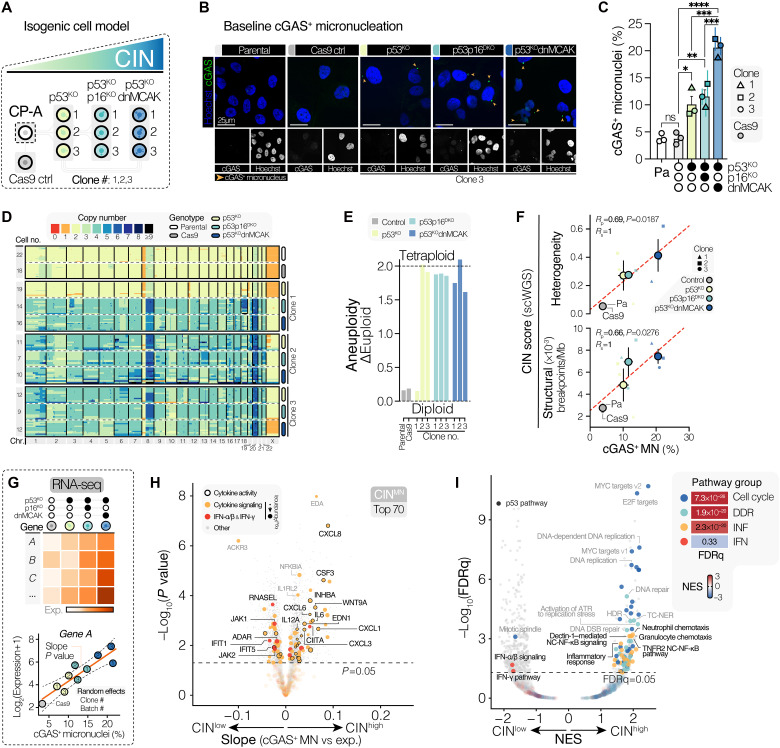 Figure 3
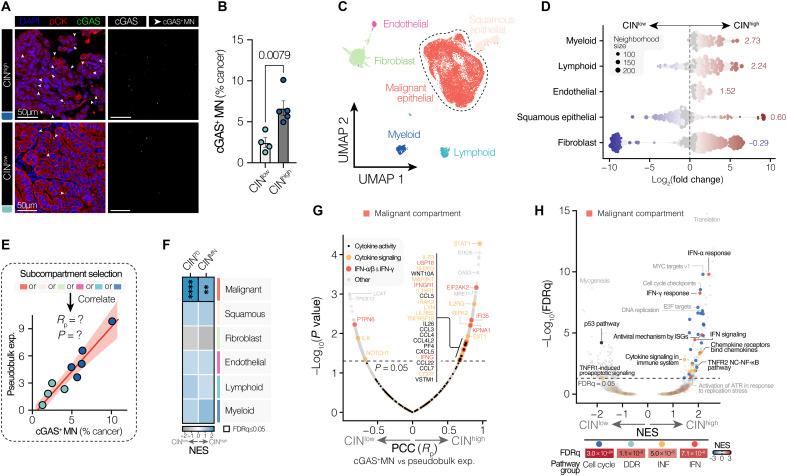 Figure 4
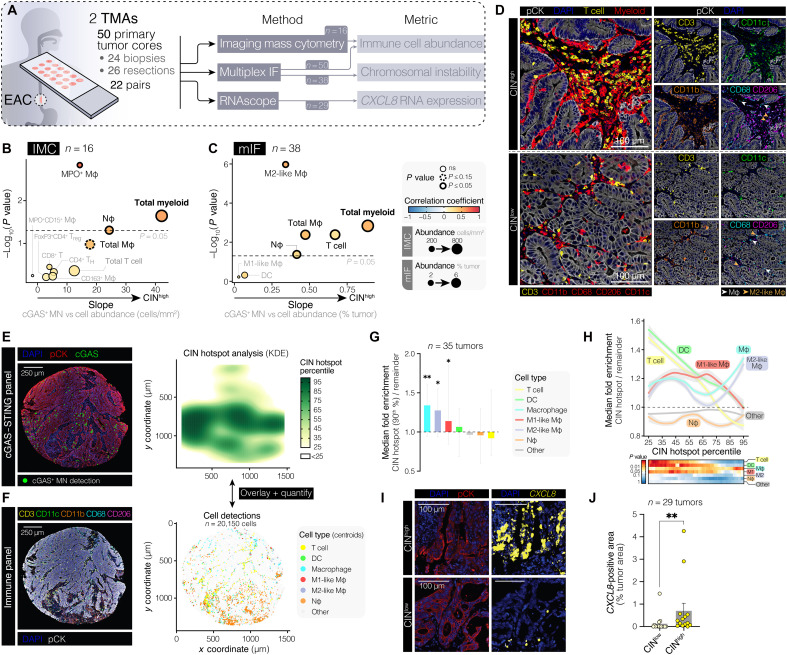 Figure 5
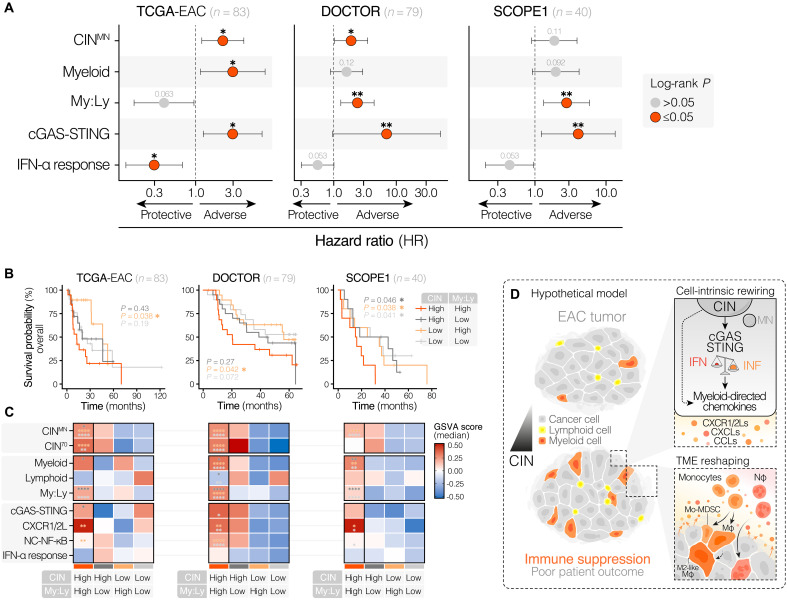 Figure 6
Peer Reviews
No public reviews on file for this paper yet. If you reviewed it on a platform where reviews are public (OpenReview, ICLR, NeurIPS, ICML), you can paste yours below so the community can read it here.
Videos
No videos yet. Explain this paper in a talk, walkthrough, or lecture? Add one.
Taxonomy
Topicsinterferon and immune responses · Cancer Immunotherapy and Biomarkers · Immune cells in cancer