A previously unrecognized class of fungal ice-nucleating proteins with bacterial ancestry
Rosemary J. Eufemio, Mariah Rojas, Kaden Shaw, Ingrid de Almeida Ribeiro, Hao-Bo Guo, Galit Renzer, Kassaye Belay, Haijie Liu, Parkesh Suseendran, Xiaofeng Wang, Janine Fröhlich-Nowoisky, Ulrich Pöschl, Mischa Bonn, Rajiv J. Berry, Valeria Molinero, Boris A. Vinatzer

TL;DR
Scientists discovered a new type of ice-nucleating proteins in fungi that function similarly to bacterial proteins, likely due to a shared evolutionary origin.
Contribution
Identification of a novel class of fungal ice-nucleating proteins with bacterial ancestry through structural and phylogenetic analysis.
Findings
Fungal proteins from Mortierellaceae efficiently promote ice formation without membranes.
Structural modeling suggests β-solenoid folds and multimerization in fungal INpros.
Fungal INpros are orthologs of bacterial InaZ, implying horizontal gene transfer.
Abstract
Ice-nucleating proteins (INpros) catalyze ice formation at high subzero temperatures, with major biological and environmental implications. While bacterial INpros have been structurally characterized, their counterparts in other organisms have remained largely unknown. Here, we identify membrane-independent proteins in fungi of the Mortierellaceae family that promote ice formation with high efficiency. These proteins are predicted to adopt β-solenoid folds and multimerize to form extended ice-binding surfaces, exhibiting mechanistic parallels with bacterial INpros. Structural modeling, phylogenetic analysis, and heterologous gene expression leading to ice nucleation in Escherichia coli and Saccharomyces cerevisiae show that the fungal INpros are encoded by orthologs of the bacterial InaZ gene, which was likely acquired by a fungal ancestor through horizontal gene transfer. The discovery…
Genes, proteins, chemicals, diseases, species, mutations and cell lines named across the full text — each resolved to its canonical identifier and authoritative record.
Click any figure to enlarge with its caption.
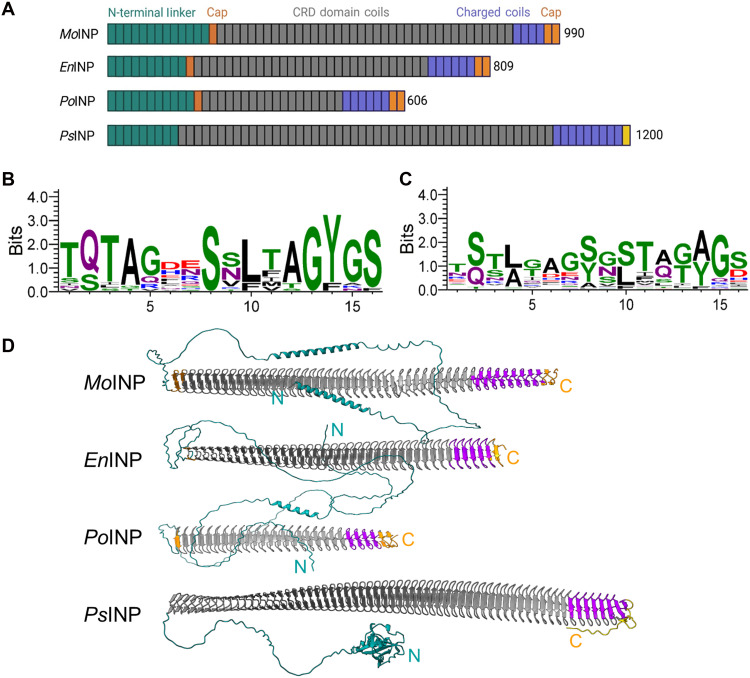 Figure 1
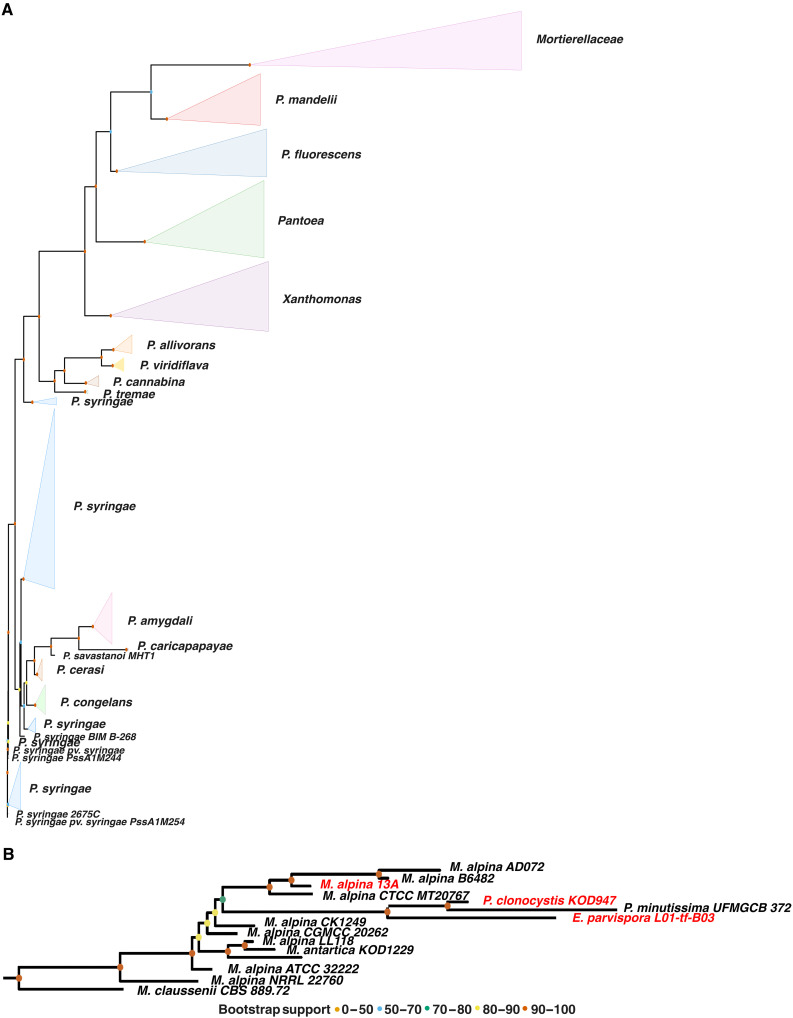 Figure 2
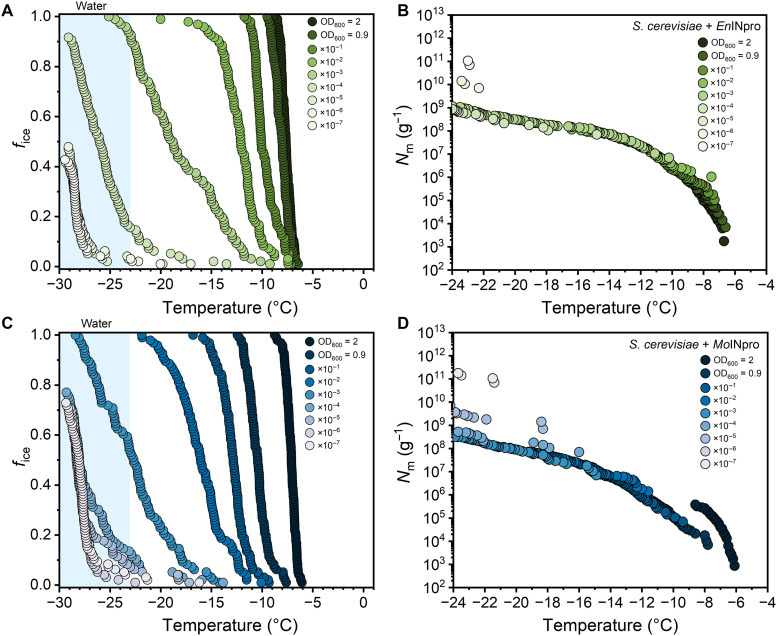 Figure 3
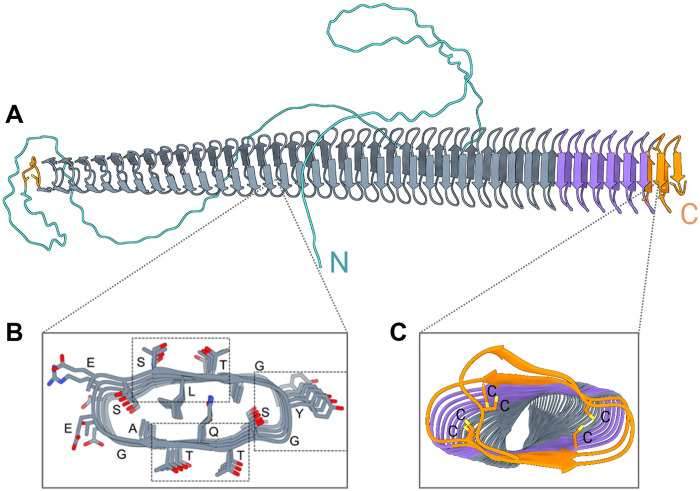 Figure 4
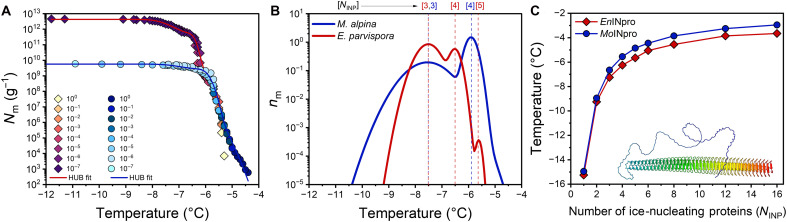 Figure 5
Peer Reviews
No public reviews on file for this paper yet. If you reviewed it on a platform where reviews are public (OpenReview, ICLR, NeurIPS, ICML), you can paste yours below so the community can read it here.
Videos
No videos yet. Explain this paper in a talk, walkthrough, or lecture? Add one.
Taxonomy
TopicsPhysiological and biochemical adaptations · Tardigrade Biology and Ecology · Polar Research and Ecology