Landscapes of HLA Mismatching in Contemporary Unrelated Haematopoietic Cell Transplantation
Esteban Arrieta‐Bolaños, Edouard F. Bonneville, Pietro Crivello, Tobias Gedde‐Dahl, Régis Peffault de Latour, Urpu Salmenniemi, Nicolaus Kröger, Ibrahim Yakoub‐Agha, Marco Zecca, Goda Choi, Charles Crawley, Eleni Tholouli, Valérie Dubois, Juha Peräsaari, Lotte Wieten

TL;DR
This study analyzes HLA mismatch patterns in unrelated blood cell transplants, showing how mismatch frequencies have changed over time and how they affect patient outcomes.
Contribution
The first large-scale analysis of real-world HLA mismatch frequencies in contemporary unrelated hematopoietic cell transplantation.
Findings
25% of transplants involved mismatches at one or more HLA loci, with a higher proportion in transplants using post-transplantation cyclophosphamide.
Single class I mismatches were three times more common than class II mismatches across all transplant eras.
Matching for HLA-DPB1 increased from 15% pre-2011 to 31% in 2021–2022.
Abstract
Haematopoietic cell transplantation (HCT) with HLA‐mismatched unrelated donors (MMUD) offers access to curative therapy for patients lacking well‐matched donors. Accumulating evidence suggests that functional matching among allele‐mismatched pairs can significantly influence patient outcomes. Therefore, real‐world data on mismatch frequencies in MMUD‐HCT could provide fundamental information for the assessment of patient risks and donor selection strategies. Here, we analysed HLA matching in 28,376 first unrelated transplants reported to the EBMT Registry with available 6‐locus high‐resolution typing. Mismatches at each locus were quantified and characterised at the allelic, antigenic and functional (antigen‐recognition domain, peptide‐binding motif) levels. 25% of the transplants were performed across one (9/10; n = 6053) or more (< 9/10; n = 1013) high‐resolution mismatches at the…
Genes, proteins, chemicals, diseases, species, mutations and cell lines named across the full text — each resolved to its canonical identifier and authoritative record.
Click any figure to enlarge with its caption.
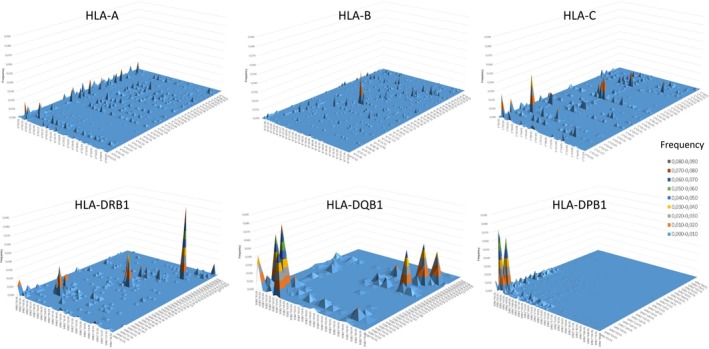 Figure 1
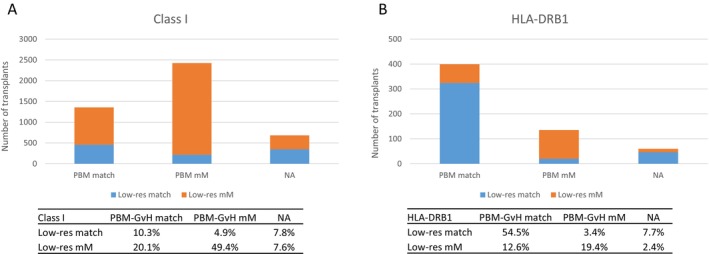 Figure 2
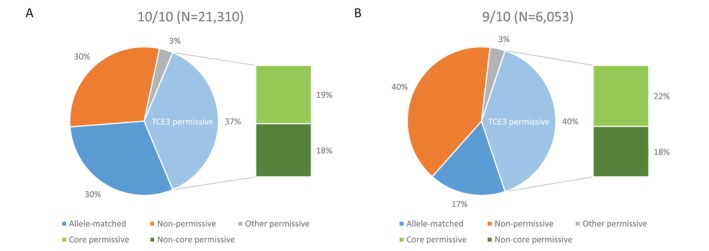 Figure 3
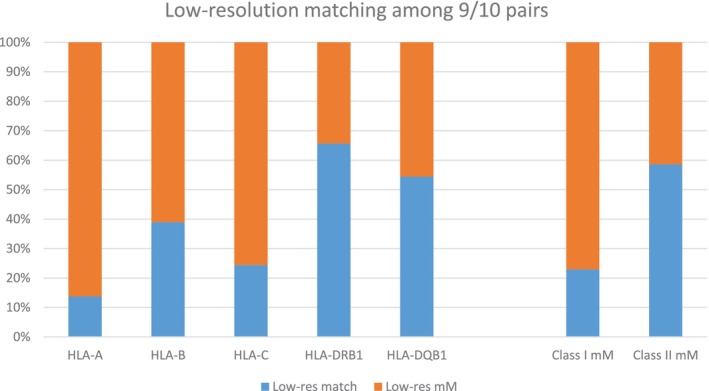 Figure 4
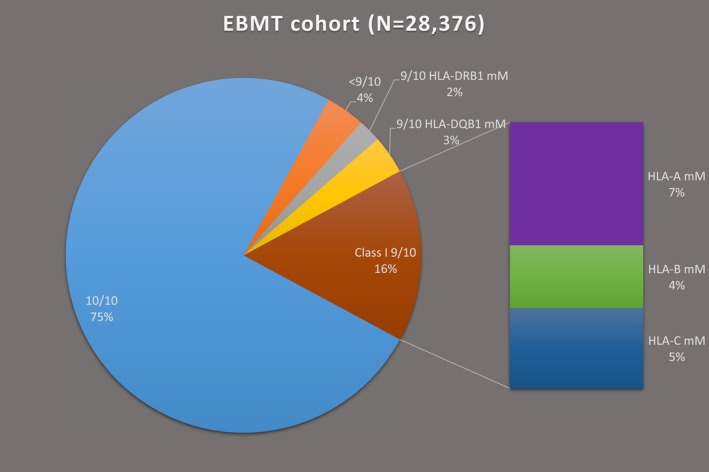 Figure 5
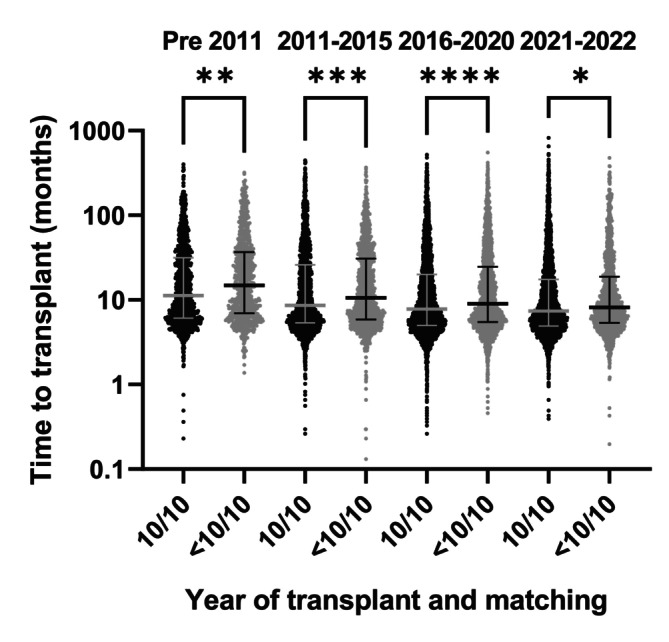 Figure 6
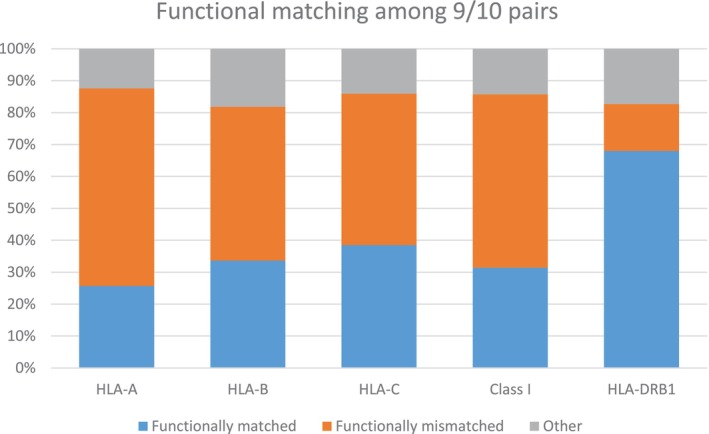 Figure 7
Peer Reviews
No public reviews on file for this paper yet. If you reviewed it on a platform where reviews are public (OpenReview, ICLR, NeurIPS, ICML), you can paste yours below so the community can read it here.
Videos
No videos yet. Explain this paper in a talk, walkthrough, or lecture? Add one.
Taxonomy
TopicsHematopoietic Stem Cell Transplantation · Renal Transplantation Outcomes and Treatments · Single-cell and spatial transcriptomics