“Reconstruction of segmental defect of flexor tendons of the wrist and hand using extensor digitorum longus”
Koushikk S. Ayyappan, Justin C. R. Wormald, Sarah Tucker, Nakul Kain, Claire Sethu

TL;DR
A 30-year-old man with severe forearm injuries was successfully reconstructed using the extensor digitorum longus tendon, showing its effectiveness and low risk.
Contribution
Demonstrates the use of the extensor digitorum longus for complex tendon reconstruction with minimal donor site issues.
Findings
The entire extensor digitorum longus tendon was successfully used for multi-level forearm reconstruction.
Combination with nerve and vein grafts and an ALT flap improved functional outcomes.
The procedure resulted in minimal donor site morbidity.
Abstract
Plastic and hand surgeons rely on traditional tendon grafts, but severe bilateral multi-level trauma may render these unusable. We report a 30-year-old man with extensive forearm loss reconstructed using the entire extensor digitorum longus tendon, nerve and vein grafts, and an ALT flap, demonstrating EDL’s versatility and minimal donor morbidity.
Genes, proteins, chemicals, diseases, species, mutations and cell lines named across the full text — each resolved to its canonical identifier and authoritative record.
Click any figure to enlarge with its caption.
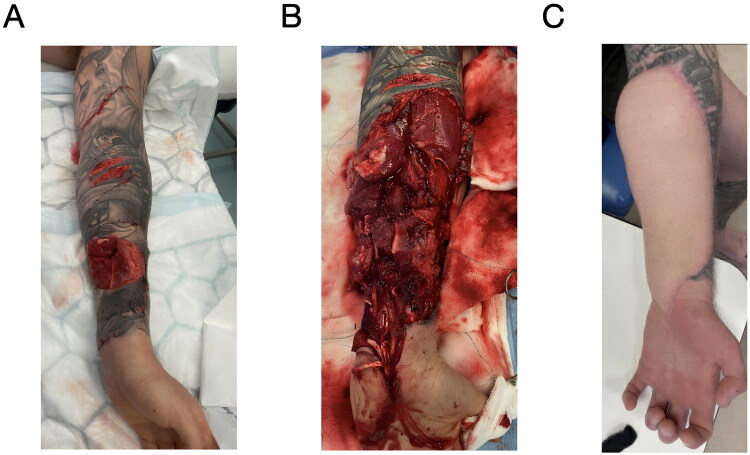 Figure 1
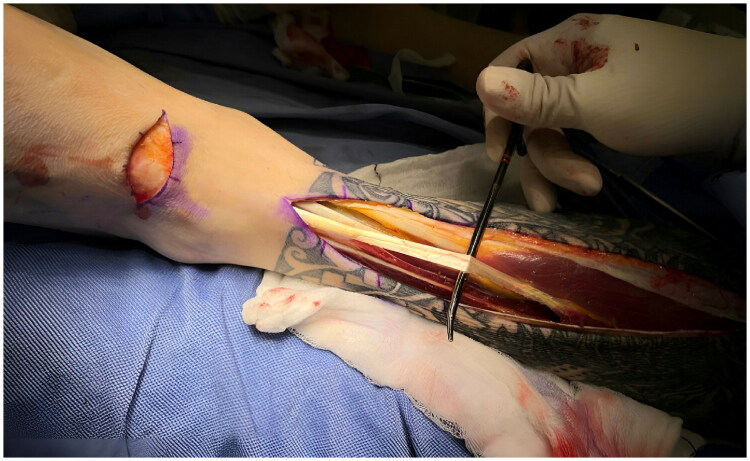 Figure 2
Peer Reviews
No public reviews on file for this paper yet. If you reviewed it on a platform where reviews are public (OpenReview, ICLR, NeurIPS, ICML), you can paste yours below so the community can read it here.
Videos
No videos yet. Explain this paper in a talk, walkthrough, or lecture? Add one.
Taxonomy
TopicsOrthopedic Surgery and Rehabilitation · Reconstructive Surgery and Microvascular Techniques · Congenital limb and hand anomalies