CACNB3 defects are associated with infantile idiopathic nystagmus
Christoph Jüschke, Kira Linsel, Marta Owczarek-Lipska, Nicola Brandt, Sarah Zunken, Janine Altmüller, Markus N Preising, Dennis Kastrati, Holger Thiele, Mervyn G Thomas, Peter Nürnberg, Birgit Lorenz, Ulrich Kellner, Anja U Bräuer, G Christoph Korenke, Irene Gottlob

TL;DR
A new gene linked to infantile nystagmus is identified, showing how calcium signaling defects may cause this eye movement disorder.
Contribution
CACNB3 is newly associated with idiopathic infantile nystagmus, revealing a role for calcium signaling in its cause.
Findings
A CACNB3 mutation (c.316G>C) co-segregates with idiopathic infantile nystagmus.
The mutation impairs plasma membrane calcium channel function and increases endoplasmic reticulum calcium release.
Reduced plasma membrane localization of calcium channels is observed in co-localization studies.
Abstract
Infantile nystagmus (IN) is a common neuro-ophthalmological disorder that presents as early-onset involuntary oscillations of the eyes. Here, we report a novel genotype-phenotype correlation that associates sequence alterations in the calcium voltage-gated channel auxiliary subunit beta 3 (CACNB3) gene, encoding the CaVβ3 protein, with idiopathic infantile nystagmus (IIN). Linkage analysis, whole exome and Sanger sequencing identified a homozygous missense mutation (c.316G>C) in CACNB3 co-segregating with IIN. Our calcium imaging experiments suggest that the p.Gly106Arg mutation in the Src homology 3 domain of CaVβ3 may impair voltage-gated calcium channel function at the plasma membrane and may increase ligand-triggered inositol trisphosphate receptor mediated calcium release at the endoplasmic reticulum. Co-localization studies indicate reduced plasma membrane localization of the…
Genes, proteins, chemicals, diseases, species, mutations and cell lines named across the full text — each resolved to its canonical identifier and authoritative record.
Click any figure to enlarge with its caption.
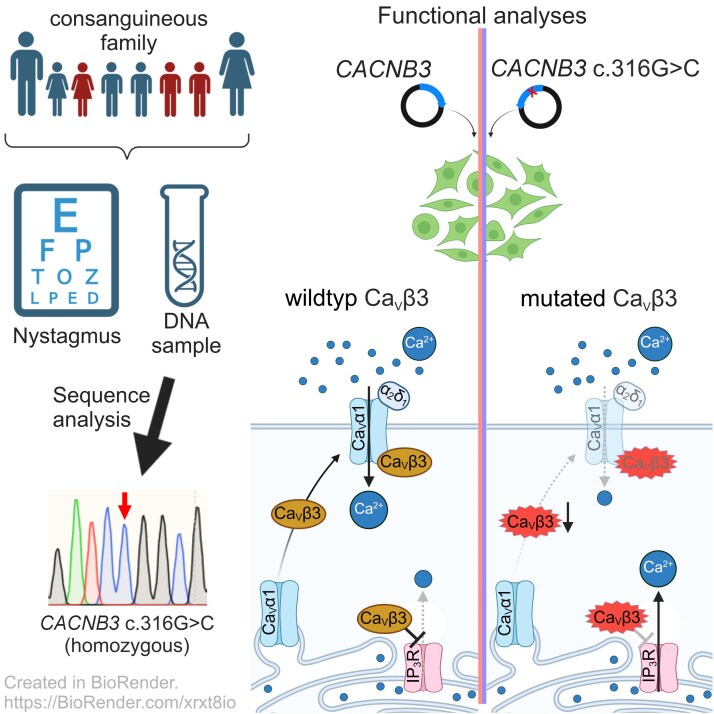 Figure 1
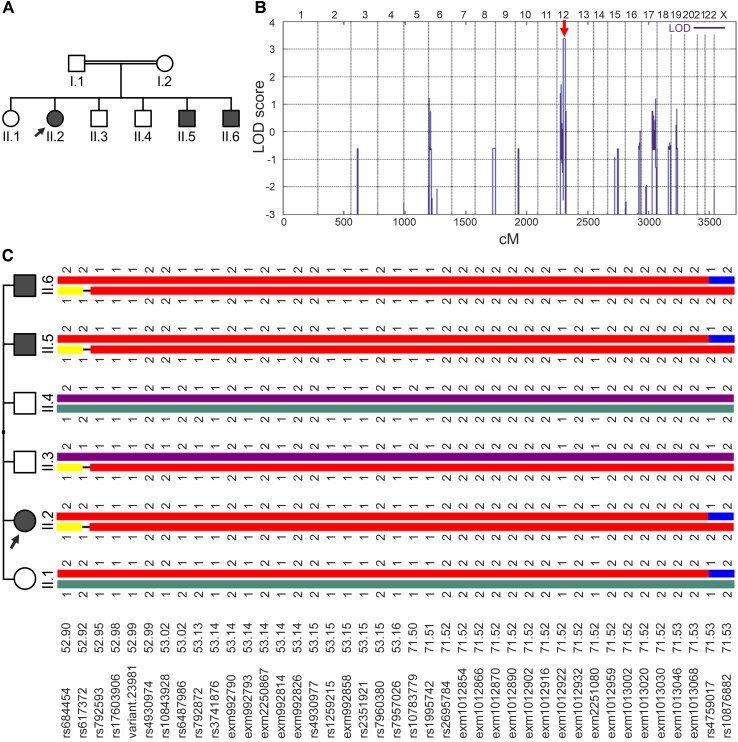 Figure 2
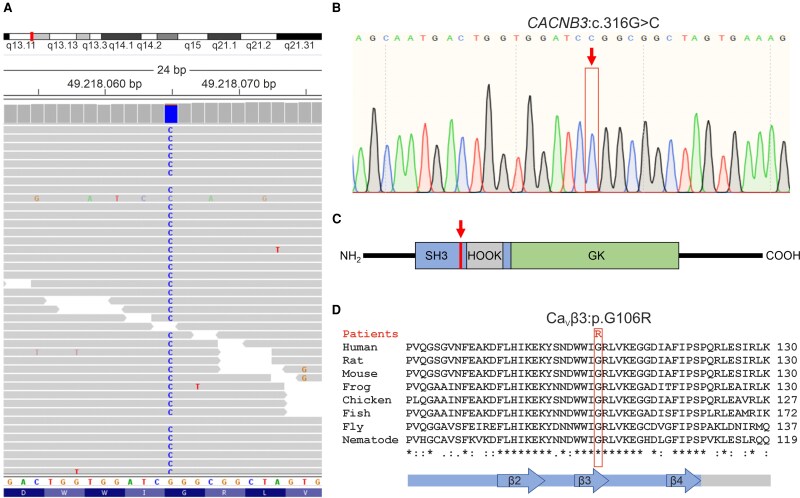 Figure 3
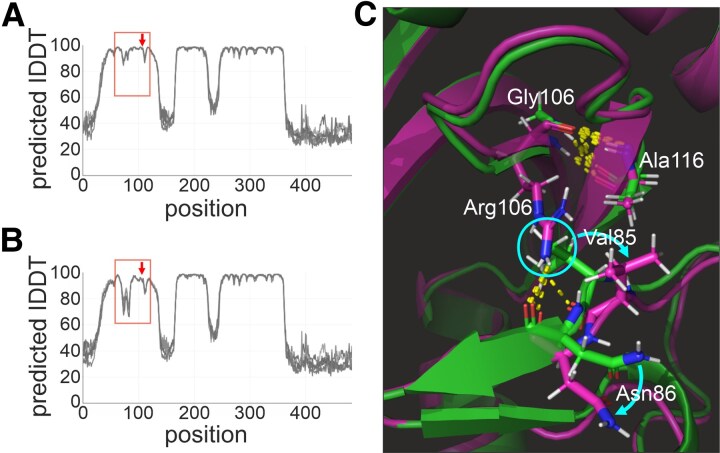 Figure 4
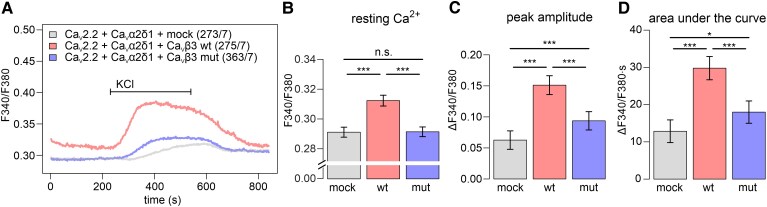 Figure 5
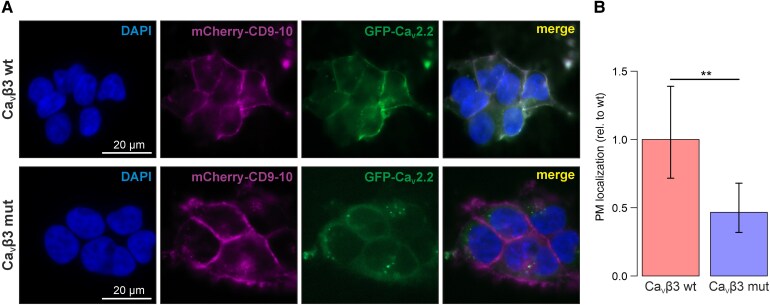 Figure 6
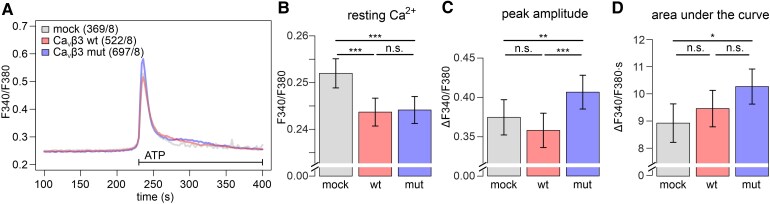 Figure 7
Peer Reviews
No public reviews on file for this paper yet. If you reviewed it on a platform where reviews are public (OpenReview, ICLR, NeurIPS, ICML), you can paste yours below so the community can read it here.
Videos
No videos yet. Explain this paper in a talk, walkthrough, or lecture? Add one.
Taxonomy
TopicsVestibular and auditory disorders · Hearing, Cochlea, Tinnitus, Genetics · Ion channel regulation and function