Genetic impacts on within-pair DNA methylation variance in monozygotic twins capture gene-environment interactions and cell-type effects
Xiaopu Zhang, Idil Yet, Sergio Villicaña, Juan Castillo-Fernandez, Massimo Mangino, Jouke Jan Hottenga, Pei-Chien Tsai, Josine L. Min, Mario Falchi, Andrew Wong, Dorret I. Boomsma, Ken K. Ong, Jenny van Dongen, Jordana T. Bell

TL;DR
This study uses monozygotic twins to find genetic variants that influence DNA methylation variability, revealing gene-environment interactions and cell-type effects.
Contribution
The study identifies vmeQTLs in twins, showing how genetic variants interact with environment and cell types to affect DNA methylation.
Findings
Over a third of vmeQTLs show consistent gene-environment interactions across twin datasets.
Most vmeQTLs replicate in non-twin adults and show longitudinal stability.
vmeQTLs interacting with blood cell types are linked to immune disease susceptibility.
Abstract
Genetic variants that are associated with phenotypic variability, or variance quantitative trait loci (vQTLs), have been detected for multiple human traits. Gene-environment interactions can lead to differential phenotypic variability across genotype groups, therefore, genetic variants that interact with environmental exposures can manifest as vQTLs. Although changes in DNA methylation variability have been observed in several diseases, vQTLs for methylation levels (vmeQTL) have not yet been explored in depth. We optimize the value of monozygotic twin studies to identify and replicate vmeQTLs for blood DNA methylation variance at 358 CpGs in 988 adult monozygotic twin pairs from two European twin registries. Over a third of vmeQTLs capture identical vmeQTL-environmental factor interactions in both datasets, and the majority of interactions are observed with blood cell counts.…
Genes, proteins, chemicals, diseases, species, mutations and cell lines named across the full text — each resolved to its canonical identifier and authoritative record.
Click any figure to enlarge with its caption.
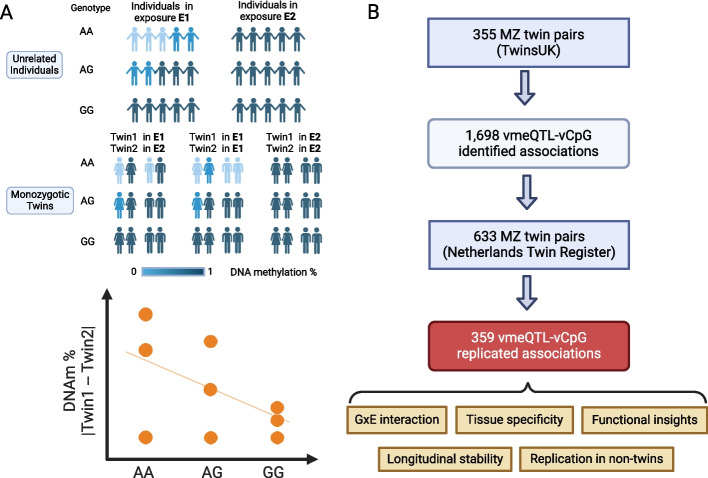 Figure 1
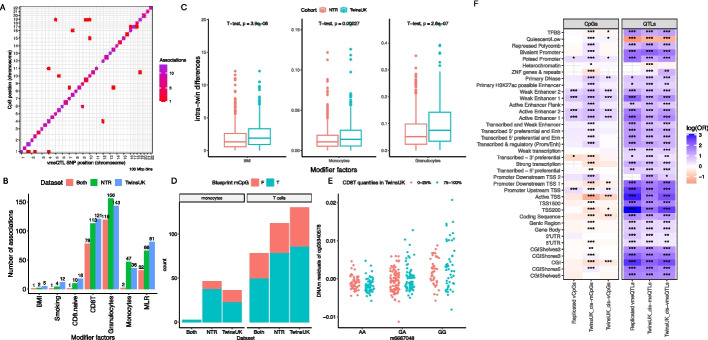 Figure 2
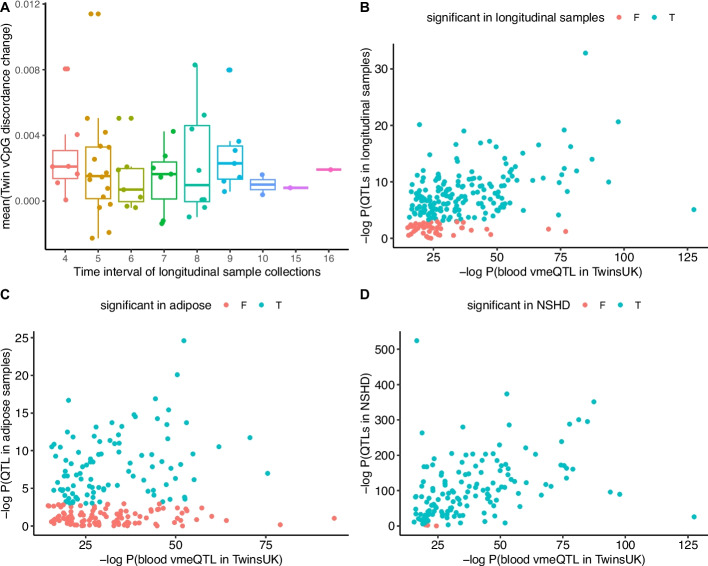 Figure 3
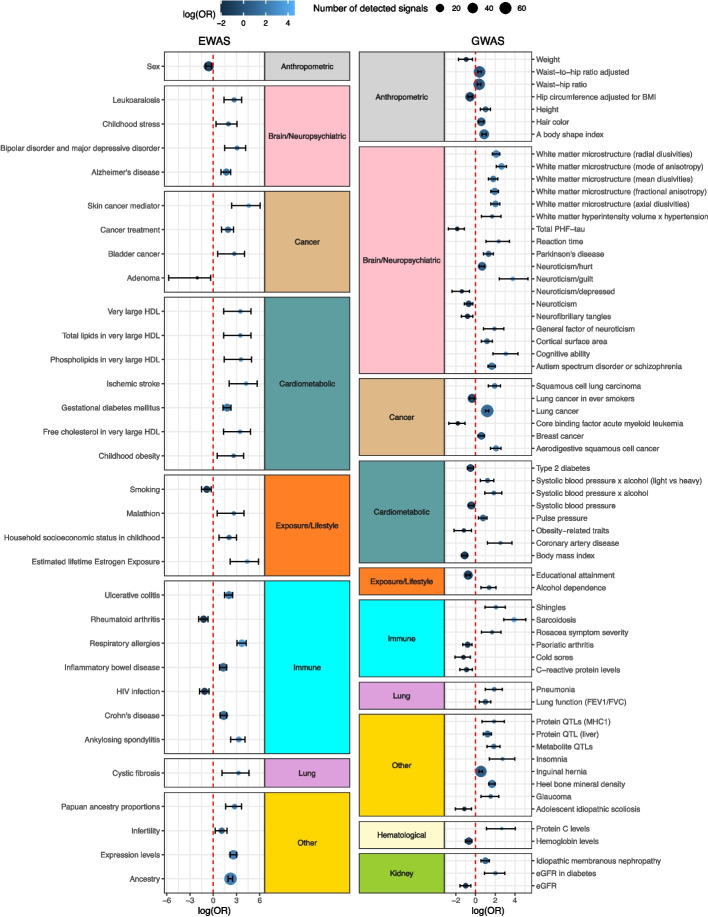 Figure 4
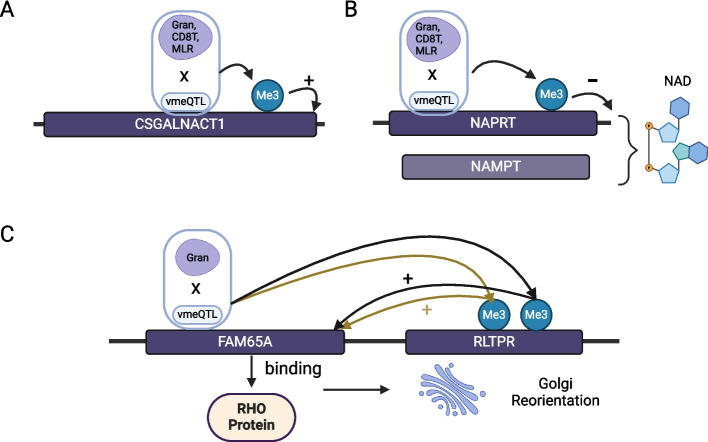 Figure 5
Peer Reviews
No public reviews on file for this paper yet. If you reviewed it on a platform where reviews are public (OpenReview, ICLR, NeurIPS, ICML), you can paste yours below so the community can read it here.
Videos
No videos yet. Explain this paper in a talk, walkthrough, or lecture? Add one.
Taxonomy
TopicsGenetic Associations and Epidemiology · Epigenetics and DNA Methylation · Genetic Syndromes and Imprinting