Effects of a personalized exercise program on physical function in older patients with rheumatoid arthritis at high risk of sarcopenia: results of a randomized controlled trial
Mie Torii, Akira Onishi, Ryuji Uozumi, Yu Hidaka, Hideo Onizawa, Takayuki Fujii, Koichi Murata, Kosaku Murakami, Masao Tanaka, Yohei Oshima, Hiroki Tanaka, Yuki Urai, Kyosuke Tanigawa, Hiroyuki Yoshitomi, Hideaki Tsuji, Mirei Shirakashi, Ryosuke Hiwa, Ran Nakashima, Kazuko Nin

TL;DR
A 16-week personalized exercise program did not significantly improve physical function in older rheumatoid arthritis patients at high risk of sarcopenia, but showed some benefits in standing ability, grip strength, and mental health.
Contribution
This study evaluates the efficacy of a personalized exercise program in older rheumatoid arthritis patients at high risk of sarcopenia through a randomized controlled trial.
Findings
The 16-week personalized exercise program did not significantly improve total SPPB scores compared to the control group.
The intervention showed a tendency to improve chair-stand test performance, grip strength, and mental component scores.
There was a 0.2-point difference in SPPB scores between the intervention and control groups, but it was not statistically significant.
Abstract
Patients with rheumatoid arthritis (RA) are at a higher risk for sarcopenia than the general population. Exercise therapy can improve muscle strength in older adults; however, its efficacy in older patients with RA has not been fully established. This study aimed to evaluate the efficacy of a personalized exercise program on physical function in older patients with RA at high risk for sarcopenia. A single-centre, parallel-group, two-arm, superiority randomized controlled trial was conducted in patients with RA aged 60–85 years who were at risk of sarcopenia. The intervention group (n = 69) underwent a 16-week personalized exercise program in addition to nutritional guidance and standard care, whereas the control group (n = 65) received only nutritional guidance and standard care. The primary outcome was the change in the total Short Physical Performance Battery (SPPB) scores from…
Genes, proteins, chemicals, diseases, species, mutations and cell lines named across the full text — each resolved to its canonical identifier and authoritative record.
Click any figure to enlarge with its caption.
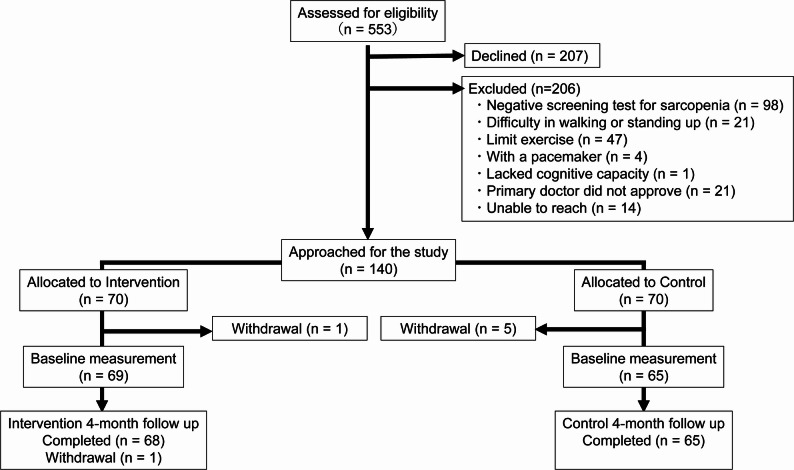 Figure 1
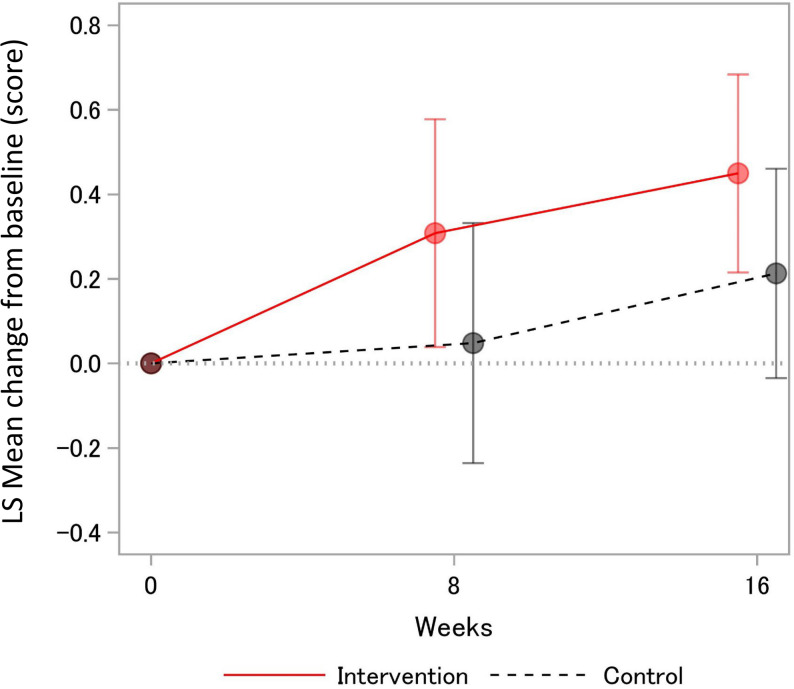 Figure 2
Peer Reviews
No public reviews on file for this paper yet. If you reviewed it on a platform where reviews are public (OpenReview, ICLR, NeurIPS, ICML), you can paste yours below so the community can read it here.
Videos
No videos yet. Explain this paper in a talk, walkthrough, or lecture? Add one.
Taxonomy
TopicsNutrition and Health in Aging · Rheumatoid Arthritis Research and Therapies · Cardiovascular and exercise physiology