Periconceptional antibiotic use and early- to mid-pregnancy psychological distress in a nationwide birth cohort: cross-sectional analysis from the Japan Environment and Children’s Study
Kenta Matsumura, Hitomi Inano, Junko Sakai, Kanako Shimada, Akiko Tsuchida, Hidekuni Inadera, Michihiro Kamijima, Michihiro Kamijima, Shin Yamazaki, Maki Fukami, Reiko Kishi, Koichi Hashimoto, Kenichi Sakurai, Shuichi Ito, Ryoji Shinohara, Takeo Nakayama, Ryo Kawasaki

TL;DR
This study explores how antibiotic use before and during early pregnancy may be linked to psychological distress in expectant mothers in Japan.
Contribution
The study identifies a potential link between periconceptional antibiotic use and increased psychological distress during early to mid-pregnancy.
Findings
Antibiotic use during either period before or after pregnancy recognition was associated with a slight increase in moderate psychological distress.
Use during both periods was linked to a higher risk of both moderate and severe psychological distress.
A dose-response pattern suggests even limited antibiotic use may independently contribute to psychological distress.
Abstract
Antibiotic use has recently emerged as a potential risk factor for psychiatric disorders, but evidence regarding its risk during pregnancy remains limited, despite the frequent use of antibiotics in pregnant women. We investigated the association between antibiotic use in the year prior to early pregnancy and psychological distress during early- to mid-pregnancy. Participants were 94,490 expectant mothers from the Japan Environment and Children’s Study, an ongoing nationwide birth cohort study. Antibiotic use during the year before early pregnancy was categorized as follows: (1) no use, (2) use during either the period before or after pregnancy recognition, and (3) use during both periods. Psychological distress was measured during early- to mid-pregnancy using the Kessler Psychological Distress Scale, with scores of 5–12 and ≥ 13 indicating moderate and severe psychological distress,…
Genes, proteins, chemicals, diseases, species, mutations and cell lines named across the full text — each resolved to its canonical identifier and authoritative record.
Click any figure to enlarge with its caption.
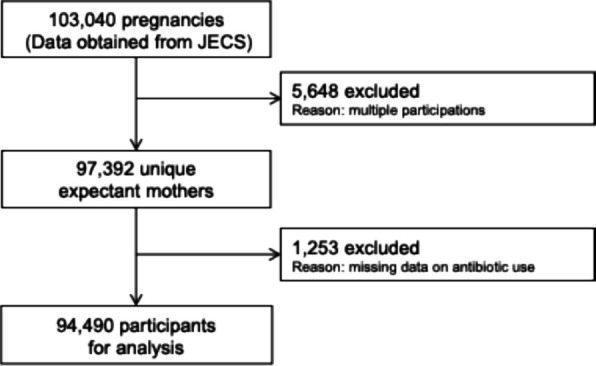 Figure 1
Peer Reviews
No public reviews on file for this paper yet. If you reviewed it on a platform where reviews are public (OpenReview, ICLR, NeurIPS, ICML), you can paste yours below so the community can read it here.
Videos
No videos yet. Explain this paper in a talk, walkthrough, or lecture? Add one.
Taxonomy
TopicsMaternal Mental Health During Pregnancy and Postpartum · Tryptophan and brain disorders · Pregnancy and Medication Impact