Bartonella infection in small mammals and their ectoparasites from the Central Highlands of Madagascar: diversity and implication in future zoonotic surveillance
Lanto Andrianarijaona Maminirina, Mamionah N. J. Parany, Fanohinjanaharinirina Rasoamalala, Angelo Andrianiaina, Lalatiana O. Randriamiharisoa, Mercia Rasoanoro, Soloandry Rahajandraibe, Voahangy Soarimalala, Milijaona Randrianarivelojosia, Dina Ratahiriarisoa

TL;DR
This study found high Bartonella infection rates in small mammals and fleas in Madagascar, identifying two potential zoonotic species that could impact public health.
Contribution
The study reports new Bartonella diversity and zoonotic potential in Madagascar's Central Highlands using molecular methods.
Findings
60.1% of small mammals and 15.9% of fleas tested positive for Bartonella.
Rattus rattus and Synopsyllus fonquerniei showed the highest infection rates.
Two potential zoonotic Bartonella species (B. elizabethae and B. kosoyi) were identified.
Abstract
This research aimed to investigate the prevalence and diversity of Bartonella in small mammals and their ectoparasites from the Central Highlands of Madagascar and to refine existing information on potential associated zoonotic diseases. A retrospective analysis was performed on mammals and their ectoparasites collected in the Fandriana and Ankazobe districts, including 253 spleen samples from seven small mammal species and 183 individual ectoparasites (132 fleas and 51 ticks). Genomic DNA was extracted and amplified by polymerase chain reaction (PCR) targeting the nuoG gene (346 bp). Sanger sequencing of the PCR products was performed to assess Bartonella diversity using phylogenetic analysis. In total, 60.1% (152/253) of small mammals and 15.9% (21/132) of fleas tested positive for Bartonella, with Rattus rattus (69.1%, 137/198) and the associated flea Synopsyllus fonquerniei…
Genes, proteins, chemicals, diseases, species, mutations and cell lines named across the full text — each resolved to its canonical identifier and authoritative record.
Click any figure to enlarge with its caption.
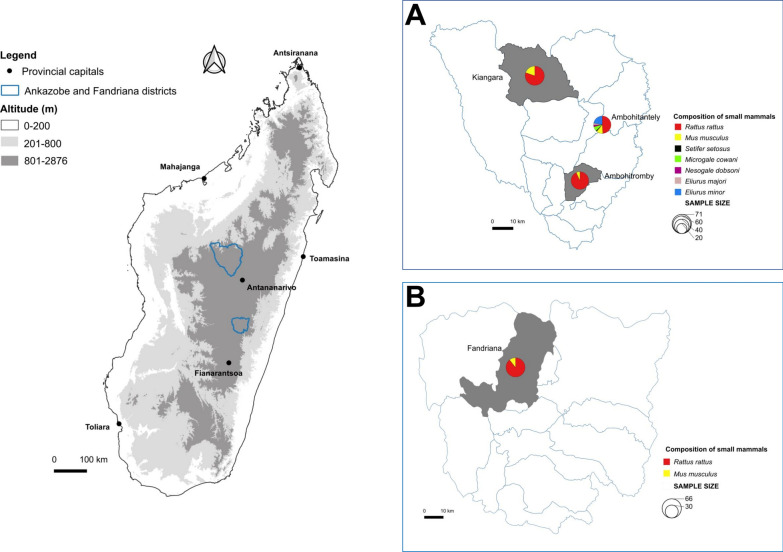 Figure 1
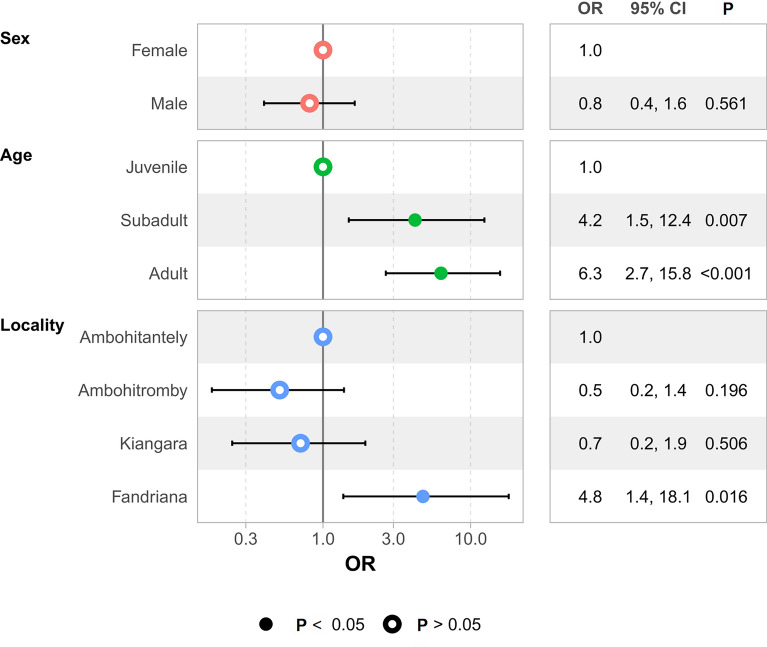 Figure 2
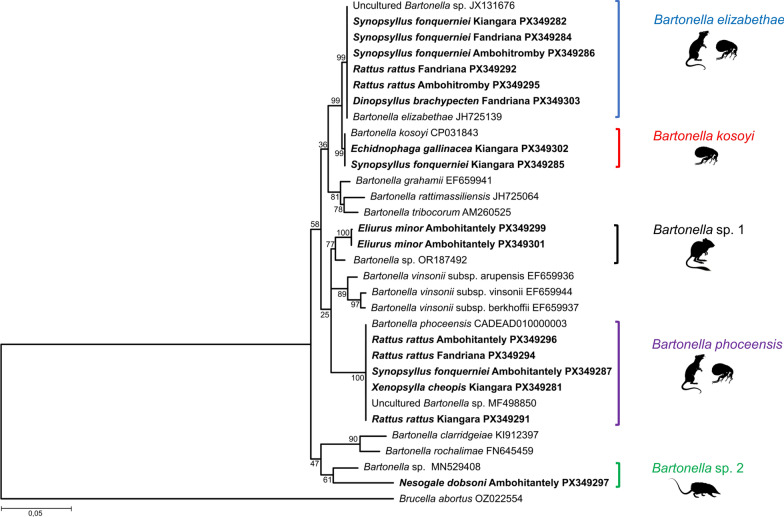 Figure 3
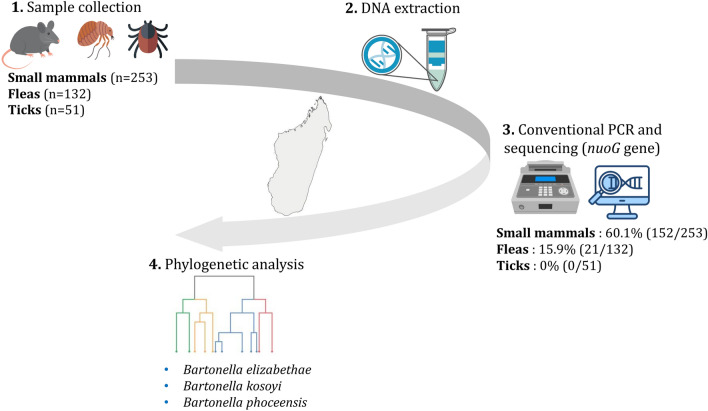 Figure 4
Peer Reviews
No public reviews on file for this paper yet. If you reviewed it on a platform where reviews are public (OpenReview, ICLR, NeurIPS, ICML), you can paste yours below so the community can read it here.
Videos
No videos yet. Explain this paper in a talk, walkthrough, or lecture? Add one.
Taxonomy
TopicsBartonella species infections research · Vector-borne infectious diseases · Yersinia bacterium, plague, ectoparasites research