HCMV promotes viral reactivation through the coordinated regulation of Notch signaling by UL8 and miR-UL36
Aaron Dirck, Nicole Diggins, Wilma Perez, Christopher Parkins, Michael Daily, Rebekah L. Turner, Luke Slind, Linh Nguyen, Daniel Malouli, Guanming Wu, Meaghan Hancock, Patrizia Caposio

TL;DR
This study shows how human cytomegalovirus manipulates the Notch signaling pathway to promote viral reactivation from latency in blood cell precursors.
Contribution
The discovery that HCMV uses UL8 and miR-UL36 to suppress Notch signaling and enable reactivation provides new insights into viral latency control.
Findings
HCMV reactivation is inhibited by Notch signaling, which is suppressed by viral UL8 and miR-UL36.
UL8 degrades Notch3 via endosomal/lysosomal pathways, and miR-UL36 reduces Notch3 and RBPJ expression.
Pharmacological Notch inhibition rescues reactivation defects in UL8 and miR-UL36 mutants.
Abstract
Human cytomegalovirus (HCMV) establishes latency in CD34+ hematopoietic progenitor cells (HPCs), where reactivation is intimately linked to cellular differentiation. We demonstrate that the Notch signaling pathway, a key regulator of stem cell maintenance and differentiation, functions as a barrier to HCMV reactivation. Two viral gene products, UL8 and miR-UL36, modulate this pathway during reactivation. UL8 promotes degradation of the Notch3 receptor via the endosomal/lysosomal pathway, dependent on two tyrosine-based motifs (Y305/314) in its cytoplasmic tail. A UL8 mutant lacking these motifs fails to degrade Notch3, resulting in sustained Notch signaling and impaired reactivation in vitro and in humanized mice. Similarly, miR-UL36 reduces the expression of Notch3 and the Notch transcription factor recombination signal binding protein for immunoglobulin kappa J region (RBPJ),…
Genes, proteins, chemicals, diseases, species, mutations and cell lines named across the full text — each resolved to its canonical identifier and authoritative record.
Click any figure to enlarge with its caption.
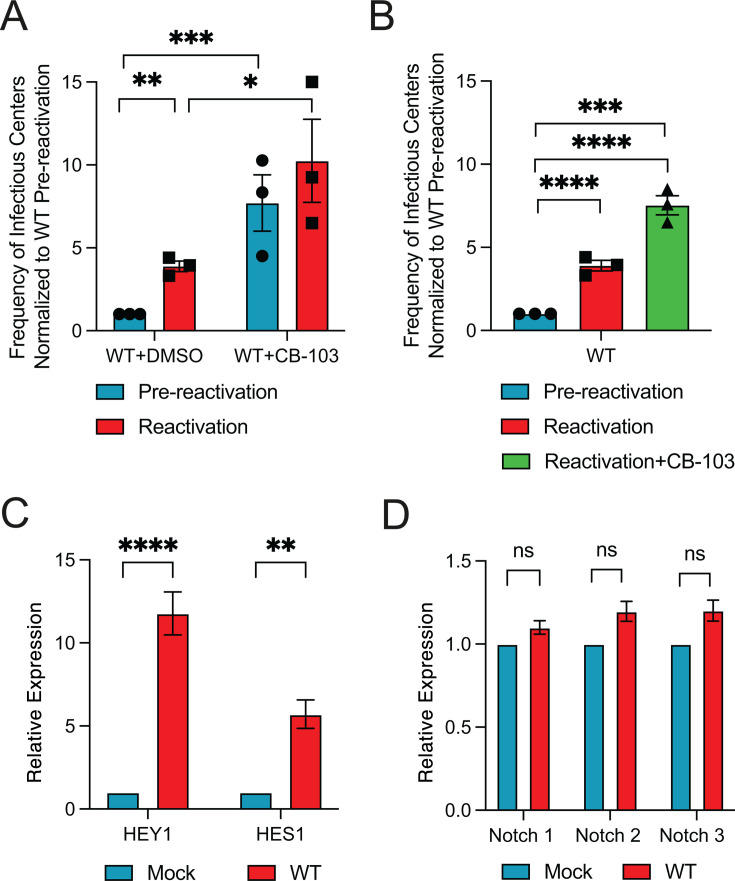 Figure 1
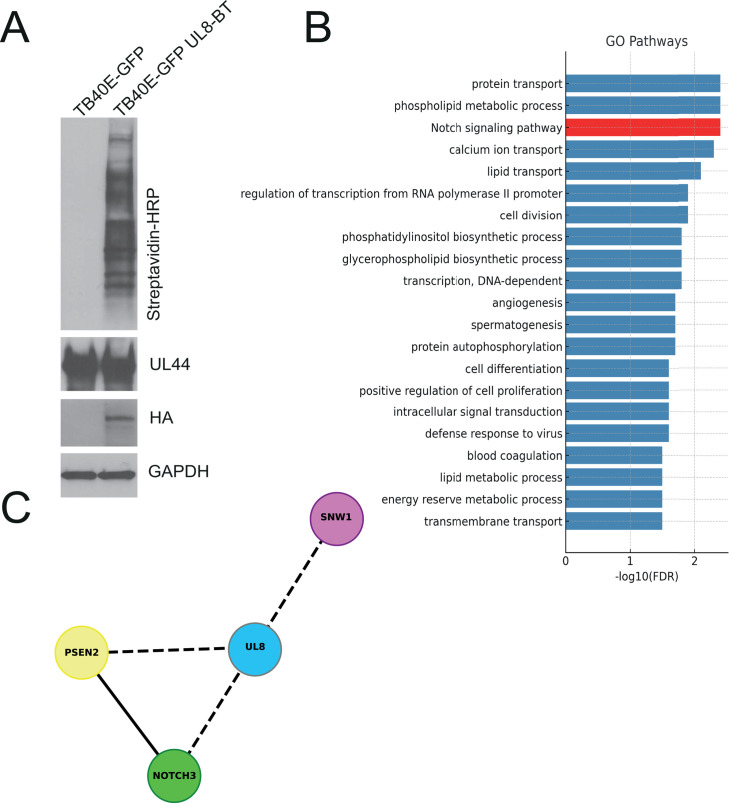 Figure 2
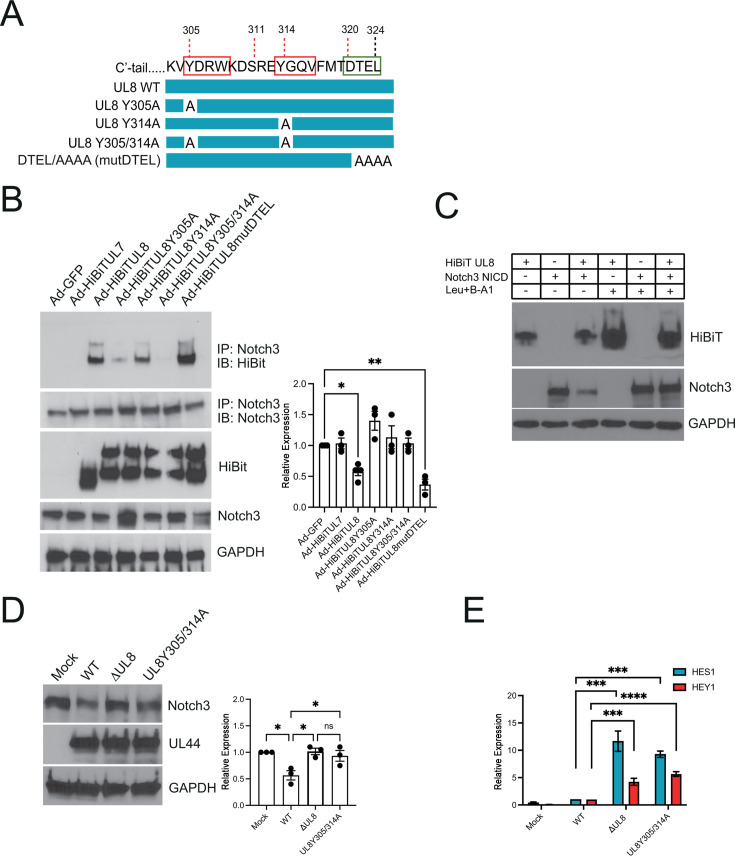 Figure 3
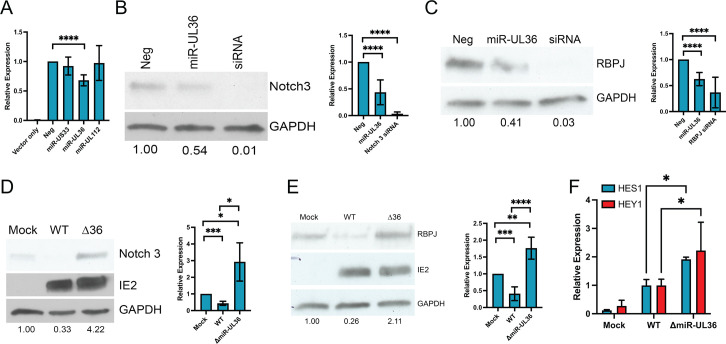 Figure 4
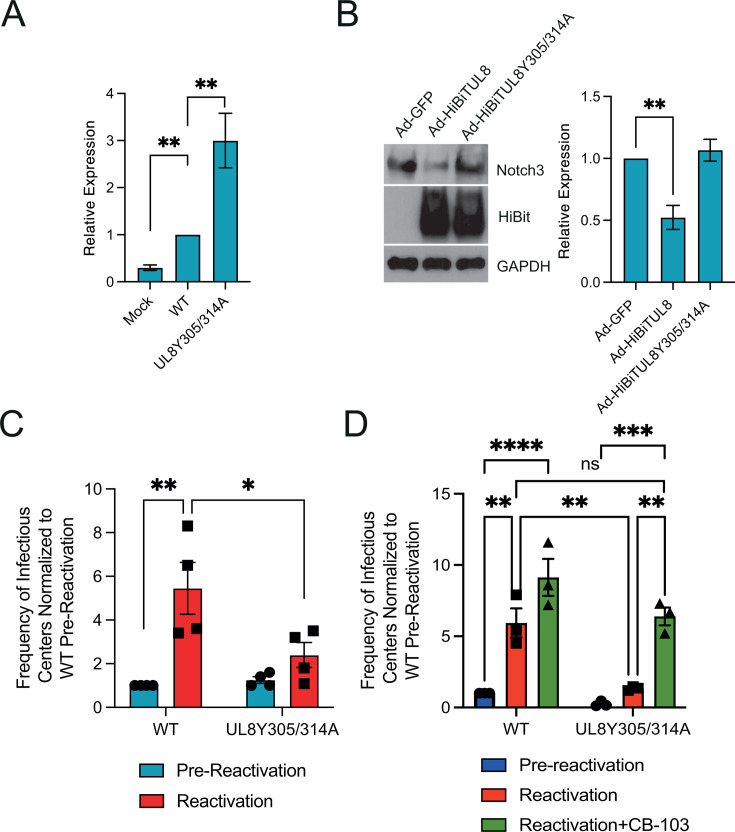 Figure 5
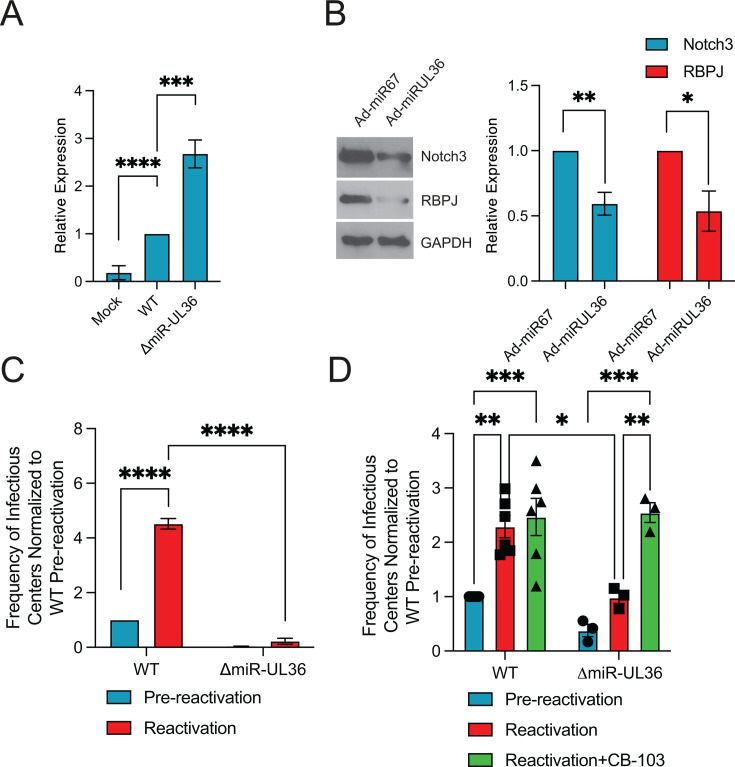 Figure 6
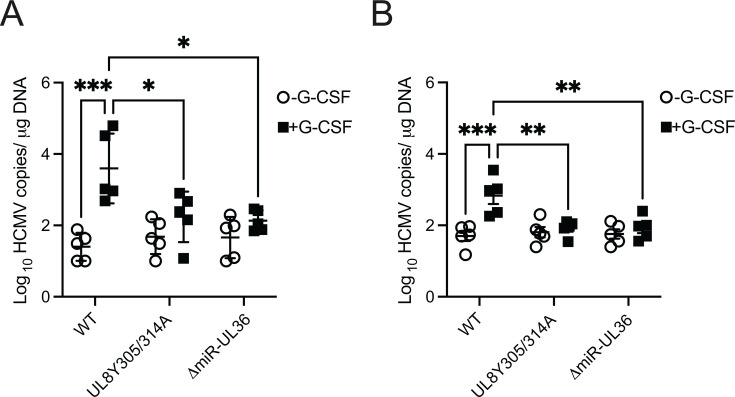 Figure 7
Peer Reviews
No public reviews on file for this paper yet. If you reviewed it on a platform where reviews are public (OpenReview, ICLR, NeurIPS, ICML), you can paste yours below so the community can read it here.
Videos
No videos yet. Explain this paper in a talk, walkthrough, or lecture? Add one.
Taxonomy
TopicsCytomegalovirus and herpesvirus research · Organ and Tissue Transplantation Research · MicroRNA in disease regulation