Plasmodium berghei serine repeat antigen 3 (PbSERA3) is required for hepatic merozoite egress
Dipti Singh, Smita Patri, Narahari Veeda, Chandan Kumar Verma, Anusha Kavati, Rameswara R. Segireddy, Surendra Kumar Kolli, Kota Arun Kumar

TL;DR
The study shows that PbSERA3 is essential for malaria parasites to leave liver cells and start blood-stage infection, suggesting it could be a target for new therapies.
Contribution
The study demonstrates that PbSERA3 is required for hepatic merozoite egress and is processed in sporozoite and ookinete stages.
Findings
PbSERA3 is indispensable for blood-stage development and is localized on the surface of ookinetes and sporozoites.
PbSERA3 is processed in ookinete and sporozoite stages, similar to its processing in blood stages.
PbSERA3 mutants fail to initiate blood-stage infection despite normal liver development.
Abstract
The asexual replicating intracellular stages of Plasmodium reside within the parasitophorous vacuole (PV) and become extracellular through an active, protease-mediated process known as egress. While egress is critical for parasite viability and dissemination, the number of effector proteases involved in this process remains unknown. The genome of P. berghei, a rodent malaria parasite, encodes five serine repeat antigens (SERAs) that bear a central papain protease domain and a serine or cysteine residue in their active site. Of these, only Pbsera3 is indispensable for blood-stage development, thus limiting its functional investigation. Using a yeast-based Flp/FRT conditional mutagenesis system, we successfully obtained Pbsera3-edited sporozoites that invaded hepatocytes and developed normally in late liver stages but failed to initiate a blood-stage infection. Interestingly, we observed…
Genes, proteins, chemicals, diseases, species, mutations and cell lines named across the full text — each resolved to its canonical identifier and authoritative record.
Click any figure to enlarge with its caption.
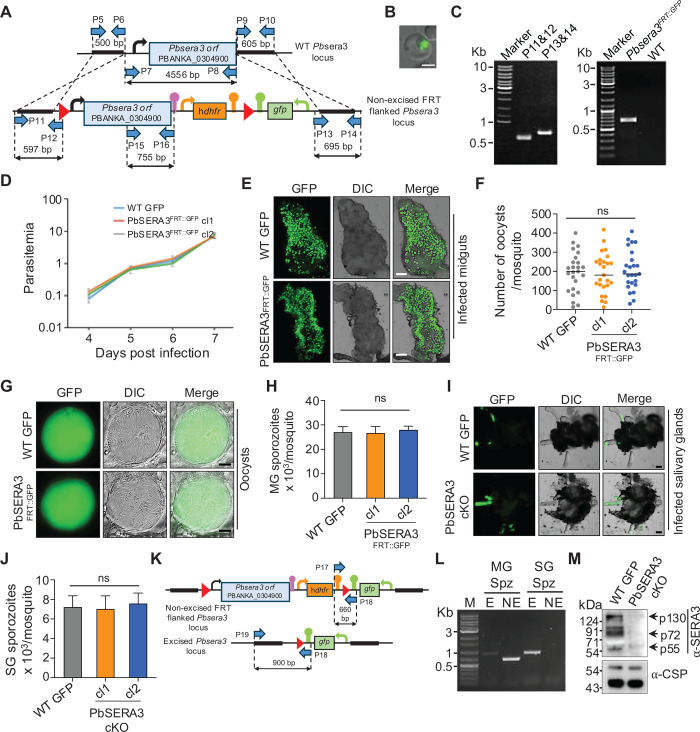 Figure 1
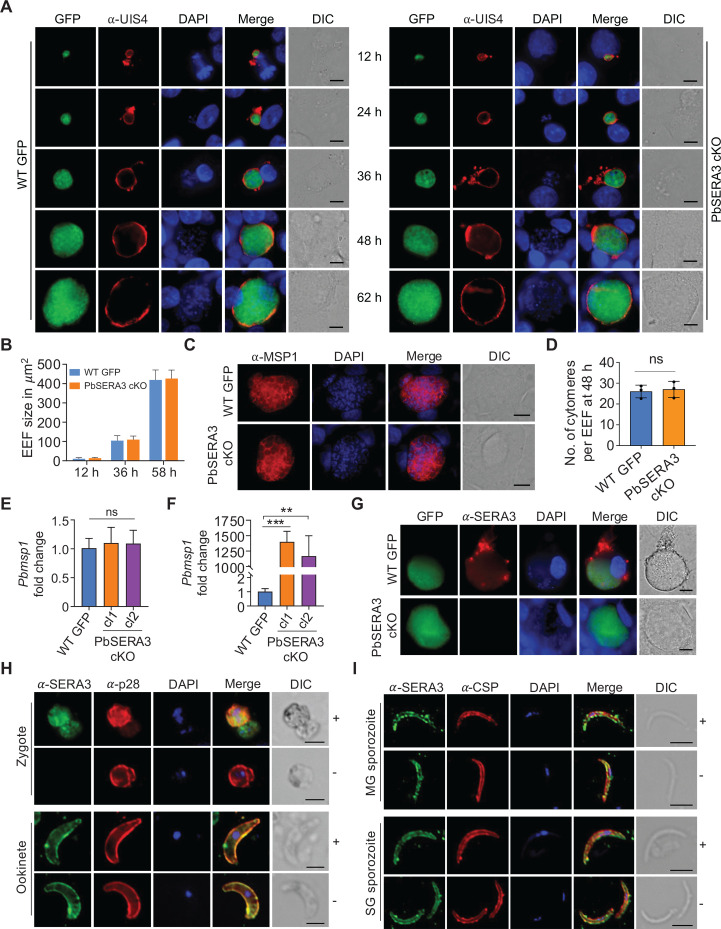 Figure 2
Peer Reviews
No public reviews on file for this paper yet. If you reviewed it on a platform where reviews are public (OpenReview, ICLR, NeurIPS, ICML), you can paste yours below so the community can read it here.
Videos
No videos yet. Explain this paper in a talk, walkthrough, or lecture? Add one.
Taxonomy
TopicsMalaria Research and Control · Invertebrate Immune Response Mechanisms · Parasites and Host Interactions