Inhibition of Neisseria gonorrhoeae complement-mediated killing during acute gonorrhea is dependent upon the IgG2:IgG3 antibody ratio
Samantha A. McKeand, Sian E. Faustini, Alex Cook, Nikki Kennett, Mark T. Drayson, Adam F. Cunningham, Ian R. Henderson, Christoph M. Tang, Jonathan D. C. Ross, Jeffrey A. Cole, Amanda E. Rossiter-Pearson

TL;DR
This study shows that Neisseria gonorrhoeae can resist immune attack by causing the body to produce more IgG2 antibodies, which block the protective IgG3 antibodies.
Contribution
The study identifies a novel mechanism of serum resistance in N. gonorrhoeae involving the IgG2:IgG3 antibody ratio.
Findings
Blocking of complement-mediated killing was observed in 3% of autologous sera from participants.
An increased IgG2:IgG3 ratio on the bacterial surface correlates with resistance to complement-mediated killing.
Blocking antibodies prevent IgG3 from initiating bactericidal activity against N. gonorrhoeae.
Abstract
Excessive binding of antibodies to the bacterial cell surface can paradoxically increase resistance of some Gram-negative pathogens to complement-mediated killing (CMK). We examined the CMK of 336 Neisseria gonorrhoeae isolates from 283 participants recruited to a clinical trial. Serum bactericidal assays revealed 3% (9/283) of the autologous participant sera blocked CMK. Gonococci isolated from these participants were resistant to the autologous host serum, but sensitive to pooled healthy control sera (HCS) and protected by autologous host serum in a 1:1 mixture with HCS. Analysis of clinical metadata showed that there was a significantly higher proportion of blocking sera found in participants with urethral infection and from men within the transmission network of men who have sex with women, when compared to the whole cohort. Following antibody purification from participants with…
Genes, proteins, chemicals, diseases, species, mutations and cell lines named across the full text — each resolved to its canonical identifier and authoritative record.
Click any figure to enlarge with its caption.
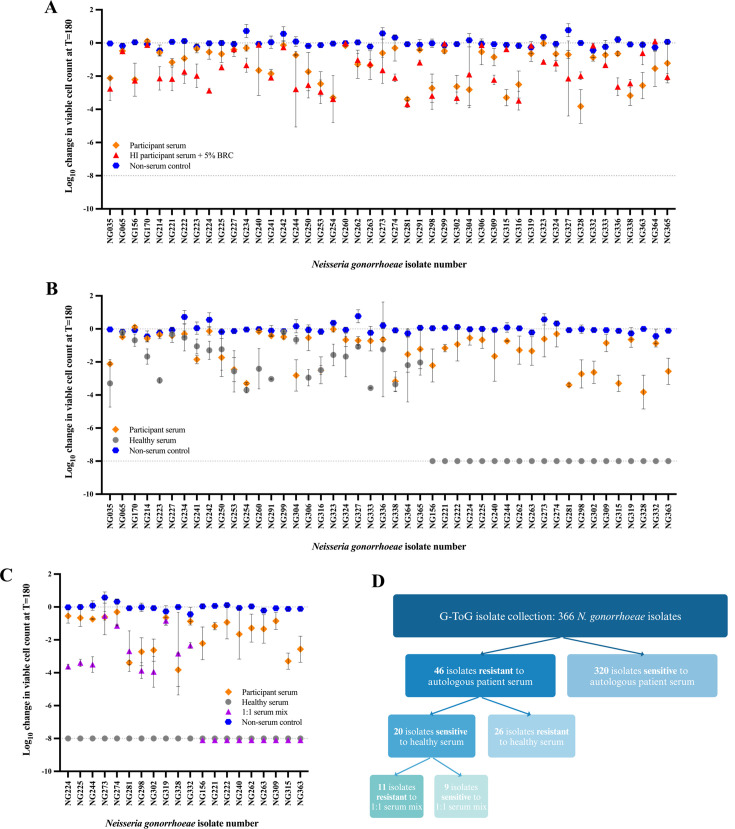 Figure 1
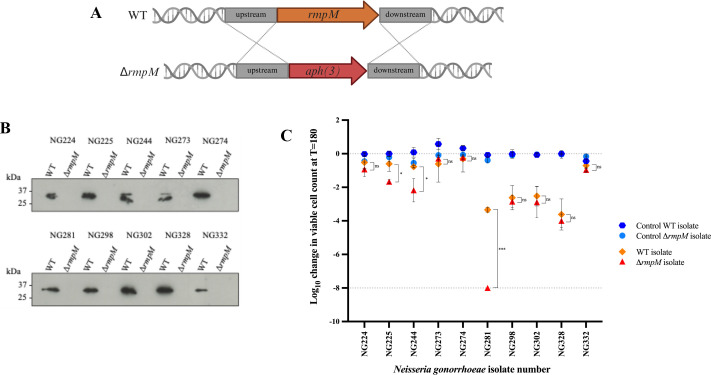 Figure 2
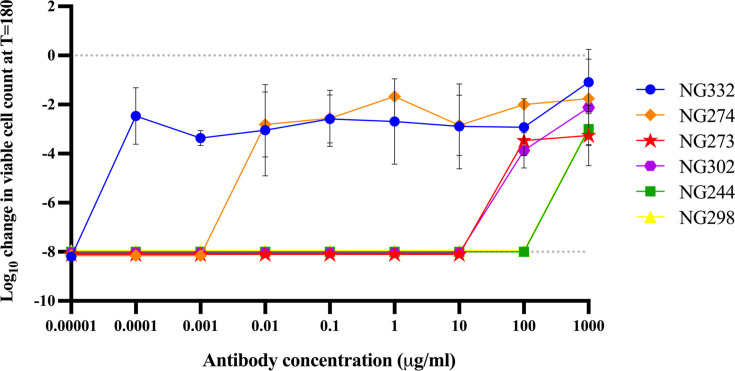 Figure 3
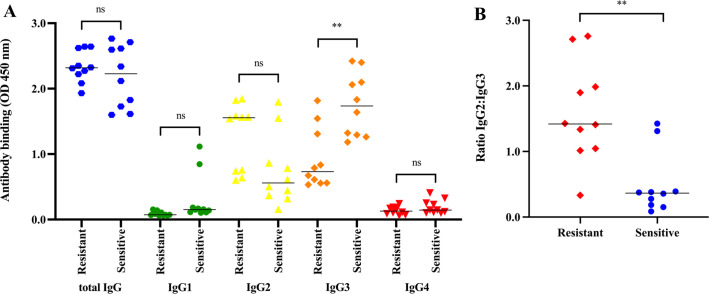 Figure 4
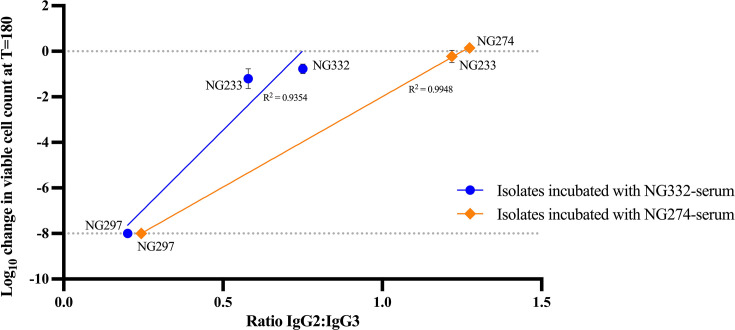 Figure 5
Peer Reviews
No public reviews on file for this paper yet. If you reviewed it on a platform where reviews are public (OpenReview, ICLR, NeurIPS, ICML), you can paste yours below so the community can read it here.
Videos
No videos yet. Explain this paper in a talk, walkthrough, or lecture? Add one.
Taxonomy
TopicsBacterial Infections and Vaccines · Reproductive tract infections research · Virology and Viral Diseases