Substrate specificity and action mechanism of the HerA-NurA nuclease from the hyperthermophilic archaeon Thermococcus kodakarensis
Keishiro Uda, Takeshi Yamagami, Sonoko Ishino, Christoph Gerle, Chai C. Gopalasingam, Hideki Shigematsu, Tomoyuki Numata, Yoshizumi Ishino

TL;DR
This study investigates the HerA-NurA nuclease from an archaeon and finds it cleaves DNA in a way that suggests it may defend against viruses rather than aid in DNA repair.
Contribution
The study reveals the HerA-NurA complex cleaves DNA in an exonucleolytic manner, suggesting a potential antiviral role rather than DNA end resection.
Findings
NurA is a non-directional, single-stranded DNA-specific nuclease.
The HerA-NurA complex cleaves both strands of dsDNA in an exonucleolytic manner.
Structural analysis suggests HerA-NurA may defend against viral infections rather than perform end resection.
Abstract
The HerA-NurA complex reportedly functions in DNA end resection in archaea. End resection is important to start homologous recombination by forming a single-stranded DNA region with an overhanging 3′-end, which invades double-stranded DNA (dsDNA) with a homologous sequence to form a D-loop. Here, we studied the structure and functions of HerA-NurA from the hyperthermophilic archaeon, Thermococcus kodakarensis. Our analyses demonstrated that NurA is a non-directional and single-stranded specific nuclease, but the HerA-NurA complex cleaves both strands of dsDNA in an exonucleolytic manner, regardless of the structure of the DNA end. The 3D structures of HerA-NurA and its complex with dsDNA revealed the detailed molecular mechanisms of these nuclease reactions. These results suggest that HerA-NurA may not be involved in the end resection process but instead performs other functions, such…
Genes, proteins, chemicals, diseases, species, mutations and cell lines named across the full text — each resolved to its canonical identifier and authoritative record.
Click any figure to enlarge with its caption.
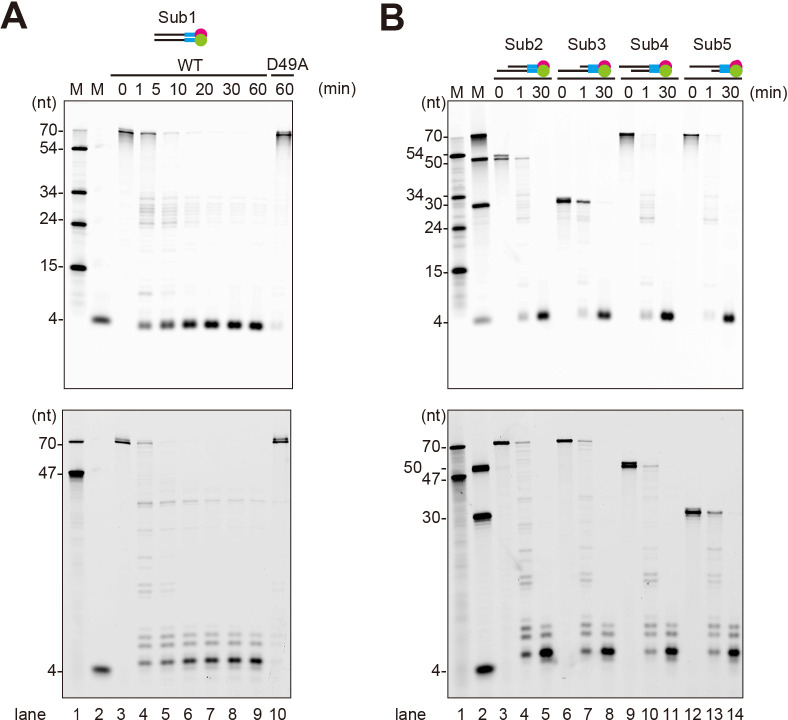 Figure 1
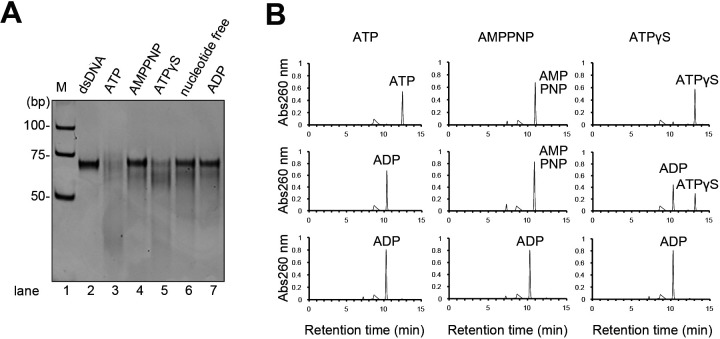 Figure 2
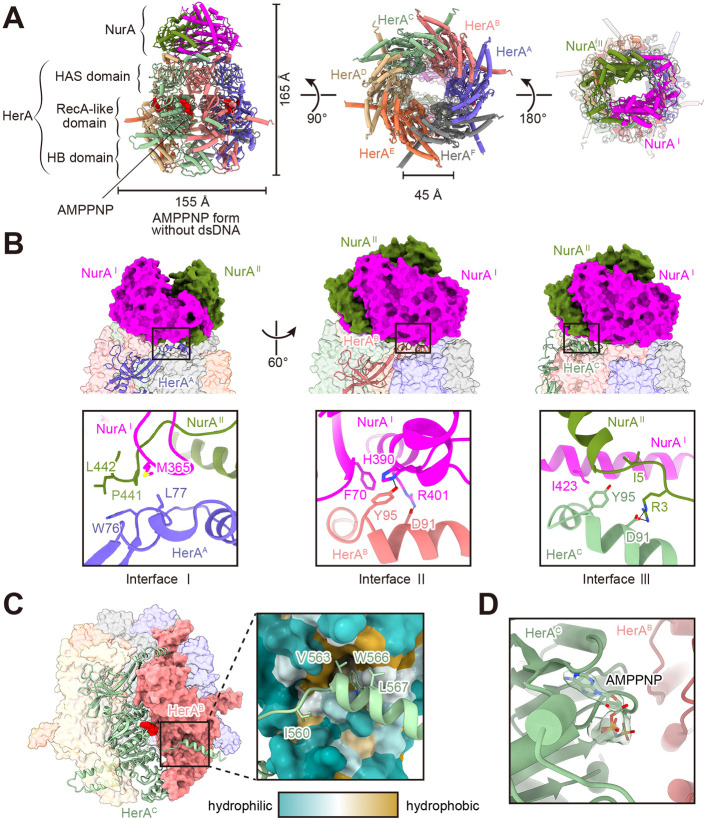 Figure 3
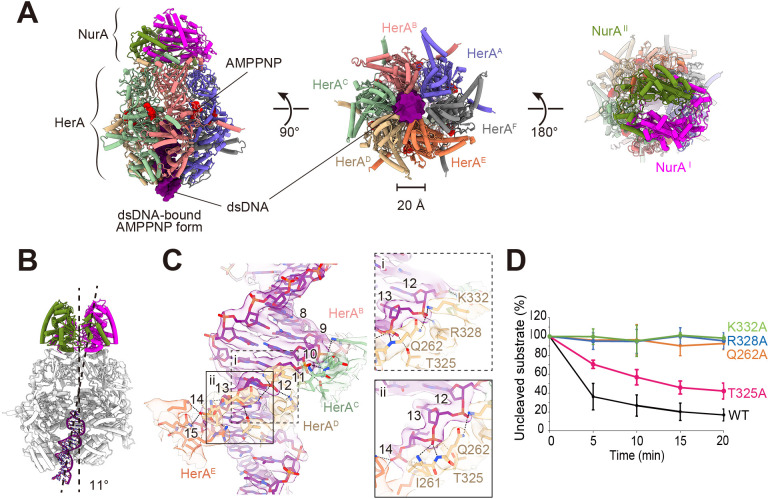 Figure 4
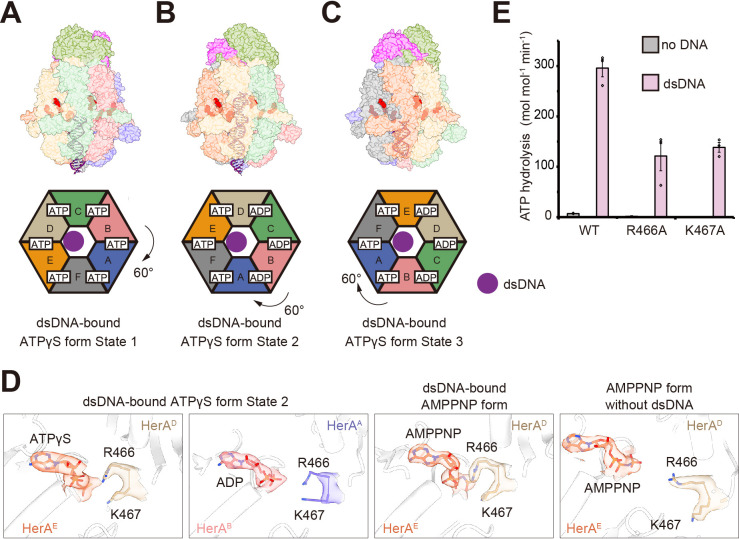 Figure 5
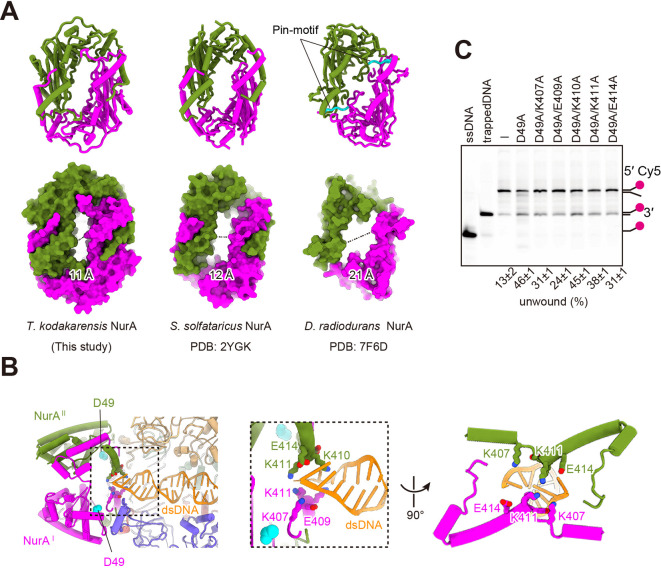 Figure 6
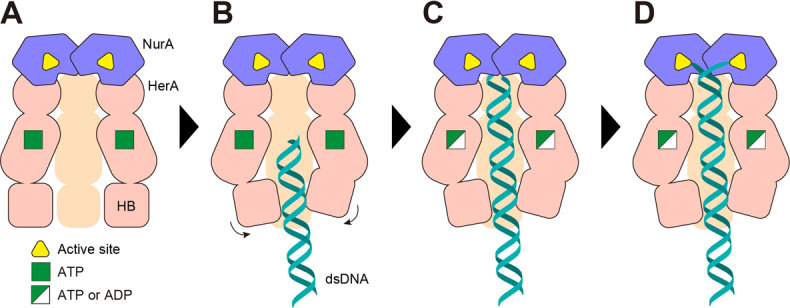 Figure 7
Peer Reviews
No public reviews on file for this paper yet. If you reviewed it on a platform where reviews are public (OpenReview, ICLR, NeurIPS, ICML), you can paste yours below so the community can read it here.
Videos
No videos yet. Explain this paper in a talk, walkthrough, or lecture? Add one.
Taxonomy
TopicsBacterial Genetics and Biotechnology · Signaling Pathways in Disease · RNA and protein synthesis mechanisms